
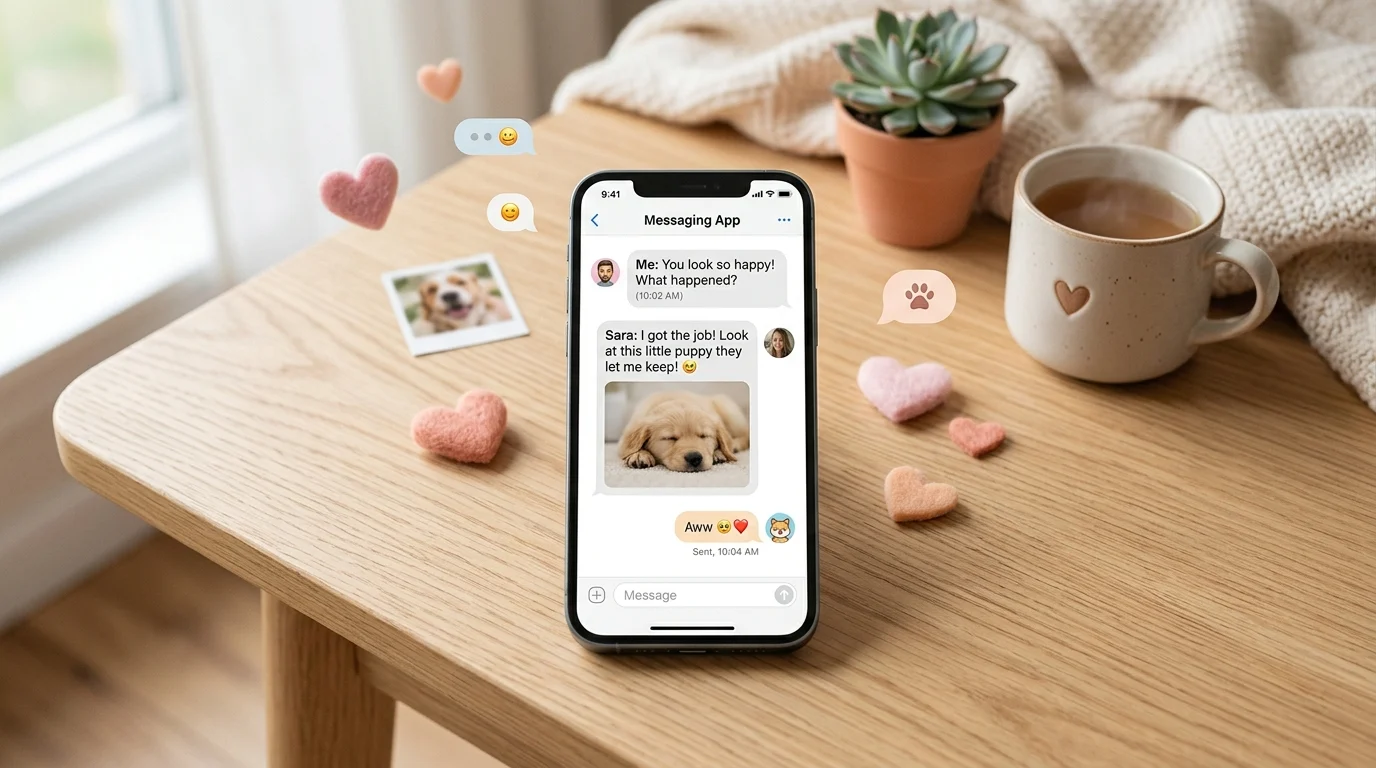

You send someone a sweet photo, share good news, or tell a slightly sad story, and they reply, “Aww.” The aww meaning is usually an emotional reaction to something cute, sweet, touching, or endearing. It can show affection, sympathy, warmth, or that someone finds what you said adorable.
The exact feeling depends on the conversation, punctuation, emojis, and relationship between the people talking. A simple “aww” can sound friendly, while “awww 🥹” may feel much more emotional. Understanding those small differences helps you read the message correctly and choose an appropriate response.
What Does Aww Mean?
In text and online conversations, “aww” is an expression used to show affection, tenderness, sympathy, or appreciation for something sweet or cute. It is not normally an acronym and does not have a standard full form.
| Detail | Explanation |
|---|---|
| Most common meaning | A reaction to something cute, sweet, touching, or endearing |
| Full form | None; “aww” is an expressive interjection |
| Tone | Warm, affectionate, sympathetic, or playful |
| Common platforms | Texting, Instagram, TikTok, Snapchat, WhatsApp, and chats |
| Formal or informal | Informal |
For example:
Person A: “My little brother made me a birthday card himself.”
Person B: “Aww, that’s so sweet!”
Here, “aww” shows that Person B thinks the gesture is touching and adorable.
What Is the Main Aww Meaning in Text?
The most common aww meaning in text is a warm emotional reaction to something considered cute, kind, touching, or affectionate.
People often use it after hearing about:
- A cute animal
- A child doing something sweet
- A thoughtful gift
- A romantic gesture
- A kind message
- A sentimental story
- Something unexpectedly adorable
The spelling can also communicate intensity. “Aw” is shorter and more understated, while “aww,” “awww,” or “awwww” can make the reaction feel more enthusiastic or emotional.
Compare these:
- “Aw, thanks.” — Mildly warm or appreciative.
- “Aww, thanks!” — More affectionate or enthusiastic.
- “Awww 🥹” — Stronger emotional reaction, often to something especially touching.
There is no strict rule about how many “w” letters someone should use. Extra letters mainly add emphasis.
How Context Changes the Meaning of Aww
The surrounding conversation usually tells you what emotion the sender is expressing. The same word can communicate affection, sympathy, admiration, or even mild disappointment.
1. Something is cute
“Aww, your puppy is adorable!”
Here, “aww” clearly expresses delight and affection.
2. Someone did something thoughtful
“My friend brought me coffee because I was studying late.”
“Aww, that was really nice of them.”
The reaction shows appreciation for the kindness.
3. Someone shares sad news
“I missed my dog while I was away.”
“Aww, I hope you get to see him soon.”
In this context, “aww” expresses sympathy rather than amusement.
4. Someone is disappointed
“They sold out of the concert tickets before I could buy one.”
“Aww, that sucks.”
Here, the expression signals sympathy or disappointment.
Punctuation and emojis can strengthen the intended emotion. “Aww!” sounds more enthusiastic, while “aww 🥺” or “awww 🥹” usually feels more tender or emotional.
Does Aww Mean the Same Thing on Different Platforms?
Generally, yes. Unlike some abbreviations that have platform-specific definitions, aww does not normally develop a completely different meaning on TikTok, Snapchat, Instagram, WhatsApp, or ordinary text messages.
Text Messages and WhatsApp
It commonly expresses affection, sympathy, or appreciation.
Example: “Aww, you remembered my birthday 🥹”
It often appears in comments or direct messages reacting to photos, pets, couples, babies, gifts, or sentimental posts.
Example: “Aww, you two are so cute!”
TikTok
The meaning is usually the same, especially in comments reacting to wholesome, funny, cute, or emotional videos.
Example: “Aww, the way he looks at her 😭”
Snapchat
It can be used as a quick emotional response to a picture, story, or message.
Example: “Aww, your cat is so tiny!”
The platform generally matters less than the content being discussed.
Real Conversation Examples
1: Friends
Person A: “My mom packed my favorite snacks before I left for college.”
Person B: “Aww, that’s so sweet.”
Meaning: The sender is expressing affection and appreciation for the thoughtful gesture.
2: Dating Conversation
Person A: “I saved the first picture you ever sent me.”
Person B: “Aww 🥹”
Meaning: The response suggests the person feels touched or emotionally warmed by the statement.
3: Family
Person A: “My nephew tried to make breakfast for everyone this morning.”
Person B: “Aww, that’s adorable!”
Meaning: The sender is reacting positively to something cute and endearing.
Is Aww Rude?
Usually, aww is not rude. It is generally a positive or sympathetic expression.
However, tone can change its meaning. If someone says, “Aww, you actually thought that would work?” the expression may sound patronizing or sarcastic.
The difference comes from the surrounding words and relationship between the speakers. An affectionate “awww 🥹” is very different from a sarcastic “aww, poor you.”
Is Aww Flirty?
Aww can be flirty, but it is not inherently a flirtatious expression.
Someone may use it affectionately when they are interested in you, especially after a sweet compliment or romantic message. However, friends and family members use “aww” just as often without any romantic meaning.
For example:
“You remembered my favorite movie? Aww ❤️”
The heart emoji and romantic context can make the message feel flirtier.
By contrast:
“Aww, your puppy is adorable!”
is simply affectionate and friendly.
Do not interpret “aww” as evidence of romantic interest by itself. Look at the broader conversation.
How to Reply to Aww
Your response should match the situation rather than treating “aww” as having one fixed meaning.
Friendly Replies
If someone reacts warmly to something you shared, you can keep the conversation casual:
- “Haha, I knew you’d like it!”
- “Right? It was so sweet.”
- “I thought it was adorable too.”
- “Glad you liked it!”
Funny Replies
If the conversation is playful, you can answer with humor:
- “Okay, stop being so wholesome.”
- “I’ll take that as a compliment.”
- “Careful, you’re making me blush.”
- “Aww right back at you 😂”
Flirty Replies
When the surrounding conversation is clearly romantic, you can respond more warmly:
- “Aww, you’re sweet.”
- “You’re making this hard to resist.”
- “That reaction was cute.”
- “I was hoping you’d say that 😉”
If you are unsure why someone said “aww,” a simple clarification can work:
“Aww as in cute, or aww as in sad?”
That prevents you from guessing incorrectly.
When to Use Aww
“Aww” works best in relaxed, personal communication where expressive language is expected.
You can naturally use it in:
- Casual text messages
- Friend group chats
- Social media comments
- Direct messages
- Conversations with family
- Dating conversations
- Online communities
It is especially useful when a plain “yes” or “nice” would not communicate enough emotion.
The spelling can also help convey your reaction. Use “aww” for a normal warm response and extend it to “awww” when you want to sound more enthusiastic or emotional.
When to Avoid Aww
There is nothing inherently wrong with “aww,” but it is informal. In professional or formal situations, clearer wording is usually better.
For example, instead of replying “Aww, that’s great!” to a client, you might say:
“That’s wonderful news. Thank you for sharing it.”
Consider avoiding “aww” in:
- Formal business emails
- Job applications
- Academic writing
- Official announcements
- Professional client communication
- Serious workplace discussions
- Sensitive situations where your tone could be misunderstood
Slang and informal expressions are not automatically inappropriate, but the audience and purpose should guide your choice.
Common Mistakes About Aww
| Common Mistake | Correct Understanding |
| Assuming “aww” is an acronym | It is normally an expressive interjection, not a shortened phrase with a standard full form. |
| Assuming it is always flirty | It can be friendly, sympathetic, affectionate, or romantic depending on context. |
| Assuming it always means “cute” | It can also express sympathy, tenderness, appreciation, or disappointment. |
Another common mistake is reading too much into the number of “w” letters. “Awww” often signals stronger emotion, but there is no universal scale that gives each additional letter a fixed meaning.
Similar Slang and Expressions
| Term | Meaning | Main Difference |
| Aw | Shorter form expressing tenderness or sympathy | Usually more understated |
| Awww | Extended form of “aww” | Often adds emotional emphasis |
| Cute | Directly describes something adorable | Describes rather than simply reacts |
| OMG | Expresses strong surprise or emotion | Broader and usually more intense |
| Adorable | Describes something especially lovable or cute | More descriptive than “aww” |
“Aww” is distinctive because it primarily functions as an emotional reaction rather than a description.
Origin and Use of Aww
“Aww” is best understood as an informal written representation of the exclamation “aw.” The extra “w” is commonly used in digital communication to stretch or emphasize the sound and emotional reaction.
There is no standard full form behind the expression, so claims that “AWW” officially stands for a particular phrase should generally be treated cautiously.
Its spelling can vary according to the writer’s intended tone. You may see “aw,” “aww,” “awww,” or longer versions, with the extended forms generally signaling greater emphasis.
Quick Recap
- Aww usually expresses affection, tenderness, sympathy, or delight.
- It is not normally an acronym and has no standard full form.
- “Awww” can make the reaction sound more emotional or enthusiastic.
- The expression is not automatically flirty; context determines the tone.
- It works best in casual texts, chats, comments, and personal conversations.
- Professional communication usually calls for clearer, more neutral wording.
Frequently Asked Questions
What does aww mean in text?
Aww usually expresses affection, sympathy, tenderness, or delight when someone shares something sweet, cute, or emotionally touching.
Is aww rude?
Aww is generally friendly, although sarcastic wording or an unsuitable context can make it sound patronizing.
Is aww flirty?
Aww can sound flirty in romantic conversations, but the expression itself does not necessarily indicate romantic interest.
How should you reply to aww?
You can respond warmly with “That’s sweet,” playfully with “Aww right back at you,” or flirtatiously when appropriate.
Can aww have different meanings?
Yes, aww can express cuteness, sympathy, affection, appreciation, or mild disappointment depending on the conversation.
Final Thoughts
The aww meaning is usually a warm emotional reaction to something cute, sweet, touching, or endearing. In text and social media conversations, it can also show sympathy or appreciation, while the longer spelling “awww” often adds emotional emphasis. The expression is not automatically romantic or flirty, so you should consider the surrounding words, emojis, punctuation, and relationship before interpreting it. For casual conversations, “aww” is a natural way to show emotion without saying much. In formal communication, however, a clearer and more direct response is usually the better choice.





Pingback: JOI Meaning Slang | The Complete Guide to Both Meanings (Updated)
Pingback: YN Meaning Slang | Y/N Meaning |The Guide to Understanding This Viral Term
Pingback: Nubile Meaning | Definition, Usage, Context, and Examples
Pingback: CTFU Meaning | What It Means in Text, Slang, and Social Media
Pingback: Noir Meaning | What It Means, Origins, and How It's Used
Pingback: Elfin Meaning | Definition, Usage, Examples, and Context
Pingback: Deerstalker Meaning | What It Is and Why It Matters
Pingback: Luffy Meaning | What It Means Online, in Anime, and in Text