
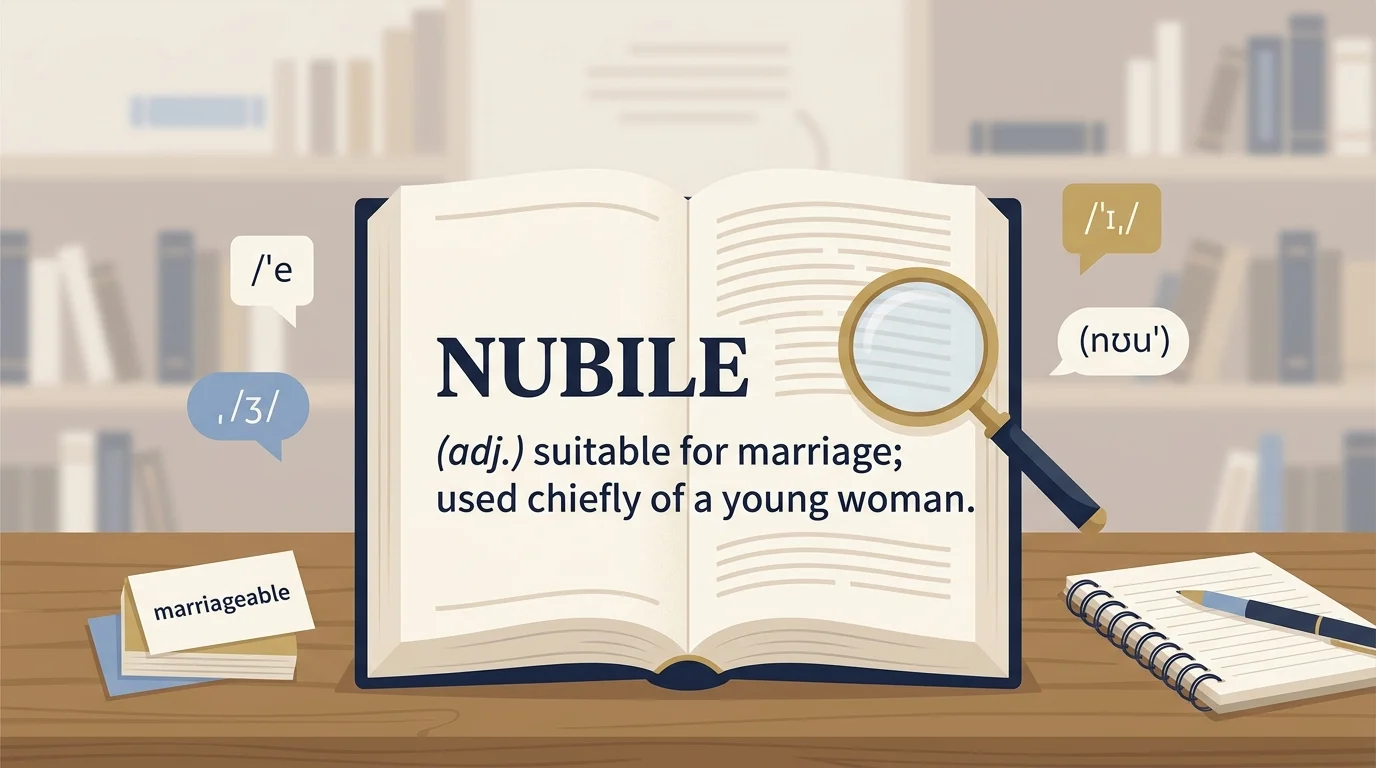

Reading the word nubile in a novel, online discussion, or social media post can leave you wondering whether it’s simply a compliment or something more specific. The answer is more nuanced than many people realize. Nubile meaning traditionally refers to a young woman who is physically mature enough for marriage or childbearing, but in modern English, the word often carries a sexual implication. Because of that shift in usage, context is essential when interpreting or using it.
Below, you’ll learn the definition, tone, examples, appropriate usage, and common misunderstandings surrounding this uncommon English word.
What Does Nubile Mean?
The most common nubile meaning is a young woman who has reached physical maturity, especially one considered sexually attractive or of marriageable age.
Unlike many internet terms, nubile is not an acronym and has no full form. It is an English adjective derived from Latin.
| Detail | Explanation |
|---|---|
| Most Common Meaning | Physically mature young woman, often with sexual implications |
| Full Form | None |
| Tone | Usually descriptive; often suggestive in modern usage |
| Common Contexts | Literature, media, adult descriptions, discussions |
| Formal or Informal | Recognized in formal English but uncommon in everyday conversation |
The Main Meaning of Nubile
The word nubile originally described someone who had reached an age suitable for marriage. In historical writing, it was often a neutral descriptive term.
Modern usage has changed considerably. Today, many English speakers associate nubile with physical attractiveness and sexual maturity rather than simply adulthood. Because of this shift, the word frequently appears in romance writing, literary works, or adult-oriented content rather than everyday conversations.
For example:
“The novel described the heroine as a nubile young woman entering adulthood.”
Here, the writer emphasizes physical maturity rather than personality or character. Depending on the surrounding text, readers may also interpret the description as suggesting attractiveness.
Alternative Meanings
Unlike many slang expressions, nubile has very few genuine alternative meanings.
| Meaning | Context | Tone | Example |
|---|---|---|---|
| Physically mature young woman | Standard English | Neutral to descriptive | “She was described as nubile.” |
| Sexually attractive young woman | Modern writing and media | Suggestive | “The magazine used the term to emphasize appearance.” |
The second interpretation is now the one many readers recognize first. Because of that, careful writers often choose different words if they want to avoid unintended implications.
How Context Changes the Meaning
The intended meaning depends heavily on surrounding words and the situation.
Consider these examples:
- “The historical text referred to nubile women preparing for marriage.”
Here, the focus is historical and social rather than sexual. - “The advertisement featured nubile models.”
This wording suggests physical attractiveness and may sound objectifying. - “The novelist described the character as nubile and confident.”
Readers may interpret this as emphasizing youth, maturity, and attractiveness together. - “The professor explained the original Latin meaning of nubile.”
This is an educational discussion without any suggestive tone.
Context clues such as nearby adjectives, the subject of the conversation, and the overall tone help determine how readers interpret the word.
Does Nubile Mean Something Different on Social Media?
Unlike many modern internet expressions, nubile does not have platform-specific slang meanings.
Text Messages and WhatsApp
When someone uses nubile in a text, they almost always mean its dictionary definition. Because the word is uncommon, many people may need clarification.
Example:
“I had to look up the word nubile after reading that message.”
The tone is usually literary or descriptive rather than conversational.
TikTok, Instagram, and Reddit
On social platforms, the meaning remains largely the same. However, it often appears in discussions about books, language, film, or vocabulary. In some posts, it may also be used humorously or sarcastically because it sounds unusually formal.
The meaning itself does not change across these platforms.
Real Conversation Examples
1 – Friends
Person A: “The author kept calling the character nubile.”
Person B: “That sounds pretty old-fashioned.”
Meaning: They’re discussing the author’s descriptive language.
2 – Literature Class
Person A: “What does nubile mean?”
Person B: “It means physically mature, but modern readers often hear a sexual implication.
Meaning: The word is being explained academically.
3 – Social Media
Person A: “That review said the movie focuses on nubile characters.”
Person B: “I think they meant young adults presented as attractive.”
Meaning: The conversation interprets how the reviewer used the adjective.
Tone and Emotional Meaning
The emotional tone of nubile depends on why someone chooses it.
Is Nubile Rude?
Not automatically.
The word itself is a legitimate English adjective. However, many people consider it awkward or objectifying when used to describe a real person because it emphasizes physical maturity and attractiveness rather than personal qualities.
Is Nubile Flirty?
Usually not by itself.
Instead, it often sounds descriptive or suggestive. If someone uses it in reference to another person during a flirtatious conversation, the overall message may feel flirtatious because of the surrounding context.
Is Nubile Offensive?
It can be.
Some readers view the word as reducing a woman to her physical appearance or sexual maturity. Others simply see it as an old-fashioned literary adjective. Audience expectations matter.
How to Reply if Someone Uses Nubile
Friendly Replies
- “I wasn’t familiar with that word.”
- Did you mean physically mature?
- “That’s an interesting choice of wording.”
- “I had to look that one up.”
Polite Replies
- “Could you explain what you mean by nubile?”
- “Are you using the historical meaning or the modern one?”
- “Thanks for teaching me a new word.”
- “I appreciate the clarification.”
Replies When You’re Confused
- What does nubile mean in this context?”
- “Are you talking about age or appearance?”
- “Could you explain how you’re using that word?”
When to Use the Term
You might use nubile appropriately in situations such as:
- Discussing literature.
- Analyzing historical texts.
- Explaining vocabulary.
- Academic conversations about language.
- Reviewing books or films where the word appears.
If you choose the word, make sure your audience understands your intended meaning.
When to Avoid the Term
There are situations where clearer wording is a better choice.
Avoid using nubile in:
- Professional emails.
- Workplace communication.
- Job applications.
- Business presentations.
- Sensitive conversations.
- Descriptions of people when a neutral word like adult, young woman, or mature better communicates your point.
Because many readers associate nubile with sexual attractiveness, using it casually can create unintended impressions.
Common Mistakes
| Common Mistake | Correct Understanding |
|---|---|
| Believing it’s internet slang | It’s a standard English adjective, not modern slang. |
| Assuming it only means “beautiful” | It specifically relates to physical maturity, often with sexual implications. |
| Using it casually in professional settings | Many readers may consider it inappropriate or overly suggestive. |
Similar Terms
| Term | Meaning | Main Difference |
|---|---|---|
| Mature | Fully developed or adult | Much broader and usually neutral |
| Youthful | Looking young | Does not imply sexual maturity |
| Attractive | Pleasing in appearance | Focuses on beauty rather than maturity |
| Seductive | Sexually appealing | Stronger emphasis on intentional attraction |
| Adolescent | Young person in development | Refers to age rather than attractiveness |
Origin and Popularity
Nubile comes from the Latin word nubere, meaning “to marry.” Historically, it referred to a young woman who had reached marriageable age.
Over time, English usage shifted. Today, the word is uncommon in everyday speech, and many people primarily encounter it in literature, dictionaries, or discussions about vocabulary. Its modern use often carries stronger sexual overtones than its historical meaning.
Quick Recap
- Nubile means physically mature, especially regarding a young woman.
- It is not an abbreviation and has no full form.
- Modern usage often suggests physical attractiveness or sexual maturity.
- Context determines whether the word sounds academic, literary, or suggestive.
- If you’re unsure how someone intended it, asking for clarification is perfectly appropriate.
Frequently Asked Questions
What does nubile mean in text?
It usually describes a physically mature young woman and often carries a suggestive meaning rather than functioning as internet slang.
What does nubile stand for?
It is a regular English adjective with no full form or abbreviation behind it.
What does nubile mean on TikTok?
It generally keeps its dictionary meaning and is most often used in vocabulary or literary discussions.
Is nubile rude?
It is not inherently rude, but many people find it objectifying because modern usage often emphasizes sexual attractiveness.
Can nubile have different meanings?
Its historical meaning centers on marriageable maturity, while modern usage commonly emphasizes physical attractiveness and sexual maturity.
Final Thoughts
Understanding nubile meaning requires more than reading a dictionary definition. Although the word originally referred to a young woman who had reached marriageable maturity, modern English often gives it a more suggestive or sexual tone. That difference makes context especially important. If you’re reading literature, discussing language, or interpreting someone’s writing, pay attention to the surrounding words and purpose. When writing yourself, consider whether a clearer and more neutral alternative would better communicate your intended meaning while avoiding misunderstanding.