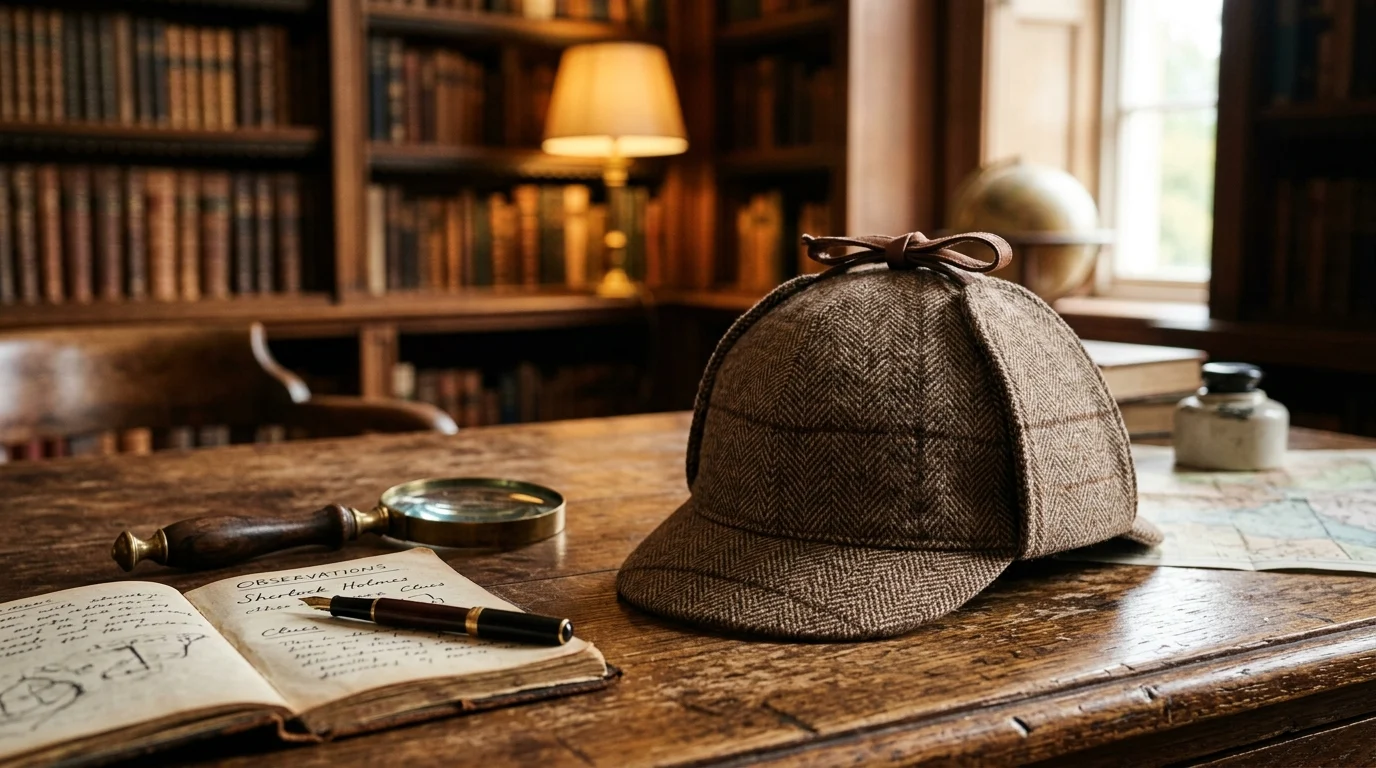

You may have come across the word deerstalker while reading a novel, watching a detective movie, or shopping for traditional hats. The deerstalker meaning is straightforward: it refers to a distinctive hunting cap with earflaps, traditionally worn during outdoor hunting in the countryside. Although it is a practical piece of clothing, many people now recognize it as the iconic hat associated with Sherlock Holmes.
Understanding the meaning matters because the term can describe both the hat itself and, in some contexts, someone participating in deer stalking. The surrounding conversation usually makes the intended meaning clear. Below, you’ll learn what a deerstalker is, where the name comes from, how it’s commonly used, and why it remains culturally recognizable.
What Does Deerstalker Mean?
A deerstalker is most commonly a traditional hunting hat featuring a soft crown, front and back peaks (brims), and fold-down earflaps that can be tied on top or under the chin.
| Detail | Explanation |
|---|---|
| Most Common Meaning | A traditional hunting cap with earflaps |
| Full Form | Not an abbreviation or acronym |
| Tone | Neutral and descriptive |
| Common Contexts | Hunting, fashion, literature, Sherlock Holmes |
Unlike many online search terms, deerstalker is not internet slang, a text abbreviation, or a social media acronym. It is simply an English noun with a long history.
The Main Meaning of Deerstalker
The primary meaning of deerstalker refers to a specific style of cap originally designed for people stalking deer across forests, moorlands, and estates in Britain.
The hat’s practical design serves several purposes:
- Two brims help protect the wearer’s face and neck from sun or rain.
- Earflaps provide warmth in cold weather.
- Soft fabric makes it comfortable during long outdoor walks.
Typical materials include tweed or wool, making the cap well suited for cool climates.
Example:
“The guide wore a deerstalker while leading the hunting party through the hills.”
Here, deerstalker simply identifies the type of hat the guide is wearing. There is no hidden or figurative meaning.
Does Deerstalker Have Another Meaning?
Yes, although it is much less common.
The word can occasionally describe a person who stalks deer, especially in discussions about hunting. However, modern English overwhelmingly uses the term to describe the hat rather than the hunter.
| Meaning | Context | Example |
|---|---|---|
| Traditional hunting cap | Everyday English | “He bought a tweed deerstalker.” |
| Person stalking deer | Hunting discussions | “The experienced deerstalker knew the terrain well.” |
Most people encountering the word in books, television, or conversation are referring to the hat.
Where Did the Name Deerstalker Come From?
The name is quite literal.
It combines:
- Deer – the animal being hunted.
- Stalker – someone who quietly tracks game.
Originally, the cap became popular because it suited hunters moving through rough countryside while following deer. Over time, the hat itself became known as a deerstalker, regardless of whether the wearer hunted.
The exact point when the name entered English usage is uncertain, but its connection to traditional British hunting is well established.
Why Is the Deerstalker Connected to Sherlock Holmes?
Many people instantly picture Sherlock Holmes when they hear the word deerstalker.
Interestingly, the original stories by Arthur Conan Doyle do not consistently describe Holmes wearing this hat in every adventure. Instead, later illustrations and film adaptations popularized the image of Holmes wearing a deerstalker while investigating cases in the countryside.
As a result, the hat became one of the most recognizable symbols of fictional detectives.
Today, costume versions often pair the deerstalker with:
- A magnifying glass
- A pipe
- An Inverness cape
These items have become visual shorthand for the famous detective.
How Context Changes the Meaning
Context tells you whether deerstalker refers to the hat or, more rarely, the hunter.
Consider these examples:
Example 1
“He bought a vintage deerstalker at the clothing store.”
Meaning: The traditional hat.
Example 2
“The experienced deerstalker waited patiently before sunrise.”
Meaning: A hunter tracking deer.
Example 3
“She dressed as Sherlock Holmes with a deerstalker and cape.”
Meaning: The detective hat.
Example 4
“The museum displayed several Victorian deerstalkers.”
Meaning: Multiple examples of the hat.
Notice that nearby words such as bought, wore, hat, costume, or displayed almost always indicate the clothing meaning.
Is There a Different Meaning on Social Media or in Text Messages?
Unlike many searchable terms, deerstalker does not have a widely accepted slang meaning on platforms like TikTok, Snapchat, Instagram, or WhatsApp.
People usually use the word literally when discussing:
- Sherlock Holmes
- British fashion
- Hunting history
- Historical clothing
- Costumes
- Vintage style
If you see the word in a social media caption, it almost certainly refers to the recognizable hat.
For example:
“Found the perfect deerstalker for my mystery-themed party.”
The meaning remains exactly the same as in ordinary English.
Real Conversation Examples
Example 1
Person A: “What kind of hat is Sherlock Holmes wearing?”
Person B: “It’s called a deerstalker.”
Meaning: The famous detective cap.
Example 2
Person A: “I found a tweed deerstalker at the antique market.”
Person B: “That would look great with a vintage outfit.”
Meaning: A traditional hat.
Example 3
Person A: “The theater asked everyone playing detectives to wear a deerstalker.”
Person B: “I’ll borrow one from the costume shop.”
Meaning: Part of a detective costume.
Tone and Emotional Meaning
The word deerstalker is generally neutral.
Depending on the conversation, it may suggest:
Friendly
Friends may casually mention the hat when discussing costumes, mystery novels, or classic fashion.
Humorous
Someone might jokingly say:
“Put on your deerstalker and solve the mystery.”
Here, the word playfully references Sherlock Holmes rather than actual hunting.
Formal
In museum descriptions, clothing catalogs, or historical writing, the word is simply descriptive and carries no emotional tone.
Is Deerstalker Rude?
No. The word is not offensive or insulting.
It only becomes humorous if someone uses it metaphorically to compare another person with Sherlock Holmes or an amateur detective.
How to Reply When Someone Mentions a Deerstalker
Most conversations involving deerstalker are straightforward.
Friendly Replies
- “That’s the classic Sherlock Holmes hat.”
- “I’ve always liked that style.”
- “It has a really traditional look.”
- “That sounds perfect for the costume.”
Polite Replies
- “I know the style you’re talking about.”
- “Thanks for explaining.”
- “I didn’t realize that’s what it was called.”
- “That’s an interesting piece of history.”
Replies When You’re Unsure
- Do you mean the hunting hat?
- “Are you talking about the Sherlock Holmes cap?”
- Do you mean the person or the hat?
When to Use the Term
Use deerstalker when referring to:
- Traditional hunting clothing
- Sherlock Holmes costumes
- Historical fashion
- Theater productions
- Vintage clothing
- British country attire
Because the word is an established dictionary term, it fits both casual and formal conversations.
When to Avoid the Term
Although the word itself is appropriate, consider using clearer wording if your audience may not recognize it.
For example, instead of saying:
“Bring your deerstalker.”
You could say:
“Bring your Sherlock Holmes-style hat.”
This can avoid confusion, especially for younger audiences or people unfamiliar with the term.
Common Mistakes
| Common Mistake | Correct Understanding |
|---|---|
| Thinking it is internet slang | It is a traditional English noun. |
| Believing it is an acronym | It has no full form. |
| Assuming it always refers to a hunter | Most modern uses describe the hat. |
Similar Terms
| Term | Meaning | Main Difference |
|---|---|---|
| Flat cap | Rounded cap with a small brim | Does not have earflaps or two brims |
| Trapper hat | Winter hat with ear coverings | Designed mainly for extreme cold |
| Tweed cap | Cap made from tweed fabric | Refers to material rather than style |
| Hunting cap | General term for outdoor hats | Deerstalker is one specific design |
Origin and Continued Recognition
The deerstalker originated as practical outdoor headwear for deer stalking in Britain. Its durable fabric and protective design made it useful for hunters spending long periods outdoors.
Its worldwide recognition comes largely from its lasting association with Sherlock Holmes in illustrations, stage productions, television, and film. Today, many people identify the hat immediately, even if they have never seen one used for hunting.
Quick Recap
- A deerstalker is primarily a traditional hunting hat with earflaps.
- It is not an abbreviation, acronym, or internet slang.
- In rare contexts, the word can describe a person stalking deer.
- Most modern references involve Sherlock Holmes or traditional clothing.
- Context makes the intended meaning easy to recognize.
Frequently Asked Questions
What does deerstalker mean?
A deerstalker most commonly refers to a traditional hunting cap with earflaps and front and back brims.
Is deerstalker an acronym?
No, it is a regular English noun rather than an abbreviation or acronym with a hidden full form.
What does deerstalker mean in text?
It usually keeps its literal meaning and refers to the famous hunting hat rather than internet slang.
Is deerstalker rude?
No, the word is neutral and generally describes either the traditional hat or, less commonly, a deer hunter.
Can deerstalker have different meanings?
Yes, although modern English almost always uses it to identify the distinctive hunting cap instead of the hunter.
Final Thoughts
The deerstalker meaning is much simpler than many people expect. It refers primarily to the well-known hunting cap with earflaps that became famous through Sherlock Holmes. While the word can occasionally describe someone who stalks deer, that usage is relatively uncommon today. Paying attention to nearby words and the overall topic will usually make the intended meaning obvious. Whether you’re reading classic literature, watching a detective drama, or exploring traditional fashion, understanding this term helps you recognize one of the most iconic hats in English-speaking culture.