
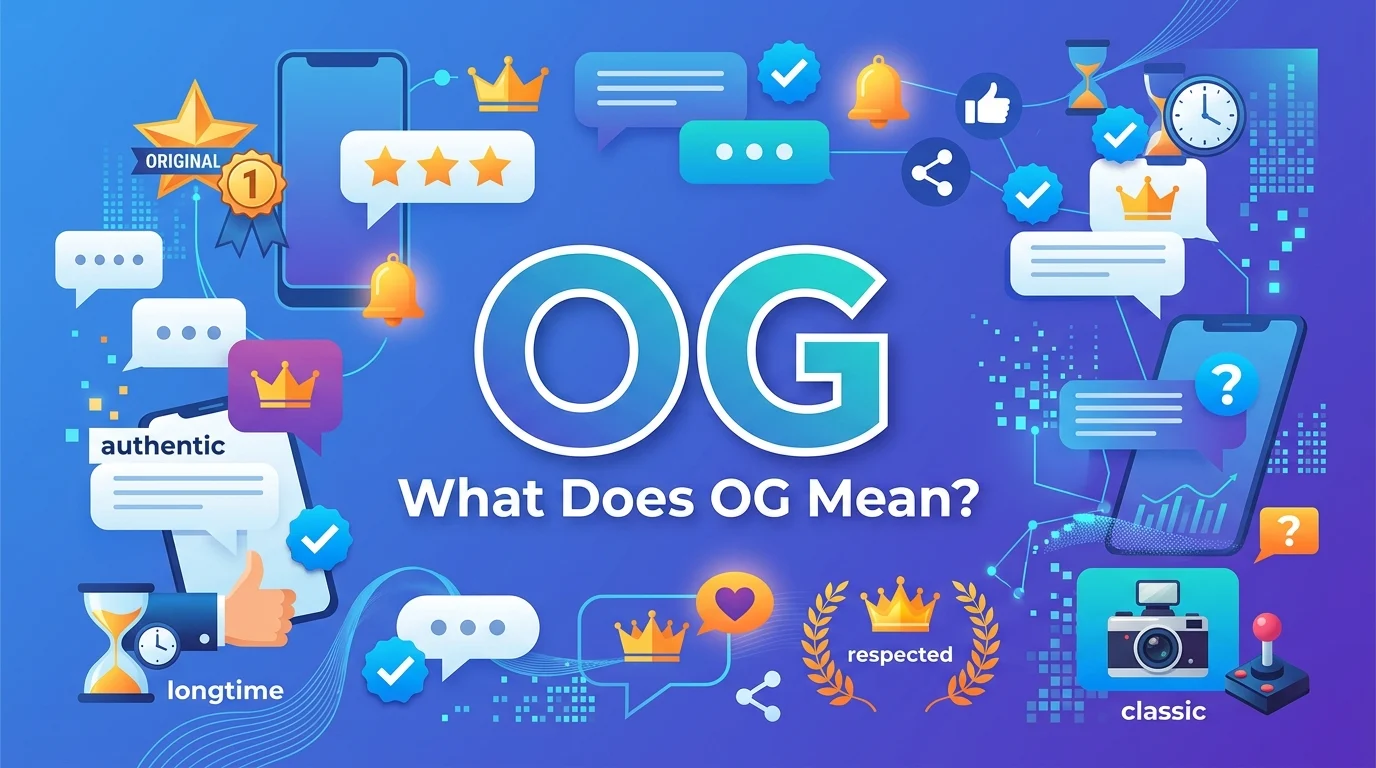

Someone might call you “an OG” after you have been around for a long time, supported a group from the beginning, or simply stayed true to yourself. The OG meaning is most commonly connected to “Original Gangster,” but in everyday slang, it often means an original, respected, authentic, or longtime member of a group or community. The exact meaning depends on context. In texts, comments, gaming chats, and social media, OG can be a compliment, a sign of respect, or a way to describe someone who has been there from the start.
What Does OG Mean?
In slang, OG most commonly means “Original Gangster.” However, people often use it more broadly to mean someone who is original, authentic, experienced, respected, or associated with the early days of something. The term is usually informal and often carries a positive tone.
| Detail | Explanation |
|---|---|
| Most Common Meaning | Original Gangster |
| Common Slang Sense | Original, authentic, respected, or longtime person |
| Tone | Usually respectful, friendly, or complimentary |
| Common Platforms | Texting, social media, gaming, group chats |
| Formal or Informal | Informal |
What Does OG Stand For?
The traditional expansion of OG is “Original Gangster.” The phrase has roots in African American slang and hip-hop culture, where it was associated with someone who was established, authentic, respected, or part of an earlier generation.
Over time, OG developed a broader slang meaning. Someone can now be called an OG without having anything to do with gangs. In casual conversation, the term often describes a person who has been involved with something for a long time or who is considered an original and respected member.
For example:
“Maria is an OG at this gym.”
Here, OG does not suggest anything criminal. It means Maria has been around for a long time and is recognized as one of the established people there.
OG Meaning in Text and Chat
When someone uses OG in text, they are usually giving someone a compliment or showing respect. The speaker may be referring to a person’s experience, loyalty, authenticity, or long-standing connection to something.
For example:
“You’re an OG for remembering that.”
This means the person is being praised for having been around long enough to remember something from an earlier period.
OG can also describe an original version of something:
“The OG version was better.”
In that sentence, OG means the original or classic version rather than the newer version.
So, when you see OG meaning in chat, look at what comes immediately before and after the term. It may describe a person, an object, a version of something, or an early participant.
Common Meanings of OG
Although the phrase “Original Gangster” is the traditional expansion, everyday usage has broadened considerably.
| Meaning | Context | Tone | Example |
| Original Gangster | Traditional slang | Respectful or cultural | “He’s an OG.” |
| Original person | Groups or communities | Positive | “She’s one of the OG members.” |
| Longtime or experienced person | Gaming, hobbies, communities | Respectful | “Ask Sam; he’s an OG here.” |
| Original or classic version | Products, media, ideas | Nostalgic | “I prefer the OG design.” |
These meanings overlap. Calling someone an OG often combines the ideas of being original, experienced, established, and respected.
How Context Changes the OG Meaning
Context is especially important because OG can describe either a person or a thing.
1. Describing a longtime member
“Jake is an OG in our Discord.”
Here, OG means Jake has been part of the community for a long time and is recognized as an established member.
2. Describing an original version
“Bring back the OG logo.”
Here, OG means the original or earlier logo.
3. Showing respect
“Thanks, OG.”
This can be a casual way of addressing someone with familiarity or respect.
4. Talking about nostalgia
“The OG games were unbeatable.”
In this case, OG refers to the older or original games and carries a nostalgic tone.
The surrounding words usually make the intended meaning clear. If OG comes before “member,” “player,” or a person’s name, it probably refers to an original or longtime person. If it comes before a product, game, design, or version, it usually means original or classic.
OG Meaning on Different Platforms
The basic slang meaning generally stays the same across social platforms, but the context can change how people use it.
Text Messages
In texting, OG often describes someone who has been around for a long time or deserves respect.
“You’re the OG for helping me with this.”
The tone is usually friendly and appreciative.
TikTok and Instagram
On social media, OG can refer to an early supporter, longtime follower, original creator, or an older version of something.
“OG fans remember this.”
Here, OG identifies people who were familiar with something before it became widely recognized.
Snapchat
On Snapchat, OG generally works like ordinary texting slang. Someone might call a longtime friend an OG or use it to describe an original version of something.
“You’re an OG 😂”
The emoji can make the expression sound playful rather than serious.
Gaming and Online Communities
Gamers and community members often use OG for someone who has been involved since an earlier period or who has substantial experience.
“She’s an OG player.”
That usually means she has been playing for a long time or was involved during an earlier era of the game.
Real Conversation Examples
1: Friends
Person A: “I still remember when we used to play that game after school.”
Person B: “Bro, you’re an OG 😂”
Meaning: Person B is jokingly praising their friend for remembering the earlier days.
2: Online Community
Person A: “Who knows how this server originally worked?”
Person B: “Ask Daniel. He’s an OG here.”
Meaning: Daniel has been part of the community for a long time and likely has useful experience.
3: Talking About an Older Version
Person A: “Which version of the app do you like?”
Person B: “The OG version was so much simpler.”
Meaning: Person B prefers the original version because it had qualities they associate with the earlier design.
What Tone Does OG Have?
OG is usually positive or respectful, especially when it describes a person. Calling someone an OG can suggest that you value their experience, loyalty, history, or authenticity.
It can also be playful:
“Okay, OG, calm down.”
Here, the word is teasing rather than seriously praising someone.
The tone can change through punctuation, emojis, and the relationship between the speakers. “Thanks, OG!” sounds appreciative, while “Sure, OG 🙄” could be sarcastic.
Is OG Rude?
Usually, no. OG is generally not rude, but its tone depends on the surrounding message and how familiar the speakers are with slang.
Is OG Offensive?
The slang term is commonly used today without its literal gangster association, but the original phrase behind the abbreviation comes from a specific cultural and linguistic context. Using OG casually to mean “original” or “respected” is generally not intended as an insult.
How to Reply to OG
Your best response depends on why someone called you an OG.
Friendly Replies
- “Haha, appreciate it!”
- “You already know.”
- “OG status 😂”
- “Respect!”
- “Been here from the start.”
Funny Replies
- “Finally, my expertise is recognized.”
- “Took you long enough to notice.”
- “OG certificate incoming.”
- “I accept this title.”
Replies When You Are Confused
If you are unsure what the person means, ask directly:
- “OG as in original?”
- “What do you mean by OG?”
- “Wait, are you calling me an OG?”
A quick clarification is better than guessing when the context is unclear.
When to Use OG
OG works best in casual communication where the people involved understand internet slang. You can use it with friends, in group chats, gaming communities, social media comments, and other informal conversations.
It is especially natural when talking about someone who has been around for a long time or something that is considered an original or classic version.
For example:
“She’s an OG member of the group.”
“I still prefer the OG design.”
The meaning is clear because the surrounding words establish what OG refers to.
When to Avoid OG
Avoid relying on OG when clarity matters more than casual style. Professional emails, academic writing, job applications, client communication, and formal announcements generally call for clearer wording such as “original,” “longtime member,” or “experienced.”
You should also be cautious with unfamiliar audiences. Someone who does not know internet slang may not understand what you mean by OG, especially if there is no context around it.
Slang is not automatically inappropriate; the key is choosing wording that fits your audience and purpose.
Common Mistakes About OG
| Common Mistake | Correct Understanding |
| Assuming OG always means “Original Gangster” literally | In everyday slang, it often means original, longtime, authentic, or respected. |
| Assuming OG only describes people | OG can also describe an original version, design, game, product, or idea. |
| Assuming OG is always serious | It can be sincere, playful, nostalgic, or sarcastic depending on context. |
Another common mistake is treating every use of OG as having exactly the same meaning. A person called an OG may be respected for their experience, while an “OG version” simply means the original version.
Similar Slang Terms
| Term | Meaning | Main Difference |
| OG | Original, longtime, authentic, or respected | Often emphasizes history or authenticity |
| Veteran | Someone experienced in a particular area | More directly emphasizes experience |
| OG member | Original or longtime member | Specifically focuses on membership or history |
| OG version | Original or classic version | Refers to a thing rather than a person |
| OG fan | Longtime or early fan | Focuses on someone’s history as a supporter |
These terms can overlap, but OG is more casual and flexible than words such as “veteran” or “original.”
Where Did OG Come From?
The traditional phrase behind OG is “Original Gangster,” a term associated with African American slang and hip-hop culture. Its meaning later broadened in everyday slang, allowing OG to describe people who are original, established, authentic, or respected without referring literally to gang membership.
The exact history of slang can be difficult to reduce to one specific starting point, so claims about a single creator or precise first use should be treated cautiously.
Today, the meaning readers encounter most often depends on context: OG can describe a longtime person, an original participant, or an older and familiar version of something.
Quick Recap
- OG traditionally stands for “Original Gangster.”
- In everyday slang, OG often means original, authentic, longtime, experienced, or respected.
- OG meaning in text is usually positive, friendly, or complimentary.
- An “OG member” is typically someone who has been around from an early period.
- An “OG version” usually means the original or classic version.
- The surrounding words, relationship, emojis, and tone help determine the intended meaning.
Frequently Asked Questions
What does OG mean in text?
In text, OG usually means original, longtime, authentic, experienced, or respected, depending on the conversation.
Is OG rude?
OG is generally not rude and is commonly used as a friendly or respectful way to describe someone.
What does OG mean on TikTok?
On TikTok, OG commonly refers to an original creator, longtime follower, early participant, or classic version of something.
How should you reply to OG?
You can respond with “Appreciate it,” “Haha, thanks,” or a playful reply such as “OG status!”
Can OG have different meanings?
Yes, OG can mean Original Gangster, an original person, a longtime member, or an original version of something.
Final Thoughts
The OG meaning is most commonly connected to “Original Gangster,” but everyday slang usually uses OG more broadly to describe someone or something original, authentic, established, or respected. In text, social media, gaming, and group chats, the term is generally positive and informal. Context matters because “OG member” refers to a longtime participant, while “OG version” usually means the original version. If you understand what the speaker is describing and pay attention to their tone, emojis, and surrounding words, the intended meaning is usually easy to recognize.
Discover More Post:
25+ Funny Responses to Who Is This (Funny, Clever, and …
Funny Responses to a Birthday Invitation | Witty, Clever …
25+ Funny Responses to Being Called Old That Will Make …






Pingback: Mashallah Meaning | What It Means in Text and Chat
Pingback: Et Al Meaning | What Does “Et Al.” Mean?
Pingback: Friday Meme | Meaning, Examples, Captions, and How to Reply
Pingback: Low Taper Fade Meme | Meaning, Origin, and Why It Became a Joke
Pingback: SYBAU Meaning in Text | What Does SYBAU Mean?
Pingback: MBN Meaning in Text | What Does MBN Mean?
Pingback: Resonate Meaning | What Does Resonate Mean?
Pingback: Luffy Meaning | What Does Luffy Mean?
Pingback: Mike Wazowski Meme | Meaning, Origin, Examples, and Uses
Pingback: In Lieu Of Meaning | Definition, Usage & Examples
Pingback: Debauchery Meaning | Definition, Examples, and Usage
Pingback: Seychelles Meaning | What Does Seychelles Mean?
Pingback: XFree Meaning | What Does XFree Mean in Text and Tech?
Pingback: Chula Meaning | What Does Chula Mean in Slang?
Pingback: Tiana Meaning | Origin, History, and What the Name Represents
Pingback: Sisi Meaning | What Does Sisi Mean in Text and Slang?
Pingback: Doxing Meaning | What Does Doxing Mean Online?
Pingback: Feening Meaning | What Does Feening Mean in Slang?
Pingback: ONG Meaning | What Does ONG Mean in Text and Slang?
Pingback: Elfin Meaning | Definition, Usage, Examples, and Context
Pingback: Clingy Meaning | What It Really Means in Text and Relationships
Pingback: Foist Meaning | Definition, Usage, Examples, and Context
Pingback: Voila Meaning | What It Means and How to Use It Correctly