
Have you ever had just 10 seconds to turn an awkward silence into a smile? It happens more often than you think. The good news is that making someone laugh is not about being a comedian. It is about timing, confidence, and understanding people.
In this guide, you’ll learn how to make someone laugh, how to make someone laugh in 10 seconds, and even how to make someone laugh instantly using simple, natural techniques that anyone can try. We’ll also cover how to make someone laugh without speaking, how to make someone laugh in 10 seconds without talking, and funny things to do to make someone laugh in everyday situations.
Whether you want to make someone laugh, how to make somebody laugh, how to make people laugh, or how to make someone laugh really hard, this guide combines proven communication tips, psychology-backed insights, and real-life examples to help you create genuine moments of laughter without forcing the joke.
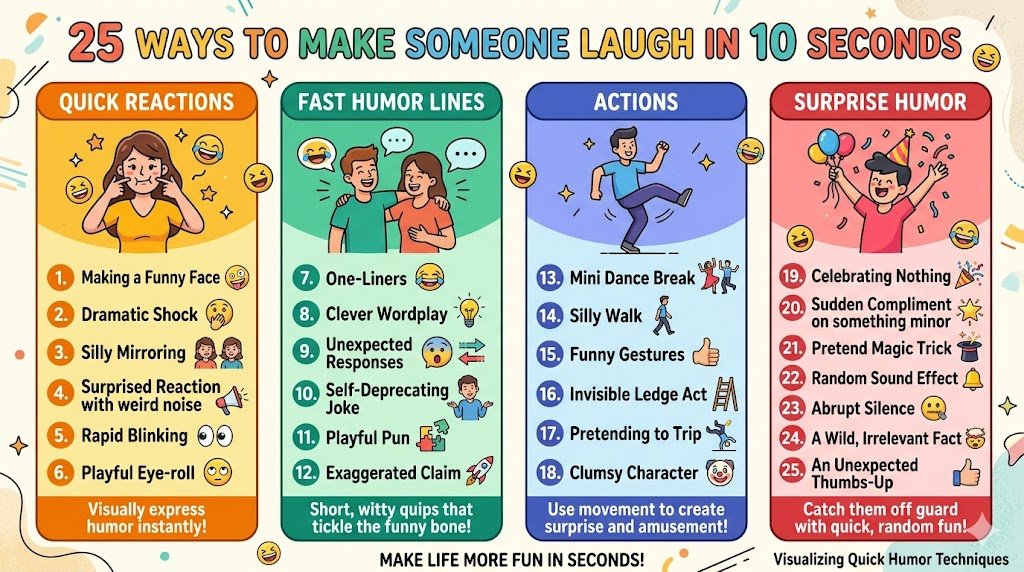
This article gives you 25 fast and funny ideas. Each one comes with a mini story, bold examples, and clear tips on when to use it or avoid it. You will learn how to create laughter in seconds, anywhere, anytime
What Does How to Make Someone Laugh in 10 Seconds Mean?
How to make someone laugh in 10 seconds means using quick humor techniques that work instantly.
These include:
- Short witty lines
- Funny facial expressions
- Quick actions or reactions
- Unexpected behavior
The goal is simple. Create laughter fast without overthinking. The shorter and more surprising the moment, the stronger the reaction
25+ Ways to Make Someone Laugh in 10 Seconds
1. Say Something Unexpected
Scenario: You are in a normal conversation and suddenly flip expectations. The person expects a serious answer, but you give a playful twist instead. That surprise creates instant laughter because their brain did not see it coming. Timing is everything here. Deliver it quickly and confidently.
“Good news, I survived today.”
“Barely, but still counts.”
✔ Use when: Casual conversations with friends
❌ Don’t use when: Serious or emotional discussions
2. Make a Quick Funny Face
Scenario: Instead of speaking, you suddenly widen your eyes and stretch your face in a silly way. The person notices instantly and laughs because it breaks the normal flow of interaction. Simple, fast, and effective without needing words.
“Wide eyes and exaggerated grin instantly.”
“Silent but hilarious reaction.”
✔ Use when: Friendly or relaxed environment
❌ Don’t use when: Formal setting
3. Give a Dramatic Reaction
Scenario: Someone says something simple, and you respond like it is the biggest news ever. You freeze, open your mouth wide, and stare dramatically. The exaggeration makes it funny instantly.
“Jaw drop like shocking news just happened.”
“Overreaction creates humor.”
✔ Use when: Light conversation
❌ Don’t use when: Topic is serious
4. Use a One Line Joke
Scenario: Keep it short and sharp. A quick one liner lands faster than a long joke. The simplicity makes it easy to deliver within seconds.
“I am not lazy. I am energy efficient.”
“That explains everything.”
✔ Use when: Quick banter
❌ Don’t use when: Someone is stressed
5. Mimic Their Action Playfully
Scenario: You copy their gesture in an exaggerated way. Not to mock, but to play. They see themselves in a funny mirror and laugh instantly.
“Copy their move with exaggeration.”
“Make it playful not rude.”
✔ Use when: Close friends
❌ Don’t use when: New or sensitive people
6. Use a Funny Sound Effect
Scenario: Someone drops something or does something small, and you add a cartoon sound effect. That unexpected audio twist creates instant humor.
“Add a dramatic ‘boing’ sound.”
“Instant cartoon moment.”
✔ Use when: Playful mood
❌ Don’t use when: Quiet or formal space
7. Pretend to Be Confused
Scenario: You act confused in an exaggerated way about something obvious. Your expression and reaction create humor because it feels absurd.
“Look around like nothing makes sense.”
“Confusion becomes comedy.”
✔ Use when: Casual chat
❌ Don’t use when: Important topic
8. Do a Quick Silly Gesture
Scenario: A sudden hand movement or body motion breaks the seriousness. It lasts only seconds but creates a strong reaction.
“Random small dance move.”
“Unexpected and funny.”
✔ Use when: Relaxed environment
❌ Don’t use when: Professional setting
9. Flip a Common Phrase
Scenario: Take a normal phrase and twist it slightly. The familiarity mixed with surprise creates humor fast.
“I woke up like this… unfortunately.”
“Self humor works instantly.”
✔ Use when: Casual conversations
❌ Don’t use when: Sensitive topics
10. React Before Thinking
Scenario: You give a fast, exaggerated reaction without pausing. The speed makes it funny because it feels natural and unexpected.
“Respond instantly with shock or excitement.”
“Speed creates humor.”
✔ Use when: Fast-paced chat
❌ Don’t use when: Thoughtful response needed
11. Use Props Quickly
Scenario: Grab something nearby and turn it into a joke instantly. The speed makes it funnier.
“Use a spoon like a microphone.”
“Mini performance in seconds.”
✔ Use when: Informal setting
❌ Don’t use when: Formal environment
12. Overreact to Small Things
Scenario: Someone says something small, and you treat it like a huge event. The contrast creates humor quickly.
“Act like it is life changing news.”
“Drama makes it funny.”
✔ Use when: Friends
❌ Don’t use when: Real serious issue
13. Use Self Humor
Scenario: Make yourself the joke. It feels safe and relatable, so people laugh instantly.
“I tried being productive today.”
“It did not go well.”
✔ Use when: Friendly environment
❌ Don’t use when: Low confidence situation
14. Quick Role Play
Scenario: Switch into a character for a few seconds. Even a tiny performance can create laughter fast.
“Act like a strict teacher for 5 seconds.”
“Then snap back.”
✔ Use when: Fun group
❌ Don’t use when: Formal setting
15. Use Visual Humor
Scenario: Show something funny on your phone or create a quick visual joke.
“Flash a funny image quickly.”
“Visual humor hits fast.”
✔ Use when: Social setting
❌ Don’t use when: Screen use inappropriate
16. Quick Sarcastic Reply
Scenario: A light sarcastic response adds humor instantly if done gently.
“Oh yes, totally planned that.”
“Even if it was not.”
✔ Use when: Friends understand tone
❌ Don’t use when: Misinterpretation risk
17. Sudden Energy Shift
Scenario: Change your tone or energy quickly. That contrast surprises people and creates laughter.
“Go from calm to excited instantly.”
“Energy shift shocks humor.”
✔ Use when: Casual chat
❌ Don’t use when: Calm mood required
18. Use Quick Callback
Scenario: Refer to something funny said earlier. It creates instant recognition humor.
“Bring back earlier joke quickly.”
“Callbacks always land.”
✔ Use when: Shared context exists
❌ Don’t use when: No shared memory
19. Play With Timing
Scenario: Pause for a second, then deliver something simple. Timing makes it funny.
“Pause… then say something obvious.”
“Delay creates humor.”
✔ Use when: Live conversation
❌ Don’t use when: Fast response needed
20. Use Exaggerated Compliment
Scenario: Give an over the top compliment that feels playful.
“You are the CEO of snacks.”
“Respect achieved.”
✔ Use when: Friendly setting
❌ Don’t use when: Misunderstanding possible
21. Pretend Mini Drama
Scenario: Create a tiny dramatic moment about nothing.
“Act like you lost everything.”
“Then smile.”
✔ Use when: Casual group
❌ Don’t use when: Real stress present
22. Use Quick Wordplay
Scenario: Play with words in a simple way.
“I am on a seafood diet.”
“I see food and eat it.”
✔ Use when: Light humor
❌ Don’t use when: Language barrier
23. Do a Fast Impression
Scenario: Copy a known voice or style quickly.
“Imitate a famous tone briefly.”
“Short and funny.”
✔ Use when: Audience recognizes it
❌ Don’t use when: Unknown reference
24. Break the Pattern
Scenario: Change behavior suddenly.
“Act normal then switch instantly.”
“Surprise equals laughter.”
✔ Use when: Casual interaction
❌ Don’t use when: Serious setting
25. Celebrate Nothing
Scenario: Suddenly celebrate something random.
“Cheer like you won something.”
“Confusion turns into laughter.”
✔ Use when: Friends or group
❌ Don’t use when: Quiet environment
26. How to Make Someone Laugh
Scenario: Use a simple joke or playful reaction to brighten someone’s mood.
“Pretend you forgot your own name.”
“Smile before revealing the joke.”
✔ Use when: Breaking the ice with friends or family
❌ Don’t use when: Someone is dealing with a serious situation
27. How to Make Someone Laugh in 10 Seconds
Scenario: Deliver a quick and unexpected joke before the moment passes.
“Say, ‘I have a secret.’”
“Then whisper, ‘I forgot it already.’”
✔ Use when: You need a fast laugh
❌ Don’t use when: The conversation is important
28. How to Make Someone Laugh Instantly
Scenario: Use an exaggerated reaction to something completely ordinary.
“Act shocked by a tiny crumb.”
“Then laugh at yourself.”
✔ Use when: Casual conversations with friends
❌ Don’t use when: The situation is emotional
29. How to Make Someone Laugh Without Speaking
Scenario: Rely on funny facial expressions or exaggerated body language.
“Raise one eyebrow dramatically.”
“Pretend you’re in slow motion.”
✔ Use when: Loud places or silent games
❌ Don’t use when: Clear communication is necessary
30. Make Someone Laugh
Scenario: Turn an ordinary moment into something playful.
“Celebrate finding your keys.”
“Act like you won a trophy.”
✔ Use when: Spending time with close friends
❌ Don’t use when: Someone wants privacy
31. How to Make Someone Laugh Really Hard
Scenario: Build suspense before delivering a funny twist.
“Start with a serious story.”
“End with a completely unexpected punchline.”
✔ Use when: Everyone is relaxed and joking around
❌ Don’t use when: The joke targets someone’s feelings
32. How to Make People Laugh
Scenario: Involve everyone with a simple and lighthearted challenge.
“Say, ‘Nobody smile for five seconds.’”
“Someone always laughs first.”
✔ Use when: Group hangouts or parties
❌ Don’t use when: The audience is unfamiliar with each other
33. How to Make Someone Laugh in 10 Seconds Without Talking
Scenario: Use only gestures, expressions, and physical comedy.
“Pretend you’re walking through invisible wind.”
“Keep a perfectly serious face.”
✔ Use when: Silent games or nonverbal fun
❌ Don’t use when: The setting requires complete focus
33. How to Make Somebody Laugh
Scenario: Share a playful moment that feels natural and spontaneous.
“Wave at someone by mistake.”
“Laugh at yourself first.”
✔ Use when: Casual social situations
❌ Don’t use when: The mistake could embarrass someone
35. Funny Things to Do to Make Someone Laugh
Scenario: Try harmless, goofy actions that catch people by surprise.
“Balance a spoon on your nose.”
“Bow like you just won an award.”
✔ Use when: Family gatherings or time with friends
❌ Don’t use when: Safety or professionalism is important
Top 10 Editor’s Choice Responses
- Good news I survived today
- Wide eyes and exaggerated grin
- Jaw drop dramatic reaction
- I am energy efficient not lazy
- Copy gesture playfully
- Add cartoon sound effect
- Self humor quick line
- Mini role play moment
- Quick sarcastic reply
- Celebrate nothing suddenly
FAQs
Q1: How can I make someone laugh quickly
A: Use short jokes, expressions, or quick actions that surprise them
Q2: What is the fastest way to make someone laugh
A: Use unexpected humor or exaggerated reactions
Q3: Does timing matter
A: Yes timing is the most important factor in fast humor
Q4: Can this work in professional settings
A: Only light humor works. Avoid anything distracting
Q5: Are facial expressions effective
A: Yes visual humor works instantly
Q6: Can I use these in texting
A: Yes short witty lines work best
Q7: What should I avoid
A: Avoid sensitive topics or serious situations
Final Thoughts
Making someone laugh in 10 seconds is not hard
You just need speed, surprise, and simplicity
Next time you see a dull moment, try a quick reaction or funny line
Even a small joke can create a big smile