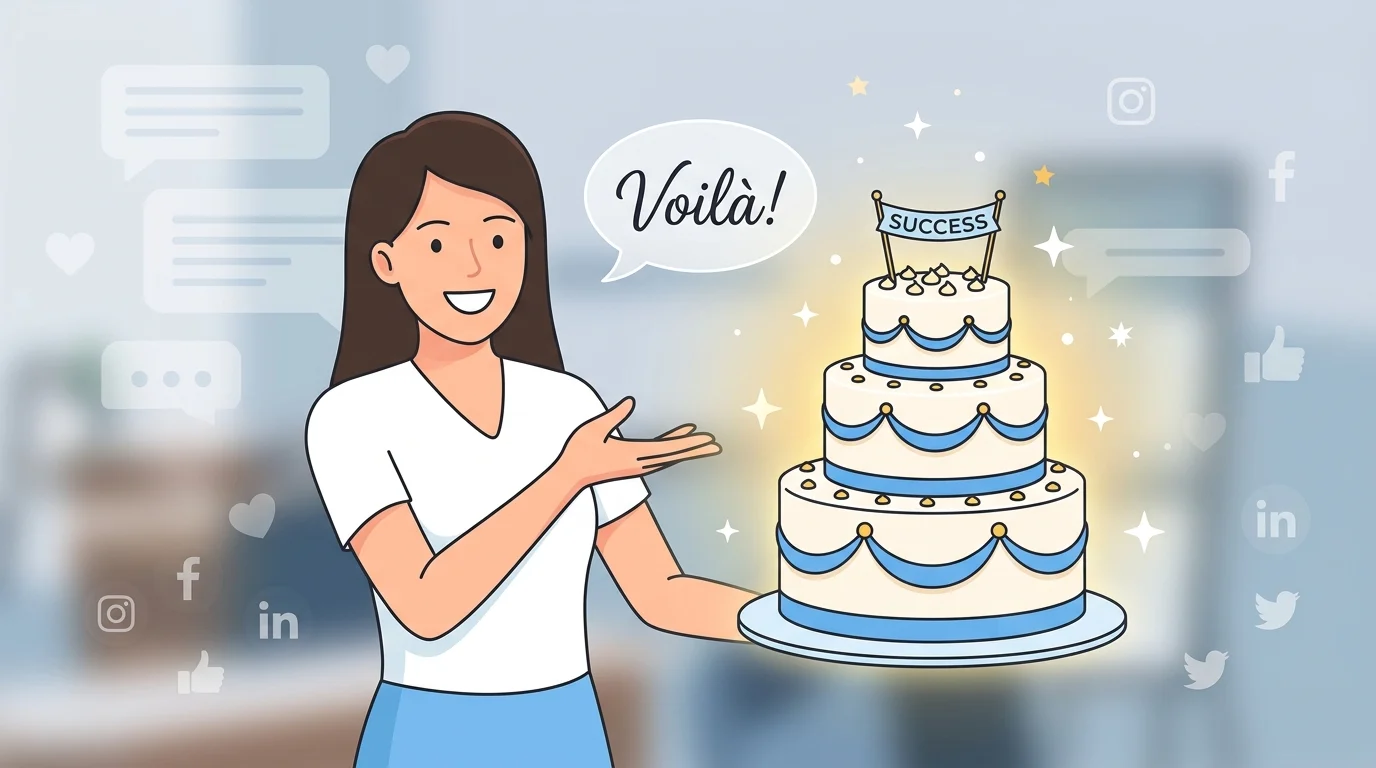

You might see someone finish a sentence with “voila!” after sharing a recipe, completing a project, or revealing a surprise. If you’re wondering about the voila meaning, the answer is straightforward: it’s an expression used to present or reveal something with a sense of completion, satisfaction, or surprise. Although it comes from French, it has become a familiar part of English conversation and writing.
The exact tone depends on the situation. Sometimes it’s playful, sometimes dramatic, and sometimes simply signals, “Here it is.” Understanding the context helps you recognize why someone used it and whether it’s appropriate for your own conversations.
What Does Voila Mean?
The most common voila meaning is “there it is,” “here it is,” or “there you have it.” People say it when introducing, revealing, or successfully finishing something.
| Detail | Explanation |
|---|---|
| Most Common Meaning | Here it is; there you have it |
| Full Form | Not an acronym or abbreviation |
| Tone | Friendly, playful, expressive, sometimes dramatic |
| Common Platforms | Text messages, social media, everyday conversation |
| Formal or Informal | Mostly informal but acceptable in many casual writing situations |
Unlike internet slang or texting abbreviations, voila is an actual French word that English speakers have adopted.
The Main Meaning of Voila
In French, voilà literally means something close to “there is” or “there are.” In English, however, people usually use voila as an interjection after revealing, completing, or presenting something.
The direct answer is simple:
- It introduces a finished result.
- It draws attention to something.
- It often expresses satisfaction or a little excitement.
For example:
“I added the final ingredient, stirred everything together, and voila—the soup was ready.”
Here, voila highlights the successful completion of the cooking process. It makes the moment feel more satisfying without changing the actual meaning of the sentence.
You’ll often hear it when someone:
- Finishes a recipe
- Shows a completed craft
- Solves a problem
- Reveals a surprise
- Gives a simple explanation
Alternative Meanings of Voila
Unlike many internet expressions, voila doesn’t have dozens of unrelated meanings. Its interpretation stays fairly consistent, although the exact purpose changes slightly depending on context.
| Meaning | Context | Tone | Example |
|---|---|---|---|
| Here it is | Presenting something | Neutral | “Voila, your order is ready.” |
| There you have it | Explaining a result | Friendly | “Follow these steps and voila!” |
| Ta-da | Revealing something dramatically | Playful | “Voila! My costume is finished.” |
Occasionally, people use voila sarcastically.
For example:
“I waited three hours, clicked one button, and voila… nothing happened.”
Here, the speaker uses the word ironically because the expected result never arrived.
How Context Changes the Meaning
Although the core definition stays the same, context changes how voila feels.
Things to pay attention to include:
- The surrounding words
- Whether someone is joking
- Emojis
- Punctuation
- Relationship between speakers
- What is being presented
Consider these examples:
Example 1
“I changed one setting and voila!”
Meaning: The problem was solved quickly.
Example 2
“Voila 😊”
Meaning: Friendly presentation with a cheerful tone.
Example 3
“Voila…”
Meaning: The trailing dots can suggest sarcasm, disappointment, or irony.
Example 4
“VOILA!”
Meaning: All capital letters make it sound dramatic or excited.
Even the punctuation changes the feeling. An exclamation mark usually adds enthusiasm, while an ellipsis may suggest frustration or humor.
Voila Meaning on Different Platforms
The basic meaning remains almost identical across most online platforms, so there aren’t major platform-specific differences.
Text Messages and WhatsApp
People use voila after sharing a finished result or giving instructions.
Example:
“I restarted the phone and voila—it works again.”
The tone is casual and conversational.
Instagram and TikTok
Creators often write voila in captions after revealing a makeover, recipe, artwork, outfit, or DIY project.
Example:
“Three easy steps and voila!”
The word adds excitement to the reveal.
Reddit and Online Forums
People sometimes use voila after explaining how they solved a technical issue or answered a question.
Example:
“Replace that setting, restart the app, and voila.”
Here it simply signals the successful outcome.
Real Conversation Examples
Friends
Person A: “Did you finally fix your bike?”
Person B: “Yep. Tightened the chain and voila!”
Meaning: The repair is complete.
Workplace
Person A: “How did the report get finished so quickly?”
Person B: “I automated the calculations and voila.”
Meaning: The task became much easier.
Social Media
Person A: “Your cake looks amazing!”
Person B: “Thanks! Frosting, sprinkles, and voila.”
Meaning: The decoration is complete.
Tone and Emotional Meaning
The word itself is neither rude nor offensive. Instead, its tone comes from how it’s used.
Is Voila Friendly?
Yes. Most of the time, voila sounds friendly and upbeat. It creates a lighthearted feeling after finishing something.
Can Voila Be Funny?
Yes. People often use it humorously when pretending a complicated process was actually simple.
For example:
“Worked on it for six hours… and voila!”
The humor comes from pretending the result appeared effortlessly.
Can Voila Sound Sarcastic?
Sometimes.
If the expected result doesn’t happen, speakers may use voila ironically.
Example:
“Pressed the update button and voila… another error.”
The sarcasm comes from the disappointing outcome rather than the word itself.
Is Voila Rude?
No. By itself, voila isn’t rude. Only the surrounding message determines whether it feels dismissive or mocking.
How to Reply to Voila
Since voila usually introduces a result, your reply should acknowledge what’s being shown.
Friendly Replies
- “Looks great!”
- “Nice work!”
- “That turned out really well.”
- “Perfect!”
- “I like how it came together.”
Funny Replies
- “Magic confirmed.”
- “That was easier than expected!”
- “You’re making it look too simple.”
- “Teach me your secret.”
- “Nicely done!”
Replies When You’re Confused
- “What changed?”
- “Can you explain what you did?”
- “How did you get that result?”
When to Use the Term
Voila works well in many casual situations.
Good places to use it include:
- Text conversations
- Family chats
- Social media captions
- Cooking discussions
- DIY projects
- Craft tutorials
- Before-and-after photos
- Casual workplace conversations
It’s especially effective when you’re presenting a finished result or revealing something unexpectedly.
When to Avoid the Term
Although voila isn’t inappropriate, there are situations where clearer wording works better.
Consider avoiding it in:
- Professional contracts
- Formal business reports
- Academic essays
- Legal documents
- Official announcements
- Sensitive conversations requiring precise language
Instead of saying “Voila,” you may simply write “The task is complete,” “Here are the results,” or “The solution is shown below.”
Common Mistakes
| Common Mistake | Correct Understanding |
|---|---|
| Thinking it is an acronym | It is a French expression, not an abbreviation. |
| Assuming it always sounds dramatic | It can also be completely neutral. |
| Using it in highly formal documents | Clearer wording is usually better in formal writing. |
Another common mistake is confusing voila with wala.
Many English speakers write “wala” because it sounds similar when spoken. However, the correct spelling is voila, or more accurately in French, voilà with an accent. In everyday English, leaving off the accent is common and generally accepted.
Similar Terms
| Term | Meaning | Main Difference |
|---|---|---|
| Ta-da | Expression after revealing something | More playful and theatrical |
| Here you go | Giving someone something | Usually directed at another person |
| There you have it | Presenting a conclusion | More conversational and explanatory |
| Done | Task completed | More direct and less expressive |
These expressions can often replace one another, but each creates a slightly different tone.
Origin and Popularity
Voila comes directly from the French word voilà, which English speakers borrowed long ago. The accent mark is often omitted in English writing, especially in casual messages and online conversations.
Although the spelling varies between voilà and voila, both are widely understood by English readers. The meaning has remained remarkably consistent: drawing attention to something that has just appeared, been completed, or been revealed.
Quick Recap
- Voila means “here it is” or “there you have it.”
- It is a French expression, not an internet acronym.
- People commonly use it after finishing or revealing something.
- Context, punctuation, and tone influence whether it sounds playful, neutral, or sarcastic.
- Replies usually acknowledge or compliment the completed result.
Frequently Asked Questions
What does voila mean in text?
It usually means “here it is” or “there you have it” after presenting a completed result or idea.
What does voila stand for?
It does not stand for anything because it is a borrowed French expression rather than an abbreviation.
What does voila mean on TikTok?
Creators commonly use it to reveal finished projects, transformations, recipes, or other completed results with enthusiasm.
How should you reply to voila?
Acknowledge the revealed result naturally with appreciation, praise, or a follow-up question if additional explanation is needed.
Can voila have different meanings?
Its core meaning stays consistent, but context can make it sound playful, dramatic, neutral, or sarcastic.
Final Thoughts
Understanding the voila meaning is easier than it first appears. The word simply introduces or reveals something, often with a sense of completion or satisfaction. Whether you’re reading it in a text message, seeing it in a social media caption, or hearing it in conversation, it usually means “here it is” or “there you have it.” Pay attention to punctuation, tone, and surrounding words to recognize whether it’s being used sincerely, humorously, or sarcastically. Used naturally, voila adds a touch of personality without making your message difficult to understand.