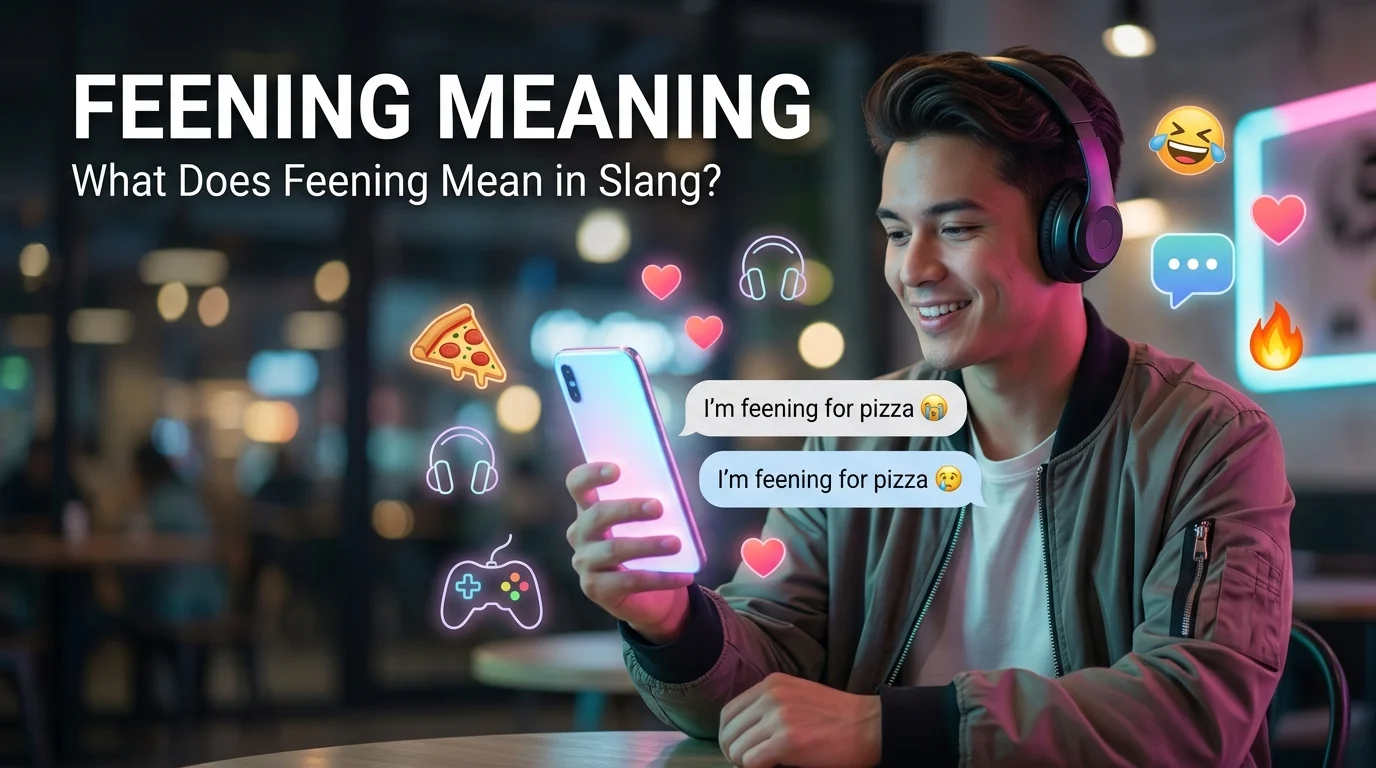

You might see someone text, “I’m feening for pizza,” or “I’m feening for your attention,” and wonder whether feening is a typo or actual slang. Feening means strongly craving, wanting, or desiring something, often with more intensity than simply saying you want it. It is an informal spelling associated with fiending, and the meaning can range from playful cravings for food or entertainment to more serious cravings involving substances. Context matters because the same word can sound funny, dramatic, flirtatious, or serious depending on what someone is talking about. Below, you’ll find the feening meaning in text, realistic examples, spelling differences, tone, and useful ways to respond.
What Does Feening Mean?
In slang, feening means wanting or craving something very badly. It can describe a strong desire for food, attention, entertainment, a person, or another experience. The spelling feening is informal; fiending is the more standard spelling.
| Detail | Explanation |
|---|---|
| Most Common Meaning | Strongly craving or wanting something |
| Standard Form | Fiending |
| Tone | Informal, intense, sometimes playful |
| Common Use | Texts, chats, social media, casual speech |
| Formal or Informal | Informal |
For example, “I’m feening for some fries” means the person really wants fries right now. The phrase usually adds emphasis: they are not merely interested in the fries; they have a strong craving for them.
The word can also be used for people or experiences. Someone might say, “I’m feening to see you,” meaning they strongly want to see that person.
The Main Feening Slang Meaning
The simplest way to understand the feening slang meaning is “craving something intensely.”
It is often used with for:
“I’m feening for some ice cream.”
It can also appear with to:
“I’m feening to play that game.”
In both cases, the speaker is emphasizing a strong desire.
The intensity does not always have to be serious. Friends may use feening dramatically for ordinary things such as snacks, a new episode, a vacation, or a favorite song.
However, the word has also been associated with addiction and substance cravings. Because of that background, the seriousness of the expression depends heavily on what follows it.
Feening vs. Fiending: Which Spelling Is Correct?
Fiending is the standard spelling, while feening is commonly used as an informal slang spelling.
The two forms are closely connected in usage and are often pronounced similarly. You may also encounter forms such as feenin’ or fiendin’ in very casual writing.
A useful distinction is:
- Fiending: better choice for standard or formal English.
- Feening: informal spelling commonly seen in casual speech, texting, lyrics, and social media.
- Feenin’: highly casual spelling that imitates pronunciation.
So if you are writing a school assignment, professional email, or formal article, fiending is the safer choice. In a casual text, feening can reflect the speaker’s informal style.
How Context Changes the Feening Meaning
The meaning becomes clearer when you look at the words around feening. Four common clues are especially useful.
1. What comes after it
“I’m feening for tacos” describes a food craving.
“I’m feening for you” usually expresses a strong desire to see or be close to someone, and it can sound romantic or flirtatious.
2. The conversation topic
If friends are discussing a new video game and someone says, “I’m feening for the update,” they probably mean they are eagerly waiting to play it.
If the conversation concerns substance use, the same word may have a much more serious meaning.
3. Emojis and punctuation
“I’m feening for cake 😂” sounds playful.
“I’m feening for you 😭” may communicate longing, affection, or exaggerated emotion.
An emoji can make an otherwise intense statement feel humorous rather than serious.
4. The relationship between speakers
A close friend might say, “You’re feening for that new phone,” teasing someone who keeps talking about it.
A romantic partner saying, “I’m feening to see you,” may be expressing genuine longing.
Feening Meaning in Text and Social Media
The feening meaning in text is usually straightforward: someone wants or craves something strongly.
The spelling is particularly suited to casual communication because texting often reflects how people speak rather than following formal spelling conventions.
On platforms such as TikTok, Instagram, Snapchat, and WhatsApp, the basic meaning generally stays the same. There is no separate universal platform-specific definition that changes feening into a completely different term.
For example:
- Texting: “I’m feening for Chinese food.”
- TikTok: “Everyone is feening for the next episode.”
- Snapchat: “I’m feening to go home 😭.”
- Instagram: “Lowkey feening for summer already.”
In each example, the speaker is expressing a strong desire or craving.
Real Conversation Examples
1: Friends
Person A: “You want anything from the store?”
Person B: “Yeah, I’m feening for those spicy chips.”
Meaning: Person B really wants the chips and is emphasizing the craving.
2: Social Media
Person A: “The next season doesn’t come out for months.”
Person B: “I know, I’m already feening for it 😭.”
Meaning: Person B is eagerly waiting for the next season and is using feening dramatically.
3: Dating Conversation
Person A: “When are you coming back?”
Person B: “Soon. I’m feening to see you too.”
Meaning: Person B strongly wants to see the other person and may be expressing affection or romantic longing.
Is Feening Rude or Offensive?
Feening is not inherently rude or offensive. In casual conversations, it is often playful or simply a stronger way to say “really wanting something.”
The word can become more serious when it refers to substance cravings or compulsive behavior. In those situations, joking about the term may be inappropriate.
The tone also changes with wording. “I’m feening for pizza 😂” is lighthearted, while “He’s feening for another hit” describes a potentially serious situation.
So the surrounding subject matters more than the word itself.
Is Feening Flirty?
It can be flirty when the object of the desire is a person, but the word itself is not automatically romantic.
For example:
“I’m feening for you.”
Depending on the relationship, this could mean “I really want to see you,” express physical attraction, or simply communicate strong longing.
By contrast, “I’m feening for your homemade cookies” has no romantic meaning. The object of the craving determines much of the tone.
How to Reply to Feening
Your response should match what the person says they are craving.
Friendly Replies
- “Same, I could really go for that.”
- “Then you better get some!”
- “I know exactly what you mean.”
- “What are you waiting for?”
- “Let’s go get it.”
Funny Replies
- “That craving sounds serious 😂.”
- “You’re feening way too hard.”
- “At this point, just order it.”
- “Someone needs to get you some immediately 😭.”
Replies When You Are Confused
If you are unsure what they mean, ask directly:
- “Feening for what?”
- “Wait, what are you craving?”
- “You mean you really want it?”
These replies keep the conversation natural without assuming what the person intended.
When to Use the Term
Feening works best in casual communication where the other person understands slang.
You might use it when texting friends, chatting in group conversations, commenting on social media, or talking casually with someone you know well. It can also work in creative dialogue when you want a character’s speech to sound informal.
Think about your audience before using it. Slang is most effective when it fits the relationship and the surrounding conversation.
When to Avoid Feening
Use clearer wording when the audience may not understand the slang or when precision matters.
Avoid feening in situations such as:
- Professional emails
- Job applications
- Academic assignments
- Formal announcements
- Client communication
- Official documents
- Sensitive conversations where wording could be misunderstood
This does not mean slang is always inappropriate. It simply means “craving,” “strongly wanting,” or “eager for” may communicate your meaning more clearly in formal settings.
Common Mistakes About Feening
| Common Mistake | Correct Understanding |
| Assuming it always means drug cravings | It can describe ordinary cravings or strong desires in casual speech. |
| Treating feening as the standard spelling | Fiending is the standard form; feening is informal slang spelling. |
| Assuming it is always serious | It is often used humorously or dramatically for everyday wants. |
Another common confusion is mixing up feening with feigning. They are not the same word. Feigning means pretending or faking something, while feening refers to craving or strongly wanting something.
For example, “She was feigning interest” means she was pretending to be interested. “She was feening for dessert” means she really wanted dessert.
Similar Slang Terms
| Term | Meaning | Main Difference |
| Fiending | Craving or strongly wanting something | Standard spelling of the related term |
| Craving | Having a strong desire for something | More neutral and widely understood |
| Jonesing | Strongly wanting or craving something | Informal slang with a similar sense |
| Yearning | Deeply wanting someone or something | More emotional and less slang-heavy |
| Itching for | Eagerly wanting something to happen | Often suggests impatience or anticipation |
Among these, fiending is the closest match because it is the standard form behind the informal feening spelling.
Where Did Feening Come From?
The exact history of the slang spelling feening is not completely settled. It is generally understood as an informal spelling connected to fiending, which comes from fiend and developed a sense involving an overpowering desire or craving.
The term has long appeared in informal speech and music-related slang, particularly in contexts involving intense cravings. Over time, its everyday use broadened, so people can now describe cravings for ordinary things such as food, entertainment, attention, or experiences.
Because the spelling is informal, you should not treat feening as a separate formal English word with a universally fixed definition.
Quick Recap
- Feening means strongly craving or wanting something.
- It is an informal spelling related to fiending.
- The word can describe ordinary cravings, intense desire, or more serious cravings depending on context.
- It can sound playful, dramatic, romantic, or serious.
- Use feening mainly in casual communication and choose clearer wording in formal situations.
Frequently Asked Questions
What does feening mean in text?
Feening in text usually means strongly craving or wanting something, often with an informal or exaggerated tone.
Is feening rude?
Feening is generally not rude, although its tone can become serious or inappropriate when discussing sensitive subjects.
What does feening mean on TikTok?
On TikTok, feening generally means intensely wanting, craving, or eagerly anticipating something in a casual way.
How should you reply to feening?
Ask what they are craving or respond playfully if the conversation clearly shows what they mean.
Can feening have different meanings?
Feening usually expresses intense desire, but the seriousness changes according to the subject and surrounding conversation.
Final Thoughts
The feening meaning is essentially having a strong craving or wanting something very badly. In casual texts and social media, it can describe everything from craving food to eagerly wanting attention, entertainment, or time with someone. The spelling is informal and is closely connected to the standard word fiending. Context is the key to understanding its tone, especially because the term can sometimes refer to more serious cravings. If you use feening, keep it casual and consider whether your audience understands slang; otherwise, “craving” or “strongly wanting” is clearer.
Discover More Post:
Glaze Meaning Slang | The Complete Guide to Understanding …
FN Meaning in Slang | The Complete Guide to This Viral …
304 Meaning Slang | What It Really Means & How It’s Used