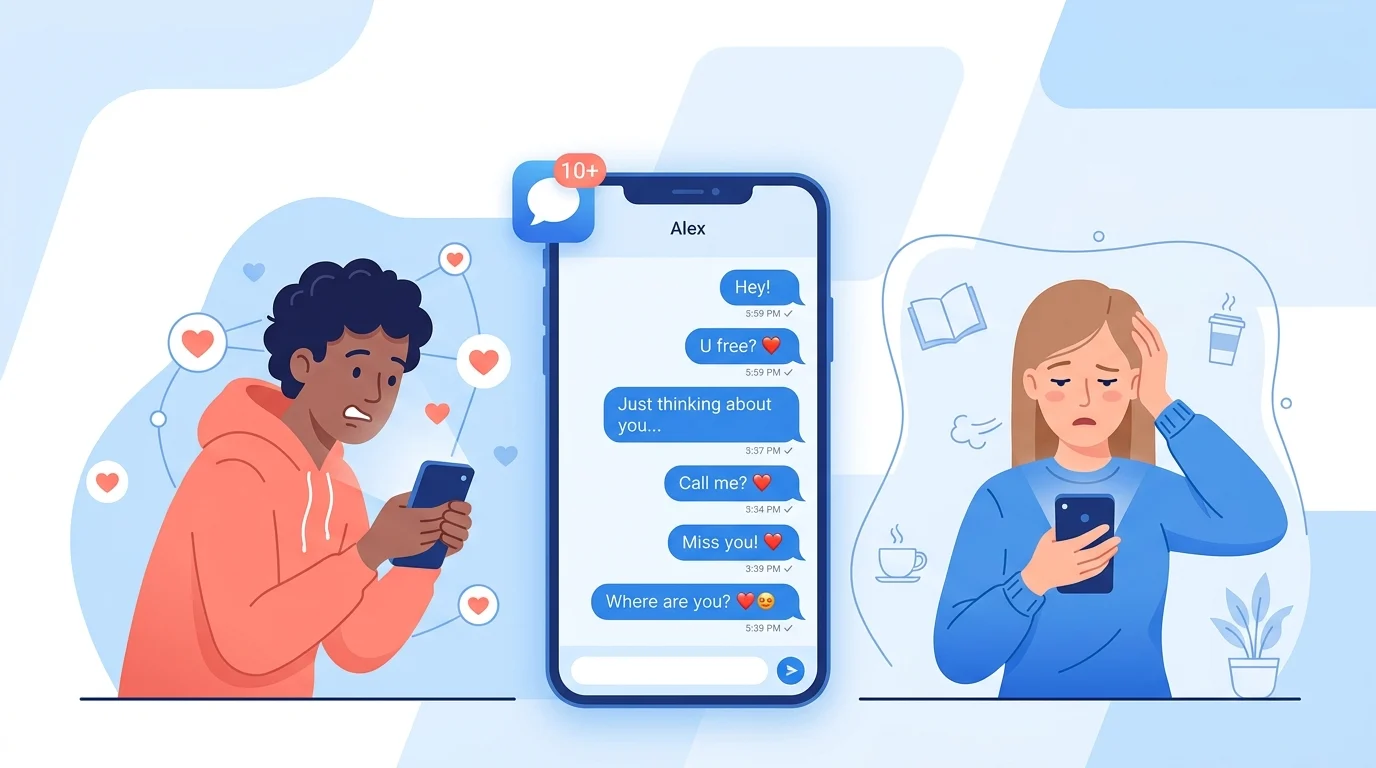

You might see someone describe a friend, partner, or even themselves as “clingy” and wonder whether it’s an insult, a joke, or simply an observation. The most common clingy meaning is someone who wants more attention, contact, or reassurance than another person feels comfortable giving. Whether the word sounds caring, playful, or critical depends heavily on the situation and the relationship between the people involved.
Understanding how people use “clingy” in text messages, social media, and everyday conversations helps you interpret the tone correctly and respond appropriately. Here’s what the term usually means, when it can have different shades of meaning, and how context changes everything.
What Does Clingy Mean?
The word clingy describes a person who becomes overly dependent on someone else’s time, attention, affection, or reassurance. It is an adjective rather than an abbreviation or acronym, so it has no full form.
In casual conversations, people often use it when someone texts constantly, dislikes spending time apart, or frequently seeks validation.
| Detail | Explanation |
|---|---|
| Most Common Meaning | Needing excessive attention or emotional reassurance |
| Full Form | Not applicable; “clingy” is a regular English word |
| Tone | Usually negative, sometimes playful or affectionate |
| Common Platforms | Text messages, TikTok, Instagram, WhatsApp, dating apps |
| Formal or Informal | Mostly informal |
The Main Clingy Meaning Explained
When someone calls a person clingy, they usually mean that the person wants more closeness or communication than others expect.
The word often appears in discussions about dating, friendships, or family relationships. While it can describe genuine emotional dependence, people also use it casually to tease someone who sends several messages in a row or wants frequent updates.
Example:
Person A: “You texted me six times while I was in class.”
Person B: “Sorry, I didn’t mean to sound clingy.
Meaning: Person B recognizes that their repeated messages may have seemed overly dependent or impatient.
Being called clingy doesn’t automatically mean you’ve done something wrong. People’s expectations for communication and personal space differ, so what feels clingy to one person may feel perfectly normal to another.
Alternative Meanings of Clingy
Although the core meaning stays consistent, the tone changes depending on the conversation.
| Meaning | Context | Tone | Example |
|---|---|---|---|
| Emotionally dependent | Dating or friendships | Negative | “He’s too clingy after only one week.” |
| Wants frequent communication | Texting or social media | Neutral to playful | “You’re so clingy when I don’t reply.” |
| Affectionate and attached | Close couples joking | Playful | “I’m a little clingy because I missed you.” |
Outside personal relationships, people sometimes describe pets, children, or even certain fabrics as clingy. However, when people search for “clingy meaning,” they usually want the relationship or texting definition.
How Context Changes the Meaning
The word clingy rarely has a fixed emotional tone. Small details can completely change how it sounds.
Relationship Between the People
A longtime partner saying, “You’re clingy today 😂,” may simply be teasing.
The same comment from someone you’ve just started dating could suggest they’re uncomfortable with the amount of attention they’re receiving.
Surrounding Words
Compare these examples:
- “She’s clingy because she gets anxious when I’m away.” — focuses on emotional behavior.
- “You’re clingy today 😂.” — playful teasing.
- “He’s way too clingy for me.” — criticism or incompatibility.
- “My dog is clingy whenever it storms.” — describes behavior without criticizing.
Emojis and Punctuation
Emojis can soften the message.
- “You’re clingy ❤️” often sounds affectionate.
- “You’re clingy…” may sound annoyed.
- “You’re CLINGY!” emphasizes frustration or exaggeration.
Timing
If someone says you’re clingy after you’ve sent several unanswered messages, they may be asking for more personal space. If they say it while joking during a lighthearted conversation, the meaning is usually much less serious.
Clingy Meaning in Text Messages and Social Media
Unlike many internet slang terms, the meaning of clingy stays fairly consistent across platforms.
Text Messages and WhatsApp
People commonly use clingy when discussing response times or communication habits.
Example:
“Don’t think I’m clingy—I just wanted to check if you got home safely.”
The tone is often self-aware or apologetic.
TikTok and Instagram
On social media, creators frequently discuss “clingy behavior,” “clingy partners,” or “clingy friendships.”
Sometimes users jokingly describe themselves as clingy to highlight affectionate behavior rather than emotional dependence.
Example:
“I’m clingy when I actually like someone.”
The tone is usually humorous or relatable.
Dating Apps
On dating platforms, someone may say they’re “not looking for someone clingy” to express a preference for independence and healthy personal boundaries.
Real Conversation Examples
1: Friends
Person A: “You’ve called me four times already.”
Person B: “I know. Sorry if I seemed clingy.”
Meaning: Person B realizes they may have been asking for too much attention.
2: Dating
Person A: “I like talking to you every day.”
Person B: “That’s sweet. Just don’t worry if I take a while to reply.”
Meaning: Person B sets expectations without accusing the other person of being clingy.
3: Family
Person A: “Our puppy follows everyone around.”
Person B: “Yeah, she’s really clingy.”
Meaning: The word simply describes attached behavior without criticism.
Tone and Emotional Meaning
Whether clingy feels rude depends almost entirely on how it’s delivered.
Is Clingy Rude?
It can be.
Calling someone clingy during an argument may sound dismissive or hurtful because it suggests they are emotionally demanding. However, among close friends or partners, the same word can be used jokingly without causing offense.
Is Clingy Flirty?
Sometimes.
People occasionally call themselves “a little clingy” while flirting to suggest they enjoy spending lots of time with someone.
Likewise, partners may affectionately tease each other by saying, “You’re so clingy,” accompanied by laughing or heart emojis.
Is Clingy Offensive?
Generally, no.
The word is not considered offensive in itself, but it can hurt someone’s feelings if used to criticize their emotional needs or attachment style.
How to Reply When Someone Calls You Clingy
Your response depends on whether the comment is playful, serious, or confusing.
Friendly Replies
- “I guess I just enjoy talking to you.”
- “Fair enough. I’ll give you some space.”
- “Didn’t realize I was doing that.”
- “Thanks for telling me honestly.”
Funny Replies
- “I’m not clingy—I’m just very enthusiastic.”
- “I’ll send only three messages next time.”
- “Consider it premium customer support.”
- “You noticed already?”
Replies When You’re Confused
- “What made you feel that way?”
- Can you explain what you mean?”
- “I’d like to understand your perspective.”
These replies encourage healthy communication instead of turning the conversation into an argument.
When to Use the Term
Clingy works best in casual conversations where everyone understands the tone.
Good situations include:
- Texting close friends.
- Talking about dating experiences.
- Social media discussions.
- Casual conversations about relationship dynamics.
- Lighthearted jokes with people who know your sense of humor.
Even then, think about how the other person might interpret it.
When to Avoid Using the Term
Sometimes a more specific description is kinder and clearer.
Avoid calling someone clingy when:
- Writing professional emails.
- Communicating with clients or coworkers.
- Discussing sensitive emotional situations.
- Speaking with someone you don’t know well.
- Giving serious relationship feedback without explanation.
Instead of simply saying “You’re clingy,” explaining the specific behavior—such as frequent messaging or difficulty respecting boundaries—often leads to a more productive conversation.
Common Mistakes
| Common Mistake | Correct Understanding |
|---|---|
| Thinking clingy means someone always loves deeply | The word usually refers to excessive dependence or attention-seeking behavior. |
| Assuming it’s always an insult | Friends and couples sometimes use it playfully. |
| Using it without considering context | Tone, relationship, and wording determine how it is received. |
Similar Terms People Confuse With Clingy
| Term | Meaning | Main Difference |
|---|---|---|
| Needy | Constantly seeks support or validation | Usually sounds more negative than clingy. |
| Attached | Emotionally close to someone | Doesn’t necessarily suggest excessive dependence. |
| Possessive | Wants control over another person | Stronger and more controlling than clingy. |
| Affectionate | Shows warmth and love | Positive trait without implying unhealthy dependence. |
Origin and Popularity
Clingy comes from the English verb cling, meaning to hold tightly or stay very close. Over time, people began using clingy figuratively to describe someone who appears emotionally attached or overly dependent on another person.
Its relationship meaning has become common in everyday English, especially in conversations about dating, friendships, and texting. The exact point when this figurative use became popular is difficult to identify, so no single origin or creator can be credited.
Quick Recap
- Clingy usually means wanting more attention or reassurance than another person feels comfortable giving.
- The word has no full form because it is a standard English adjective.
- Context determines whether it sounds playful, affectionate, or critical.
- It’s commonly used in texts, social media, and relationship conversations.
- Thoughtful replies and clear communication help avoid misunderstandings.
Frequently Asked Questions
What does clingy mean in text?
It usually describes someone who frequently seeks attention, reassurance, or communication beyond what another person expects.
Is clingy rude?
It can sound rude when used critically, but close friends or partners sometimes use it jokingly and affectionately.
What does clingy mean on TikTok?
It usually refers to affectionate or overly attached relationship behavior, often presented humorously or as relatable content.
How should you reply to clingy?
Respond calmly by acknowledging the comment, asking for clarification, or discussing communication expectations respectfully.
Can clingy have different meanings?
Yes, although the core idea stays similar, its emotional tone changes depending on context, relationship, and wording.
Final Thoughts
The most common clingy meaning describes someone who seeks more attention, closeness, or reassurance than another person prefers. While the word often carries a mildly negative tone, it isn’t always meant as an insult. Friends and romantic partners sometimes use it playfully, while serious conversations may require more careful wording. Paying attention to context, emojis, relationship dynamics, and the overall conversation helps you understand what the speaker really means. When used thoughtfully, the term can describe behavior without creating unnecessary misunderstandings.