
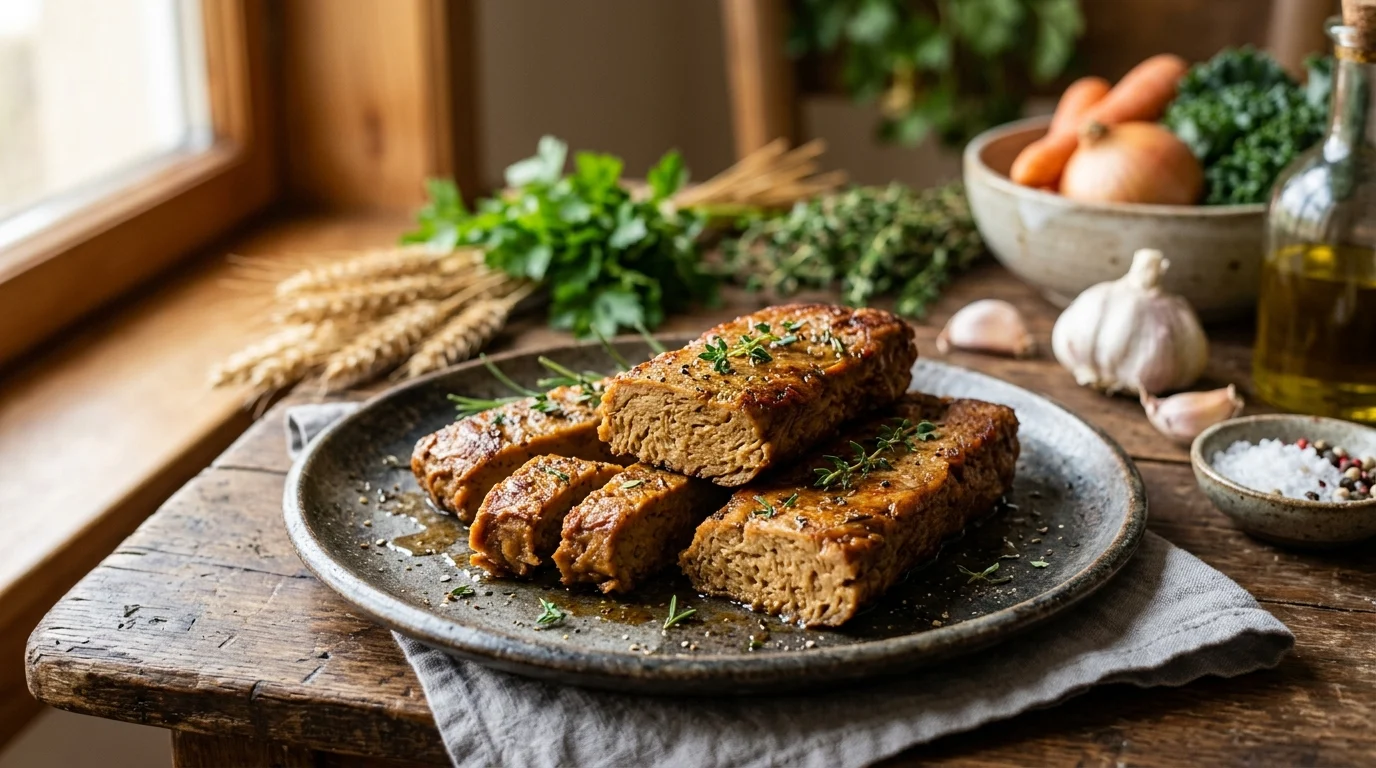

If you’ve seen seitan on a restaurant menu or in a recipe and wondered what it actually means, the answer is fairly simple: seitan is a plant-based food made primarily from wheat gluten. It has a firm, chewy texture that can resemble meat, which makes it popular in vegetarian and vegan cooking. The seitan meaning is not related to internet slang, texting, or a social media abbreviation. Instead, it refers to a specific food traditionally associated with East Asian and vegetarian cuisine. Understanding what it is, what it tastes like, and how it is prepared makes menus and recipes much easier to understand.
What Does Seitan Mean?
Seitan refers to a food made from wheat gluten, the main protein in wheat. The gluten is separated from much of the wheat flour’s starch and then cooked, often in a seasoned broth. Because it develops a dense and chewy texture, seitan is commonly used as a meat substitute in vegetarian and vegan dishes.
| Detail | Explanation |
|---|---|
| Most Common Meaning | A wheat-gluten-based plant food |
| Main Ingredient | Wheat gluten |
| Typical Texture | Firm, chewy, and meat-like |
| Common Use | Vegetarian and vegan cooking |
| Slang Meaning | None commonly recognized |
Unlike many internet terms, seitan meaning in text usually remains the literal food meaning. If someone says, “I made seitan for dinner,” they are almost certainly talking about the food rather than using a hidden abbreviation or slang expression.
What Is Seitan Made From?
The primary ingredient in seitan is wheat gluten, the protein-rich portion of wheat flour. Traditional preparation involves mixing wheat flour with water and washing away much of the starch, leaving a stretchy gluten mass. Modern recipes often use vital wheat gluten, a concentrated form of wheat gluten that makes homemade preparation easier.
The gluten dough can then be combined with ingredients such as soy sauce, vegetable broth, garlic, onion, spices, or herbs. It may be steamed, simmered, baked, grilled, or pan-fried depending on the recipe.
The result is usually dense and chewy rather than soft. Its texture is one reason seitan works particularly well in foods designed to replace chicken, beef, or other firm meats.
For example, a recipe might say, “Slice the seitan into strips and stir-fry it with vegetables.” Here, seitan simply identifies the protein-rich plant food being cooked with the vegetables.
What Does Seitan Taste Like?
Seitan has a relatively mild flavor on its own. Its taste depends heavily on the ingredients and cooking method used to season it.
Plain seitan can have a subtle wheat-like or savory flavor, but seasoned versions can taste much richer. Soy sauce, broth, spices, garlic, smoked seasonings, and marinades can give it a distinctly savory character.
Its texture is often more noticeable than its natural flavor. Properly prepared seitan can be springy, chewy, or firm, making it useful in dishes where texture matters.
This also means two seitan products can taste quite different. A homemade seitan loaf, a grilled seitan steak, and packaged seitan strips may have very different flavors and textures even though they share the same basic ingredient.
Is Seitan a Slang Term?
No. Seitan is not commonly recognized as internet slang, texting slang, or an acronym.
Searches such as “seitan slang meaning,” “seitan in chat,” or “seitan full form” can be misleading because the word looks unusual to English speakers. However, it is primarily the name of a food.
There is also no standard “seitan full form” because seitan is not an abbreviation. Treating it like terms such as “LOL” or “BRB” would therefore be incorrect.
If someone uses the word in a message, look at the surrounding conversation. A discussion about recipes, restaurants, vegan food, groceries, or dinner almost certainly indicates the food.
How Context Helps You Understand Seitan
Although seitan generally has one established meaning, context can tell you exactly how the speaker is using the word.
1. Food conversation
“Have you tried seitan tacos?”
The speaker is discussing a dish made with seitan.
2. Restaurant conversation
“The restaurant has seitan sandwiches.”
Here, seitan identifies the meat alternative used in the sandwich.
3. Cooking conversation
“I’m making seitan from vital wheat gluten.”
The term refers to the ingredient and preparation process.
4. Casual text
“Want me to bring some seitan for dinner?”
The meaning is still the food, with the message simply using the term in an everyday conversational setting.
Unlike many slang expressions, punctuation or capitalization usually does not dramatically change the meaning. The topic of the conversation is the most useful clue.
Seitan Meaning on Different Platforms
There is generally no major platform-specific meaning for seitan on TikTok, Snapchat, Instagram, WhatsApp, Reddit, Discord, or ordinary text messaging.
On social platforms, the word may appear in recipe videos, restaurant discussions, vegan cooking posts, food reviews, or comments about plant-based meals. The platform changes the setting, but not the basic definition.
For example:
- TikTok: “This seitan recipe looks amazing” refers to the food.
- Instagram: “My homemade seitan came out so chewy” refers to cooking.
- Snapchat: “We’re getting seitan bowls tonight” refers to a meal.
- Text messages: “Do you want seitan or tofu?” refers to choosing a food.
If you encounter the word in an unusual context, do not automatically assume it has a secret social media meaning. Check the surrounding conversation first.
Real Conversation Examples
1: Friends
Person A: “What are you ordering?”
Person B: “Probably the seitan burger.”
Meaning: Person B is choosing a burger made with seitan rather than conventional meat.
2: Cooking
Person A: “What protein are you using for the stir-fry?”
Person B: “Seitan. I want something chewy.”
Meaning: The speaker is using seitan as the main plant-based protein in the dish.
3: Group Chat
Person A: “I’m bringing food for everyone. Any preferences?”
Person B: “Could you get seitan for me?”
Meaning: Person B is asking for a seitan-based food option, likely because they prefer or eat plant-based foods.
Is Seitan Healthy?
Whether seitan is a good choice depends on the overall product, recipe, and your individual dietary needs.
Seitan can provide substantial protein because wheat gluten is protein-rich. However, packaged or heavily seasoned versions can contain significant amounts of sodium, and their nutritional profiles vary considerably.
It is also important to remember that seitan is made from wheat gluten. Therefore, it is not appropriate for people who need to avoid gluten, including people with celiac disease or certain gluten-related dietary restrictions.
The simplest approach is to check the ingredient list and nutrition information rather than assuming every seitan product has the same nutritional profile.
How to Use Seitan
Seitan is versatile because it can take on different shapes and textures depending on how it is prepared.
Common uses include:
- Stir-fries
- Sandwiches and wraps
- Tacos
- Grain bowls
- Curries
- Stews
- Skewers
- Grilled dishes
- Sliced deli-style preparations
- Plant-based versions of meat-centered meals
Its mild flavor also makes it suitable for marinades and sauces. For example, you can marinate seitan in a savory sauce before grilling it, or simmer it with vegetables and spices in a stew.
The key is that seitan does not have to be prepared one specific way. Its final flavor depends greatly on seasoning and cooking.
When to Use the Word Seitan
Use seitan when you are specifically talking about the wheat-gluten food.
It is appropriate in:
- Casual conversations about food
- Restaurant orders
- Grocery shopping
- Recipes
- Cooking discussions
- Vegan or vegetarian food conversations
- Food reviews
- Menu descriptions
Because it is the established name of a food, there is no special slang etiquette involved. You generally do not need to replace it with another term in casual conversation.
When to Avoid the Term
There is no need to avoid the word simply because it is unfamiliar to some readers. However, clearer wording can help when communicating with someone who may not know what seitan is.
For example, on a restaurant menu or in a recipe intended for a broad audience, you could write “seitan, a wheat-gluten-based meat alternative” the first time you mention it.
In formal writing, the word itself is perfectly acceptable when the subject is food. The important thing is to explain it when your audience may not recognize the term.
Common Mistakes About Seitan
| Common Mistake | Correct Understanding |
|---|---|
| Assuming seitan is an acronym | Seitan is the name of a wheat-gluten-based food, not a standard abbreviation. |
| Treating it as internet slang | It does not have a widely recognized texting or social media slang meaning. |
| Assuming all seitan tastes the same | Flavor and texture vary according to ingredients, seasoning, and cooking method. |
Another common misunderstanding is assuming that all plant-based proteins are interchangeable. Seitan, tofu, tempeh, and legumes differ substantially in ingredients, texture, and preparation.
Seitan vs. Similar Plant-Based Foods
| Food | Main Ingredient | Main Difference |
|---|---|---|
| Seitan | Wheat gluten | Dense, chewy texture |
| Tofu | Soybeans | Softer and more neutral texture |
| Tempeh | Fermented soybeans | Firm, grainier texture and distinct flavor |
| Lentils | Legumes | Softer texture and naturally different flavor |
The biggest distinction is the base ingredient. Seitan is primarily made from wheat gluten, while tofu and tempeh are soy-based and lentils are legumes.
This distinction matters especially for people choosing foods based on allergies, intolerances, dietary restrictions, or personal preferences.
Where Does the Word Seitan Come From?
The word seitan is associated with Japanese terminology and vegetarian food culture. Its modern use as the name of a wheat-gluten food is relatively recent compared with the much older practice of preparing wheat gluten as a meat substitute in parts of East Asia.
The exact history of the word and its adoption can be described in different ways, so it is better not to assign an unsupported single creator or precise origin story.
What matters for everyday usage is straightforward: seitan is now an established culinary term for a wheat-gluten-based food.
Quick Recap
- Seitan means a food made primarily from wheat gluten.
- It is commonly used as a plant-based alternative to meat.
- The word is not normally internet slang, an acronym, or a texting abbreviation.
- Its flavor depends heavily on seasoning and preparation.
- Context can clarify whether someone is discussing a recipe, restaurant dish, or packaged food.
- Seitan contains wheat gluten, so it is unsuitable for gluten-free diets.
Frequently Asked Questions
What does seitan mean in text?
Seitan normally refers to the wheat-gluten-based food, even when someone mentions it casually in text messages.
Is seitan a slang word?
No, seitan is primarily a culinary term rather than a recognized internet slang expression or texting abbreviation.
What does seitan mean on TikTok?
On TikTok, seitan generally refers to the plant-based wheat-gluten food featured in recipes, meals, reviews, or cooking videos.
Is seitan the same as tofu?
No, seitan is primarily made from wheat gluten, while tofu is made from soybeans and has a different texture.
Can seitan have different meanings?
Seitan generally has one established food meaning, although the specific dish or preparation can vary considerably by context.
Final Thoughts
The seitan meaning is straightforward: it is a wheat-gluten-based food commonly used in vegetarian and vegan cooking. Unlike many terms people search for online, seitan is not normally slang, a text abbreviation, or a platform-specific expression. Its meaning stays essentially the same across recipes, restaurant menus, social media, and everyday conversations. What changes is how the food is prepared, seasoned, and served. If you encounter the word in a message, simply consider the surrounding topic. When the conversation involves food or cooking, seitan almost certainly refers to this chewy, versatile plant-based ingredient.
Discover More Post:
What Does Chula Mean in Slang? – TextingRoast.com –
CFS Meaning | Don’t Reply Until You Know These Popular …
Ennui Meaning | Why You Feel Empty Even When Life Seems …