
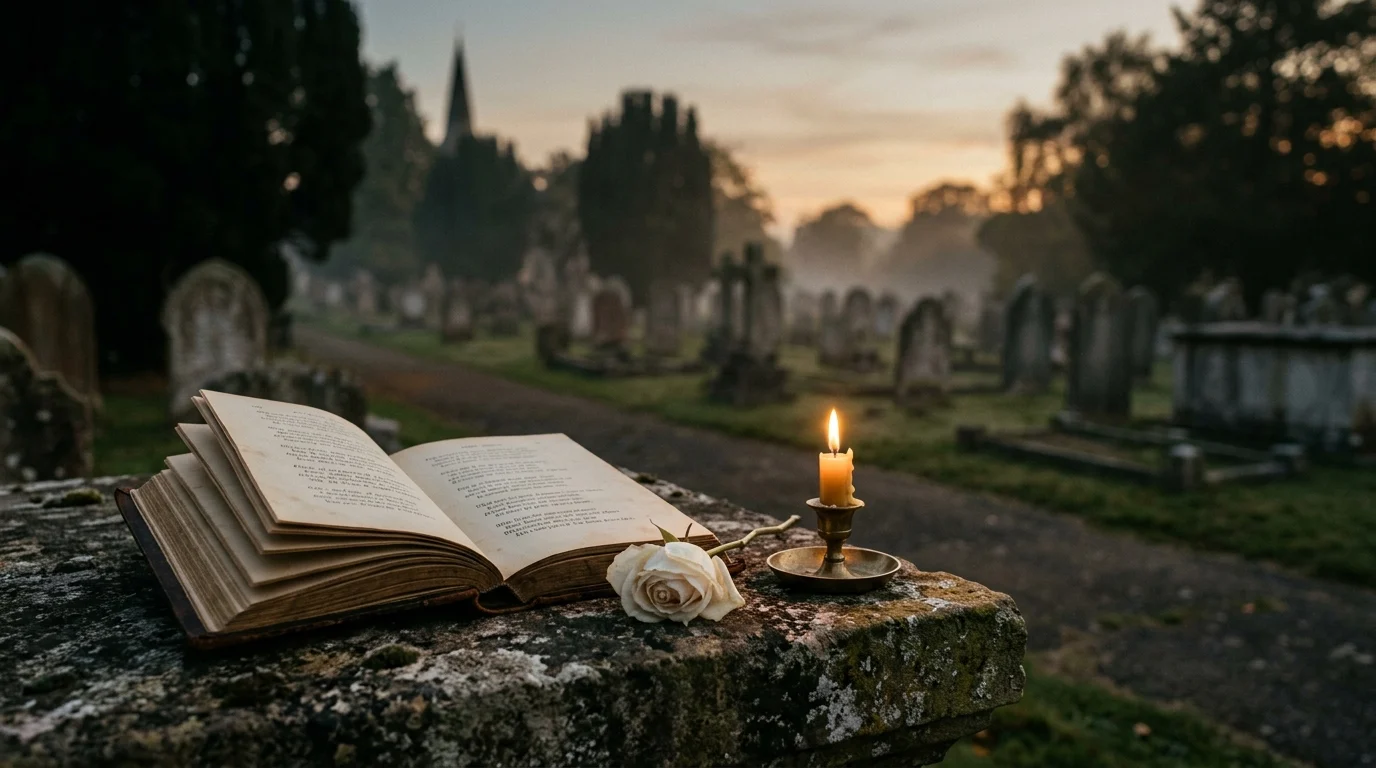

You may encounter the word “elegy” in a poem, literature class, funeral context, or discussion about someone who has died. The elegy meaning is a poem or literary work that expresses sorrow, mourning, or reflection, especially after a person’s death. Unlike a simple statement of grief, an elegy often combines sadness with remembrance, praise, reflection, or acceptance. Understanding the context helps because the word can describe both a specific type of poem and, more broadly, a mournful work of art or writing. Below, you’ll find the definition, key features, types, examples, tone, common misunderstandings, and practical ways to recognize an elegy.
What Does Elegy Mean?
An elegy is traditionally a poem written to mourn or reflect on the death of a person. It often expresses grief while remembering the person, considering the meaning of their life, or reflecting on mortality and loss.
In literature, an elegy does not have to follow one fixed rhyme scheme or structure. Modern elegies can take many forms, from formal poems to personal reflections.
| Detail | Explanation |
|---|---|
| Meaning | A poem or literary work expressing grief, especially for someone who has died |
| Full form | Not an abbreviation, so there is no full form |
| Tone | Usually mournful, reflective, respectful, or contemplative |
| Common context | Poetry, literature, memorial writing, and discussions of loss |
| Formal or informal | Primarily a literary and formal term |
The Main Elegy Meaning in Literature
The central elegy meaning is a work that mourns death or expresses deep reflection about loss. Traditionally, the term refers to poetry, although people sometimes use “elegy” more broadly for a mournful literary or artistic work.
An elegy often does more than say that someone is missed. It may remember the person’s qualities, describe the speaker’s grief, question the nature of death, or gradually move toward acceptance.
For example:
“She wrote an elegy for her grandfather, remembering his kindness and the lessons he taught her.”
Here, the word means a poem or similar literary work created to honor someone who has died. The focus is not simply on sadness; remembrance and reflection are also important parts of the expression.
Is an Elegy Always About Death?
Traditionally, yes, an elegy is strongly associated with mourning the dead. In broader modern usage, however, writers sometimes use the word for works mourning the loss or passing away of something more generally, such as a disappearing place, tradition, era, or way of life.
That broader use should not replace the primary literary definition. If you see “elegy” in a literature context, mourning and reflection are usually central.
Key Features of an Elegy
Not every elegy looks or sounds the same, but many share several characteristics.
Grief: The speaker expresses sadness over death or loss.
Remembrance: The work recalls the person, place, experience, or thing being mourned.
Praise: Some elegies celebrate the qualities or achievements of the person who has died.
Reflection: The speaker may think about mortality, time, memory, or the meaning of life.
Acceptance: Some elegies gradually move from intense grief toward consolation or acceptance, although this is not required.
Because of these features, an elegy can feel deeply personal while also addressing universal experiences such as death, memory, and change.
How Context Changes the Elegy Meaning
Context matters because “elegy” can be used narrowly or more broadly.
Consider these examples:
“The poet wrote an elegy after his mother’s death.”
Here, the meaning is clearly a mourning poem for a deceased person.
“The novel is an elegy for a disappearing neighborhood.”
The word is being used figuratively to describe a work mourning the loss of a place and its culture.
“The students studied a famous elegy in English class.”
The context points to a literary work, most likely a poem concerned with death or mourning.
“The film feels like an elegy for an older generation.”
Here, “elegy” describes the film’s mournful, reflective quality rather than necessarily identifying it as a traditional poem.
The surrounding nouns and verbs usually reveal whether the word refers to a specific literary form or a broader expression of mourning.
Famous Examples of Elegies
Several well-known poems are commonly discussed as elegies or are associated with the elegiac tradition.
One famous example is “Elegy Written in a Country Churchyard” by Thomas Gray. The poem reflects on death, ordinary lives, and the passage of time.
Another major example is “In Memoriam A.H.H.” by Alfred, Lord Tennyson, a long poem written in response to the death of Tennyson’s close friend Arthur Henry Hallam. It explores grief, faith, doubt, memory, and loss.
“When Lilacs Last in the Dooryard Bloom’d” by Walt Whitman is also widely regarded as an elegy. Whitman wrote it after the assassination of President Abraham Lincoln, using personal and symbolic imagery to explore national mourning.
These works show that an elegy does not have to be limited to a short poem about one person’s death. Elegiac writing can explore personal grief, public tragedy, mortality, and the passage of time.
Real-World Examples of the Word Elegy
The word can appear outside traditional poetry discussions.
Literature class
Teacher: “What makes this poem an elegy?”
Student: “It mourns a person’s death and reflects on the meaning of loss.”
Meaning: The term identifies the poem’s mournful literary purpose.
Book review
Reviewer: “The novel becomes an elegy for a vanished way of life.”
Meaning: The reviewer uses “elegy” figuratively for a work that mourns something that has disappeared.
Memorial writing
Writer: “Her collection of poems serves as an elegy for her father.”
Meaning: The poems express grief while remembering and honoring her father.
The Tone and Emotional Meaning of Elegy
“Elegy” generally has a serious, mournful, and reflective tone. It is not normally a casual or humorous word.
An elegy may communicate grief, tenderness, nostalgia, respect, longing, or contemplation. The emotional intensity can vary depending on the writer and subject.
For example, an elegy about a family member may feel intimate and sorrowful, while an elegy for a lost community may sound nostalgic and contemplative.
Is Elegy a Sad Word?
Usually, yes. The word is strongly associated with mourning and loss, particularly death.
However, an elegy does not necessarily communicate only sadness. Remembering someone’s life, celebrating their qualities, and finding meaning in loss can also be part of an elegiac work.
Is Elegy the Same as a Eulogy?
No. The terms are related but are not interchangeable.
A eulogy is a speech or piece of writing that praises and remembers a person, often delivered at a funeral or memorial service. An elegy is traditionally a poem or literary work expressing grief and reflection over death.
A eulogy can be celebratory and personal, while an elegy generally emphasizes mourning and contemplation.
How to Recognize an Elegy
When you’re trying to determine whether a poem is an elegy, look for several clues.
First, ask whether the work responds to a death or significant loss. Next, consider whether the speaker remembers, mourns, praises, or reflects on what has been lost.
The poem’s structure can provide clues, but there is no single rhyme pattern or required format that automatically makes something an elegy. Meaning and purpose matter more than a particular poetic structure.
When to Use the Word Elegy
Use “elegy” when discussing literature, poetry, memorial writing, or a creative work centered on mourning and reflection.
It works naturally in sentences such as:
- “The poem is an elegy for her late brother.”
- “The collection contains several elegies about grief and memory.”
- “The novel reads like an elegy for a changing rural community.”
- “He composed an elegy to remember his friend.”
The word is especially useful when “sad poem” or “memorial poem” does not fully capture the work’s reflective purpose.
When to Avoid the Word Elegy
Avoid using “elegy” simply as a synonym for anything sad. A poem about heartbreak, loneliness, or disappointment is not automatically an elegy.
You should also be careful in everyday conversations where a simpler term would be clearer. For example, calling a short condolence message an “elegy” could sound unnecessarily literary if you simply mean a message expressing sympathy.
The term works best when the work genuinely involves mourning, remembrance, or reflection on death or significant loss.
Common Mistakes About Elegy
| Common Mistake | Correct Understanding |
|---|---|
| An elegy is always a funeral speech | An elegy is traditionally a poem or literary work, while a eulogy is commonly a speech or tribute |
| Every sad poem is an elegy | Elegies specifically center on mourning, death, or significant loss |
| Every elegy has one required structure | Elegies can use different poetic forms and structures |
| Elegy only refers to a dead person | The traditional meaning concerns death, but the word can also be used figuratively for other losses |
Elegy vs. Similar Literary Terms
| Term | Meaning | Main Difference |
|---|---|---|
| Eulogy | Speech or writing praising someone who has died | Usually focuses more directly on tribute and praise |
| Dirge | A mournful song or piece of music for the dead | Often associated with music and funeral mourning |
| Lament | An expression of grief, sorrow, or regret | Broader than elegy and does not require a specific literary form |
| Ode | A poem expressing praise, admiration, or serious reflection | Usually celebrates or honors rather than primarily mourns |
| Requiem | A work or musical composition associated with remembrance of the dead | Often connected with religious or musical traditions |
These terms overlap, which can make them confusing. The key distinction is that an elegy is traditionally a literary expression of mourning and reflection, especially in poetry.
Origin and Literary Tradition
The word elegy comes from the Greek elegeia, associated with poetry written in elegiac verse. The literary tradition developed through classical poetry and later became an important form in English literature.
The meaning has broadened over time. While the traditional focus remains mourning the dead, modern writers can use “elegy” more figuratively to describe works that mourn the disappearance of places, cultures, periods, ideals, or ways of living.
The exact form of an elegy has also become flexible. Contemporary elegiac writing may not follow the conventions associated with older poetic traditions.
Quick Recap
- An elegy is traditionally a poem expressing grief and reflection after someone’s death.
- It may remember, honor, praise, or contemplate the person who has been lost.
- Modern usage can extend the term to works mourning other significant losses.
- An elegy is different from a eulogy, although both can involve remembering someone who died.
- Context helps determine whether “elegy” is being used in its traditional literary sense or more figuratively.
Frequently Asked Questions
What does elegy mean in text?
Elegy usually means a poem or literary work expressing grief, especially mourning someone who has died.
Is an elegy the same as a eulogy?
No, an elegy traditionally expresses mourning through literature, while a eulogy commonly praises someone in speech or writing.
Can an elegy be about something other than death?
Yes, modern writers sometimes use elegy figuratively for works mourning the loss of places, traditions, eras, or ways of life.
Is an elegy always a poem?
Traditionally, an elegy is a poem, although modern usage can describe other mournful literary or artistic works.
What is the main purpose of an elegy?
Its main purpose is to express grief and reflection while remembering or honoring what has been lost.
Final Thoughts
The elegy meaning centers on mourning, remembrance, and reflection, traditionally through a poem written after someone’s death. An elegy may express sadness, honor a person’s life, explore mortality, or gradually move toward acceptance. In modern writing, the term can also describe works that mourn the disappearance of places, traditions, or entire ways of life. Context is therefore essential: not every sad poem is an elegy, and an elegy does not need one fixed structure. When you see the word in literature, look for its connection to loss, remembrance, and thoughtful reflection.
Discover More Post:
Namaste Meaning | True Spiritual Meaning, Proper Response …
Demisexual Meaning | What It Is and How People Use the Term
Voila Meaning | What It Means and How to Use It Correctly