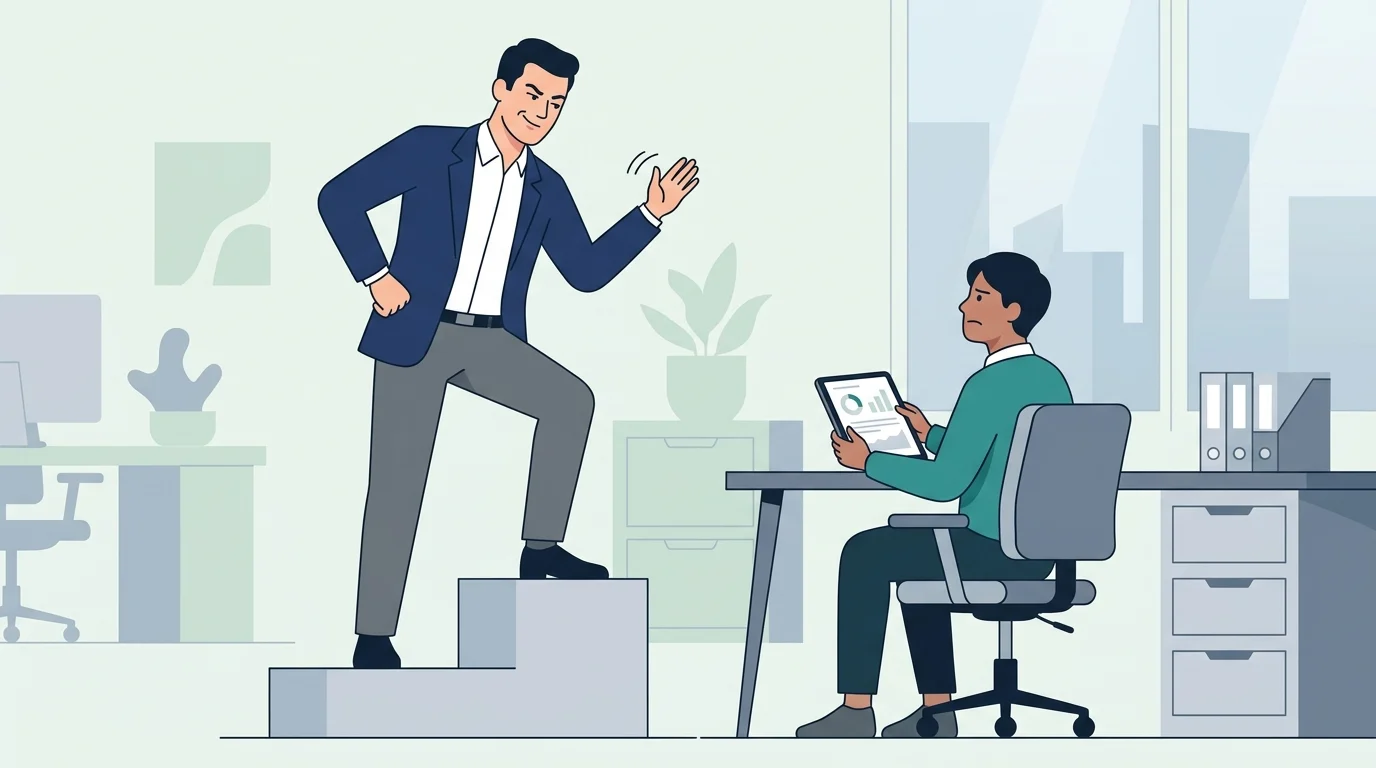

Condescending means behaving in a way that shows you believe you are superior, smarter, or more important than others. It often involves a patronizing tone, oversimplifying explanations, or offering unwanted help as if the other person is incapable. Condescension is always viewed negatively and can damage relationships, whether in person, over text, or on social media.
Have you ever had someone explain something to you like you were a child, even though you clearly understood the topic? That is condescension, and it can leave you feeling belittled, frustrated, and disrespected.
Whether you are dealing with a condescending coworker, a patronizing relative, or someone who talks down to you in a text message, understanding exactly what condescending means is the first step to handling it effectively. This guide breaks down the full meaning of provides real-life conversation examples, compares it to similar terms like patronizing, and gives you practical strategies for responding when someone speaks to you in a way. By the end, you will know exactly how to spot condescension and what to do about it.
Quick Answer
| Aspect | Details |
|---|---|
| Meaning | Acting superior to others; talking or behaving as if you are more intelligent or important |
| Context | Used to describe a person, tone, comment, or attitude that belittles or patronizes |
| Usage | “Stop being so condescending.” / “Her tone was condescending.” |
| Platforms | In-person conversations, text messages, social media, work emails, dating apps |
| Example | “Oh, you actually managed to finish that by yourself? Good for you.” |
| Tone | Always negative; implies disapproval of the speaker’s behavior |
What Does Condescending Mean?
To be condescending is to interact with others in a way that implies you are superior to them.It is an attitude or behavior that suggests you believe you are smarter, more important, or more capable than the person you are speaking to. Condescension often comes across as arrogant, patronizing, or dismissive. It is always used negatively and is considered insulting to the person on the receiving end.
A condescending person might:
- Use overly simple language as if explaining something to a child
- Speak in a slow, exaggerated tone
- Offer unsolicited help or advice
- Roll their eyes or use dismissive body language
- Use phrases like “Let me help you out here” or “Bless your heart” in a mocking way
Condescension is not just about what is said, but how it is said. A condescending tone can make even a helpful comment feel insulting.
The Origin of the Word
The word “condescending” comes from the Latin term condescendere, which means “to let oneself down.”Historically, it referred to a person of higher rank voluntarily lowering themselves to interact with someone of lower status. Over time, the meaning shifted to describe someone who acts superior while pretending to be on the same level. Today, it is almost always used to criticize someone for being patronizing or arrogant.
Full Definition
According to major dictionaries:
- Dictionary.com: “Showing or implying a usually patronizing descent from dignity or superiority.”
- Collins Dictionary: “If you say that someone is condescending, you are showing your disapproval of the fact that they talk or behave in a way which shows that they think they are superior to other people.”
- Britannica Dictionary: “Showing that you believe you are more intelligent or better than other people.”
In everyday usage, condescending describes:
- A person who consistently acts superior
- A tone that sounds like it is directed at a child
- A comment that belittles or diminishes someone else’s abilities
- An attitude that suggests others are beneath you
Context and Usage
When Is the Word Used?
People use the word “condescending” to describe behavior that makes them feel small, or unimportant. It commonly appears in:
- Workplace settings – Managers or coworkers who talk down to employees
- Personal relationships – Partners, friends, or family members who act superior
- Customer service – Staff who treat customers like they are clueless
- Online interactions – Social media comments, forum replies, or text messages with a patronizing tone
Common Phrases That Sound Condescending
Certain phrases are red flags for condescension. These include:
- “Let me explain this to you simply…”
- “I’m surprised you didn’t know that.”
- “It’s not that complicated.”
- “Bless your heart.”
- “You’ll understand when you’re older.”
- “Actually, let me correct you there.”
- “I’m just trying to help you.”
These phrases may seem polite on the surface, but the underlying message is often: “I am smarter than you, and you need me to guide you.”
Real-Life Examples
1: Workplace Condescension
Person A: “I finished the quarterly report ahead of schedule. I included all the updated projections.”
Person B: “Oh wow, you actually managed to do it without any mistakes? I’m genuinely surprised. I thought I’d have to go over everything with you again.”
Person A: “There’s no need to be condescending. I know what I’m doing.”
Person B: “I wasn’t trying to offend you. I just like to double-check everything.”
In this example, Person B’s surprise and backhanded compliment imply that Person A is not usually capable. The condescension lies in the assumption that Person A needed help or would have failed.
2: Social Setting
Person A: “I’m thinking about taking some advanced photography classes.”
Person B: “Advanced classes? You know those are for people who already have a solid foundation, right? Maybe start with something more basic.”
Person A: “I don’t need you to tell me what I’m capable of. That’s condescending.”
Person B: “I’m just giving you friendly advice. No need to get defensive.”
Here, Person B questions Person A’s ability and suggests they are not ready for advanced work. The condescension comes from assuming Person A lacks self-awareness.
3: Text Message
Person A (text): “Hey! I just got my exam results. I got a B+!”
Person B (text): “A B+? Wow, I’m amazed you did that well without my help. Good for you 😊”
Person A (text): “That’s so condescending. I studied really hard for this.”
Person B (text): “I was just joking. But if you want, I can give you some tips for next time.”
The smiley face and the “good for you” comment make this text feel dismissive and patronizing. Person B implies that Person A’s success is surprising and that they still need guidance.
4: Social Media Comment
User 1’s Post: “Just finished a 5K run in 28 minutes! So proud of my progress.”
User 2’s Comment: “28 minutes for a 5K? That’s cute. Let me know when you get under 20.”
User 1’s Reply: “No need to be condescending. I’m proud of my own time.”
User 2’s Reply: “I was just giving you something to aim for. No need to be so sensitive.”
On social media, condescension often appears as dismissive comments that minimize someone else’s achievements. User 2’s comment is designed to make User 1 feel inferior.
5: Dating App
Person A (app): “I just started learning Spanish. It’s tough but fun!”
Person B (app): “Aww, that’s adorable. I’ve been fluent for years. Let me know if you need help with the basics.”
Person B (app): “Actually, I’m doing fine on my own, but thanks.”
Person B (app): “Suit yourself. Just figured I’d offer since you’re clearly a beginner.”
The use of “adorable” and the offer to help with “the basics” implies that Person A is cute but not serious or capable. This is a classic condescending move in dating conversations.
Condescending vs Patronizing: What Is the Difference?
Many people use “condescending” and “patronizing” interchangeably, and in modern English, they are often synonyms.However, there is a subtle difference:
| Condescending | Patronizing |
|---|---|
| Displays a superior attitude openly | Treats someone with apparent kindness that hides superiority |
| More direct and obvious | More subtle; disguised as help or concern |
| “I am better than you.” | “I am better than you, but I will pretend to care.” |
Condescending is about openly showing that you think you are superior. Patronizing involves treating someone kindly on the surface while betraying a feeling of superiority underneath.
For example:
- Condescending: “Let me explain this to you in simple terms.”
- Patronizing: “Oh, sweetie, let me help you with that. You must be so overwhelmed.”
Patronizing can be harder to call out because it is wrapped in fake kindness. Condescension is usually more direct and easier to recognize.
Platform-Specific Meaning
Condescending in Text Messages
In text messages, condescension often appears through:
- Passive-aggressive emojis – Using a smiley face 😊 or thumbs up 👍 to dismiss someone’s point
- Overly simplified explanations – Explaining something obvious as if the other person is clueless
- Phrases like “Let me help you out here” – Used to preface a correction or insult
- Short, dismissive replies – “K” or “Sure” in response to a heartfelt message
Texting removes tone of voice, so condescension often relies on word choice and punctuation. A text that says “That’s cute” or “Good for you” is almost always condescending in context.
Condescending on Social Media
On platforms like Instagram, Twitter, and TikTok, condescension shows up as:
- Dismissive comments that minimize someone’s achievements
- Unsolicited corrections from people who assume they know better
- Backhanded compliments – “You’re so brave for posting that!”
- Meme culture – The “Condescending Wonka” meme is a popular example of using humor to patronize someone
Social media amplifies condescension because people feel more emboldened to talk down to others behind a screen.
Condescending on Dating Apps
On apps like Tinder or Bumble, condescension is a common turn-off. Examples include:
- “Let me know if you need help understanding that.” – Implies the other person is less intelligent
- “Aww, that’s cute that you think that.” – Dismisses their opinion as naive
- “I usually date people who are more… experienced.” – Suggests the other person is not on their level
Condescension on dating apps is a red flag because it signals a lack of respect and an inflated ego.
Condescending in the Workplace
In professional settings, condescension can take the form of:
- Managers explaining basic tasks to experienced employees
- Colleagues using jargon to exclude others – “You probably wouldn’t understand the technical details.”
- Dismissing ideas without consideration – “That’s cute, but here’s how we actually do things.”
- Using a patronizing tone in meetings – Speaking slowly or using simplified language
Workplace condescension can damage team morale, reduce productivity, and create a toxic culture.
Alternative Meanings and Related Terms
Synonyms for Condescending
- Patronizing – The closest synonym; treating someone with false kindness while feeling superior
- Arrogant – Having an exaggerated sense of self-importance
- Supercilious – Behaving as though you think you are better than others
- Haughty – Arrogantly superior and disdainful
- Pompous – Self-important and grand
- Snobbish – Looking down on others who are perceived as inferior
Antonyms for Condescending
- Humble – Having a modest view of your own importance
- Respectful – Showing esteem and consideration for others
- Approachable – Easy to talk to and open to others
- Empathetic – Understanding and sharing the feelings of others
Related Terms
- Condescension – The noun form; the act of behaving condescendingly
- Condescend – The verb form; to behave in a superior way
- Talk down to – A common phrase meaning to speak condescendingly
How to Respond to a Condescending Person
Dealing with condescension can be frustrating, but how you respond matters. Here are strategies to handle condescending people effectively.
Stay Calm and Composed
The worst thing you can do is lose your temper. Staying calm shows that you are in control and that their condescension does not rattle you.Take a breath before responding and keep your tone neutral.
Call It Out Directly
Sometimes the best response is to name the behavior. You can say:
- “There’s no need to be condescending.”
- “I understand the topic. You don’t need to simplify it for me.”
- “That comment felt dismissive. Can we talk about this differently?”
Calling it out directly forces the other person to recognize their behavior.
Use “I” Statements
Instead of accusing the other person, focus on how their words made you feel:
- “I felt belittled when you said that.”
- “I would appreciate it if you spoke to me with more respect.”
- “I know what I’m doing, and I don’t need unsolicited advice.”
This approach is less confrontational and more likely to lead to a productive conversation.
Disarm with a Calm Acknowledgment
Phrases like “I appreciate your point of view” can disarm a condescending person because they acknowledge the comment without escalating the conflict.It takes away their power to upset you.
Separate the Message from the Tone
If the person’s condescension is wrapped around useful information, try to extract the useful part and ignore the tone.Not every condescending remark requires a response.
When to Walk Away
If someone is consistently condescending and refuses to change, it may be best to limit your interactions with them. You do not owe anyone your time or energy, especially if they make you feel small.
Misinterpretations and Common Mistakes
1: Confusing Condescending with “Confident”
Confidence is believing in yourself without putting others down. Condescension is believing in yourself by putting others down. Confidence is attractive; condescension is off-putting.
2: Thinking It Is Just “Honesty”
Some people justify condescension by saying they are “just being honest” or “telling it like it is.” Honesty does not require belittling someone. You can be direct without being condescending.
3: Believing It Only Happens in Person
Condescension happens all the time in text messages, emails, social media comments, and dating apps. It is not limited to face-to-face interactions.
4: Assuming Intent Doesn’t Matter
Some people say, “I didn’t mean to be condescending.” While intent matters, impact matters more. If someone feels belittled, the behavior is still problematic regardless of intent.
When NOT to Use the Word “Condescending”
While “condescending” is a useful word, it should not be overused. Avoid using it:
- When someone is simply explaining something – Not every explanation is condescending. If someone is genuinely being helpful, give them the benefit of the doubt.
- When you are feeling overly sensitive – Sometimes our own insecurities make us perceive condescension where there is none. Check your own emotions first.
- As a weapon in an argument – Calling someone condescending during a heated debate can escalate things unnecessarily. Use it thoughtfully.
Usage Tips: How to Avoid Being Condescending
If you want to make sure you are not coming across as condescending, keep these tips in mind:
- Avoid oversimplifying – Do not explain things that the other person already understands.
- Don’t offer unsolicited advice – Unless someone asks for help, assume they are capable.
- Watch your tone – How you say something matters as much as what you say.
- Use “we” instead of “I” – Instead of “I think you should,” try “What do you think about…?”
- Acknowledge others’ expertise – Recognize that other people have knowledge and skills too.
- Apologize if you slip up – If someone tells you that you sounded condescending, apologize and adjust your approach.
FAQs
1. What does condescending mean in simple terms?
Condescending means acting like you are better, smarter, or more important than someone else. It often involves talking down to people or explaining things to them as if they are children.
2. Is condescending the same as patronizing?
They are very similar and often used interchangeably. However, condescending is more about openly showing superiority, while patronizing involves a fake kindness that hides superiority.
3. What are some examples of condescending phrases?
Common condescending phrases include “Let me explain this simply,” “I’m surprised you didn’t know that,” “Bless your heart,” and “It’s not that complicated.”
4. How do you respond to a condescending person?
Stay calm, call out the behavior directly, use “I” statements to express how you feel, or calmly acknowledge their point without engaging further.
5. Can a text message be condescending?
Yes. Text messages can be condescending through passive-aggressive emojis, oversimplified explanations, dismissive replies, and phrases like “Good for you” or “Let me help you out.”
6. What is the difference between condescending and arrogant?
Arrogance is an inflated sense of self-importance. Condescension is the behavior that comes from that arrogance – talking down to others and treating them as inferior.
7. Is condescending always negative?
Yes. Condescending is always used negatively and implies disapproval of the person’s behavior.
8. What is the noun form of condescending?
The noun form is condescension, which refers to the act of behaving condescendingly.
9. How can I tell if someone is being condescending or just helpful?
If someone is being helpful, they will respect your knowledge and offer assistance without making you feel small. If they are condescending, their tone will imply that you are incapable or less intelligent.
10. Why do people act condescending?
People act condescending for various reasons: insecurity, a need to feel superior, lack of social awareness, or a habit of communicating poorly. It is often more about the speaker’s issues than the listener’s.
11. What is the Condescending Wonka meme?
The Condescending Wonka meme features a picture of Willy Wonka with a sarcastic, patronizing caption. It is used to mock someone or make a condescending point in a humorous way.
12. Can condescension be unintentional?
Yes. Some people do not realize they sound condescending. If someone points it out, a respectful person will apologize and adjust their tone.
13. Is condescension a form of bullying?
It can be. When condescension is repeated and used to control or humiliate someone, it crosses into bullying or emotional abuse.
14. How do I stop being condescending?
Practice active listening, avoid unsolicited advice, watch your tone, and be open to feedback. If someone tells you that you sound condescending, take it seriously.
15. What is the opposite of condescending?
The opposite of condescending is humble, respectful, or empathetic – treating others as equals and valuing their perspective.
Conclusion
Understanding the condescending meaning is essential for navigating social interactions, both online and offline. Condescension is more than just rudeness – it is a behavior that signals superiority and disrespect, leaving others feeling belittled and dismissed. Whether you are dealing with a condescending coworker, a patronizing friend, or a dismissive comment on social media, recognizing the signs is the first step to protecting your self-worth and setting boundaries.
At the same time, it is important to check your own behavior. Nobody wants to be the person who talks down to others. By practicing humility, active listening, and respect, you can avoid coming across as condescending and build stronger, more genuine relationships.
Remember: true confidence does not require putting others down. The most impressive people are those who lift others up, not those who look down on them.