
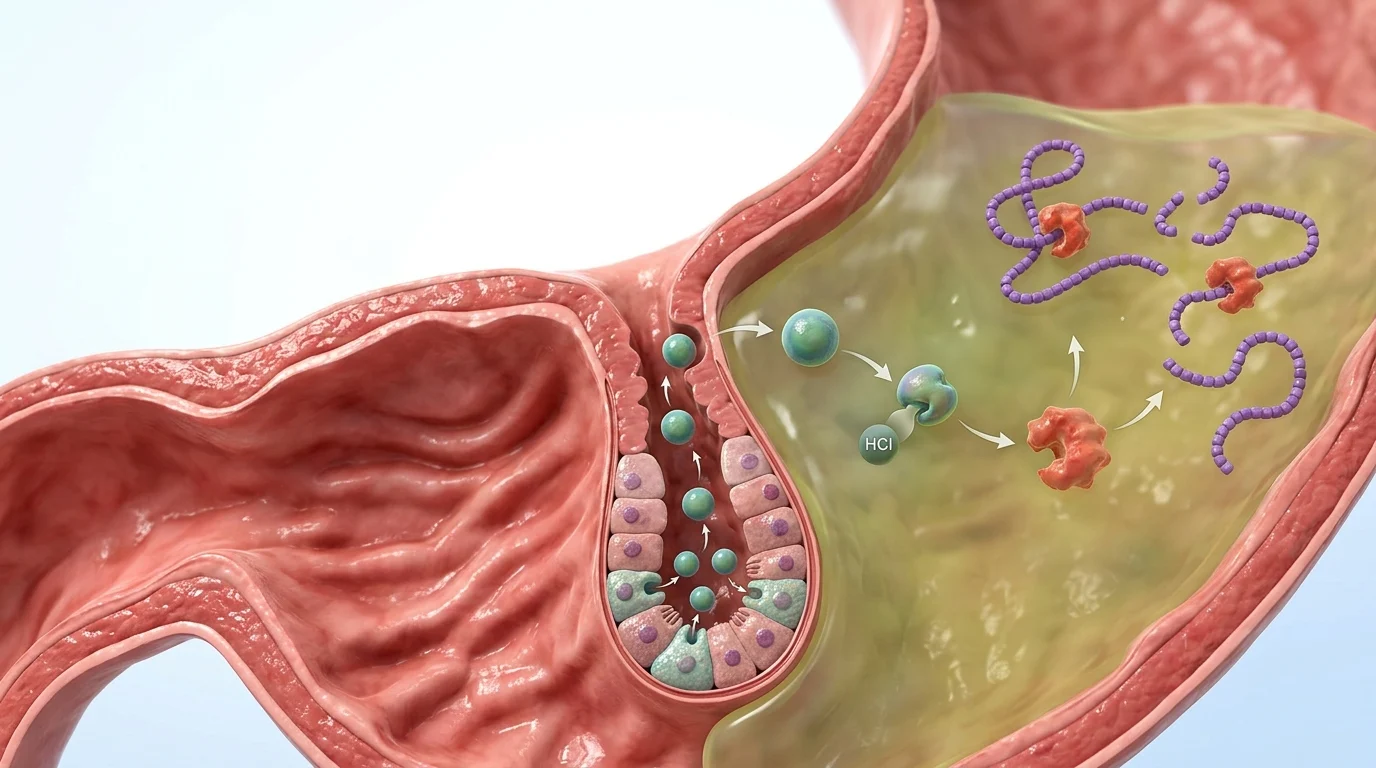

If you come across the term pepsinogen in a biology lesson, medical report, or discussion about digestion, it refers to a specific substance produced in the stomach. Pepsinogen is the inactive precursor, or zymogen, of pepsin, an enzyme that helps digest proteins. It is mainly produced by chief cells in the stomach and becomes active pepsin when exposed to acidic conditions.
Understanding the pepsinogen meaning is useful because the body produces it in an inactive form for a reason: active protein-digesting enzymes could damage the cells that make them. The sections below explain what pepsinogen does, how it becomes pepsin, its types, and how the term is used in medical contexts.
What Does Pepsinogen Mean?
Pepsinogen means the inactive precursor of the digestive enzyme pepsin.
| Detail | Explanation |
|---|---|
| Meaning | Inactive precursor of pepsin |
| Main source | Chief cells of the stomach |
| Main role | Prepares to become a protein-digesting enzyme |
| Activation | Primarily triggered by acidic stomach conditions |
| Biological type | Zymogen, or inactive enzyme precursor |
The key idea is simple: pepsinogen is inactive; pepsin is the active enzyme.
What Is Pepsinogen and What Does It Do?
After food enters the stomach, gastric acid lowers the stomach’s pH. This acidic environment helps convert pepsinogen into pepsin by removing a portion of the precursor molecule. Once activated, pepsin can break peptide bonds in proteins, helping turn large dietary proteins into smaller fragments.
This activation process is an important protective mechanism.
A Simple Example
Imagine eating a meal containing eggs, meat, or beans. The proteins in that food enter your stomach, where acid helps create the conditions needed to activate pepsinogen. The resulting pepsin then participates in protein digestion.
So, pepsinogen itself is not the main enzyme doing the digestion. Its job is to serve as the inactive starting form of pepsin.
How Does Pepsinogen Become Pepsin?
A simplified sequence looks like this:
Chief cells → pepsinogen → acidic stomach environment → pepsin → protein digestion
Once some pepsin has formed, pepsin can also help activate additional pepsinogen molecules.
This creates an efficient digestive process: the stomach stores and releases the inactive precursor first, then activates it when the appropriate conditions are present.
The distinction between the two terms is therefore important:
- Pepsinogen: inactive precursor
- Pepsin: active protein-digesting enzyme
Are There Different Types of Pepsinogen?
Yes. Human pepsinogens are commonly divided into pepsinogen I (PG I) and pepsinogen II (PG II) based on their biochemical characteristics and primary sites of production.
| Type | Main source | General significance |
|---|---|---|
| Pepsinogen I | Mainly chief and related cells in the gastric body and fundus | Associated primarily with the acid-producing region of the stomach |
| Pepsinogen II | Produced in a broader area, including the gastric body and antral/pyloric regions | More widely distributed in the stomach and upper digestive tract |
These forms are particularly relevant in medical testing because their concentrations and their relationship to one another can provide information about the condition of the stomach lining.
Why Is Pepsinogen Measured in Blood Tests?
When you see pepsinogen on a medical laboratory report, the term may refer to measurements of PG I, PG II, or the PG I/PG II ratio.
Changes in pepsinogen concentrations or their ratio may occur with certain forms of stomach inflammation or changes affecting the stomach’s glandular tissue.
Reference ranges can vary between laboratories, and the meaning of an abnormal result depends on factors such as symptoms, medical history, other laboratory findings, and sometimes additional testing.
A laboratory result therefore does not automatically diagnose a specific disease simply because a pepsinogen value is high or low.
How Context Changes the Meaning of Pepsinogen
Unlike internet slang, pepsinogen generally has one established biological meaning.
Consider these examples:
1. Biology class:
“Pepsinogen is converted into pepsin.”
Here, the focus is the digestive process.
2. Anatomy discussion:
“Chief cells secrete pepsinogen.”
The emphasis is on where the substance comes from.
3. Laboratory report:
The term refers to a clinical biomarker rather than a basic digestion lesson.
4. Stomach health discussion:
The focus is the relationship between different pepsinogen forms and gastric tissue.
So, context changes the purpose of the discussion, but not the fundamental pepsinogen meaning.
Pepsinogen vs. Pepsin
Pepsinogen and pepsin are closely related, so they are easy to confuse. The simplest distinction is that one is inactive and the other is active.
| Term | Meaning | Role |
|---|---|---|
| Pepsinogen | Inactive precursor | Becomes pepsin under acidic conditions |
| Pepsin | Active digestive enzyme | Breaks proteins into smaller peptides |
| Hydrochloric acid | Stomach acid | Creates the acidic environment that supports activation |
Think of pepsinogen as an enzyme in a ready-to-activate form. Once the right conditions occur, it can become functional pepsin.
Real-Life Examples of the Term
1: Biology
Student: “What does pepsinogen do?”
Teacher: “It is the inactive precursor that becomes pepsin in the acidic stomach.”
Meaning: The discussion is about how protein digestion begins.
2: Medical Testing
Patient: “Why does my report mention PG I and PG II?”
Clinician: “Those are different forms of pepsinogen that can provide information about the gastric mucosa.”
3: Nutrition and Digestion
Friend: “How does your stomach start digesting protein?”
Friend: “Stomach acid helps activate pepsinogen into pepsin.”
Meaning: The speaker is explaining the normal digestive mechanism.
Is Pepsinogen the Same as Pepsin?
This distinction is one of the most important points to remember.
The body uses this inactive-to-active system as part of the normal organization and protection of stomach digestion.
Common Mistakes About Pepsinogen
| Common Mistake | Correct Understanding |
|---|---|
| Calling pepsinogen an active digestive enzyme | Pepsinogen is an inactive precursor of pepsin |
| Saying pepsinogen directly digests proteins | Pepsin is the active enzyme responsible for protein digestion |
| Assuming every pepsinogen result diagnoses disease | Results require interpretation alongside clinical context |
| Treating PG I and PG II as identical | They are distinct pepsinogen groups with different distributions |
Another common misunderstanding is assuming that “inactive” means pepsinogen has no biological purpose. Its inactive state is precisely what allows the body to produce and release the precursor before activating it where digestion occurs.
Similar Terms You May Encounter
| Term | Meaning | Main Difference |
|---|---|---|
| Pepsinogen | Inactive precursor of pepsin | Not yet enzymatically active |
| Pepsin | Protein-digesting stomach enzyme | Active form derived from pepsinogen |
| Gastrin | Hormone involved in gastric function | Regulates stomach activity rather than directly digesting protein |
| Hydrochloric acid | Acid secreted into the stomach | Creates conditions that help activate pepsinogen |
| Chief cells | Specialized stomach cells | Produce and secrete pepsinogen |
These terms often appear together in explanations of gastric physiology, but they describe different substances or biological structures.
When Is the Term Used?
You are most likely to encounter pepsinogen in:
- Biology and anatomy textbooks
- Discussions of protein digestion
- Medical or laboratory reports
- Gastroenterology discussions
- Research involving stomach function
- Educational material about gastric enzymes
Unlike texting abbreviations or social media slang, pepsinogen is a formal scientific term. You do not need to interpret it differently based on whether it appears in a text message, social platform, or casual conversation.
When Should You Be Careful With a Pepsinogen Result?
If you encounter pepsinogen values on a laboratory report, avoid interpreting a number in isolation. A result can have different implications depending on the laboratory’s reference range, the specific test performed, and other clinical information.
If a healthcare professional has ordered the test, they can explain what your particular result means in combination with your medical history and other findings.
The important distinction is between understanding the term and diagnosing a medical condition. Knowing the pepsinogen meaning does not by itself tell you whether a particular test result is normal or abnormal.
Quick Recap
- Pepsinogen is the inactive precursor of pepsin.
- It is produced mainly by specialized cells in the stomach.
- Stomach acidity helps convert pepsinogen into active pepsin.
- Pepsin then helps digest dietary proteins.
- PG I and PG II are different pepsinogen groups used in some clinical testing.
- Laboratory results require context and should not be interpreted from the term alone.
Frequently Asked Questions
What does pepsinogen mean in simple terms?
Pepsinogen is an inactive substance produced in the stomach that becomes the protein-digesting enzyme pepsin.
What is the difference between pepsinogen and pepsin?
Pepsinogen is inactive, whereas pepsin is the active digestive enzyme formed when pepsinogen undergoes activation.
Where is pepsinogen produced?
Pepsinogen is produced mainly by chief cells in the stomach, with different forms having somewhat broader distributions.
Why is pepsinogen important for digestion?
It provides an inactive source of pepsin that can be activated under acidic stomach conditions during protein digestion.
What do PG I and PG II mean?
PG I and PG II are distinct pepsinogen groups whose levels and ratio can provide information about gastric mucosal conditions.
Final Thoughts
The basic pepsinogen meaning is straightforward: it is the inactive precursor of pepsin, a stomach enzyme involved in protein digestion. Understanding the difference between pepsinogen and pepsin makes gastric digestion much easier to understand. If you encounter PG I, PG II, or a pepsinogen result in a medical context, remember that those measurements require appropriate clinical interpretation. Context matters, especially when the term appears in a laboratory report rather than a basic biology explanation.
discover More Post:
Glaze Meaning Slang | The Complete Guide to Understanding …
FN Meaning in Slang | The Complete Guide to This Viral …
OI Meaning Slang | The Complete Guide to Both Meanings