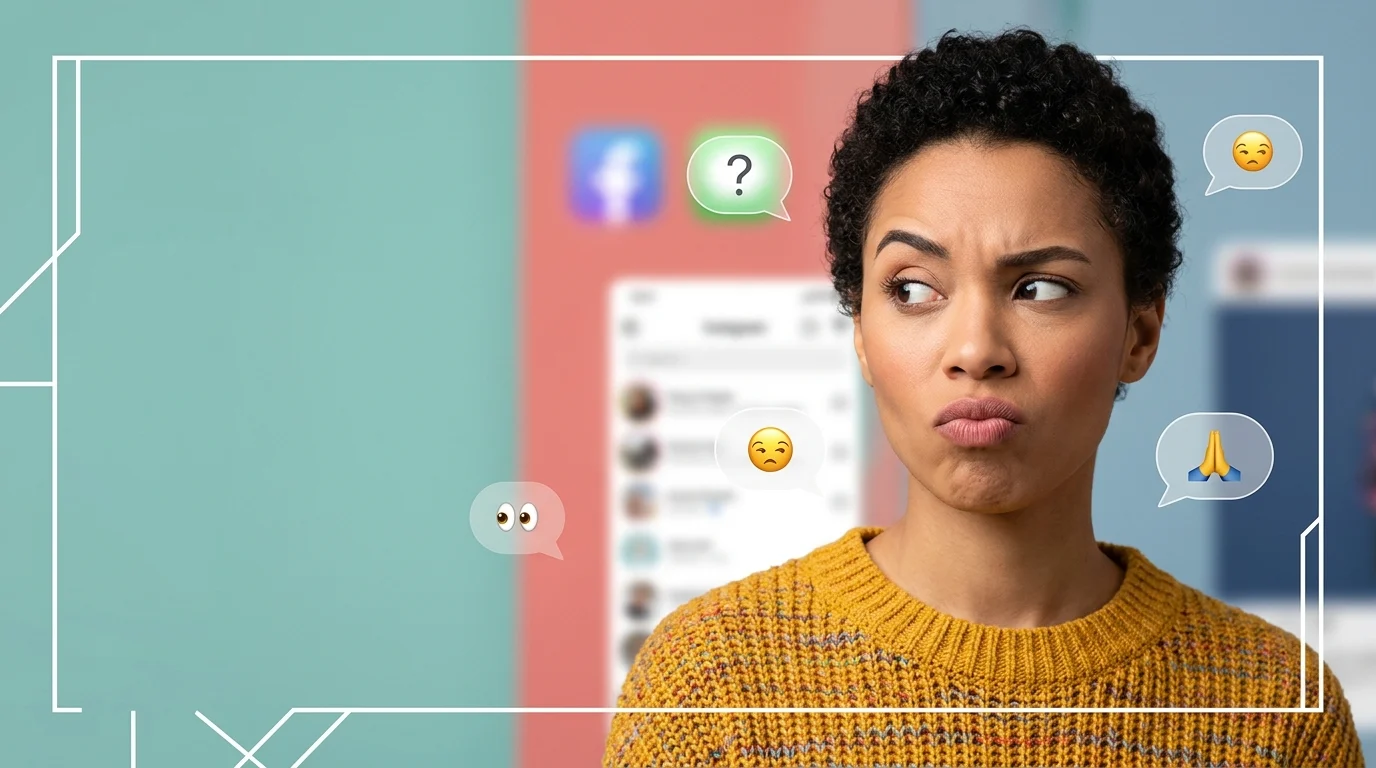

You see someone post a ridiculous opinion, questionable excuse, or painfully awkward comment, and a reaction image shows someone staring sideways. That is the basic idea behind the side eye meme: a visual way to communicate doubt, disbelief, judgment, annoyance, or silent “really?” without spelling it out. The expression existed long before memes, but internet culture turned it into a flexible reaction format used across social media, chats, and comment sections. Depending on the image, caption, emoji, or situation, the side eye can be playful rather than genuinely critical. Understanding the context helps you tell whether someone is joking, skeptical, annoyed, or simply being dramatic.
What Does the Side Eye Meme Mean?
The side eye meme is a reaction image, GIF, video, or caption showing someone looking sideways to express skepticism, disbelief, suspicion, judgment, or disapproval. It often communicates an unspoken reaction such as “Seriously?”, “I don’t believe you,” or “What was that?”
| Detail | Explanation |
|---|---|
| Most common meaning | Skepticism, judgment, disbelief, or disapproval |
| Full form | Not an abbreviation; “side eye” is the phrase |
| Tone | Usually humorous, sarcastic, skeptical, or judgmental |
| Common platforms | TikTok, Instagram, X, Reddit, Snapchat, chats |
| Formal or informal | Informal |
A side eye meme can be a still image, reaction GIF, short video, or edited picture. The visual does most of the communicating, so the caption and surrounding conversation determine exactly what the reaction means.
For example, if a friend says, “I definitely didn’t eat the last slice of pizza,” and you send a side eye meme, you’re expressing doubt without directly accusing them.
What Is the Side Eye Meme Used For?
The main purpose is to react silently to something that seems questionable, ridiculous, awkward, suspicious, or annoying.
A person might use one when:
- Someone makes an obviously questionable claim.
- A friend gives an unbelievable excuse.
- Someone behaves awkwardly.
- A comment sounds inappropriate or out of place.
- A social media post seems suspicious.
- Someone says something that deserves a sarcastic reaction.
The meme can also be exaggerated for comedy. A dramatic facial expression makes the response funnier because it turns a simple skeptical glance into a full reaction.
One of the best-known versions is Side Eyeing Chloe, featuring Chloe Clem giving a memorable sideways look in a 2013 video. The image became a widely recognized reaction format and inspired countless edits and captions.
The broader side-eye meme family later included exaggerated versions such as “bombastic side eye,” which became especially associated with TikTok in the early 2020s.
Side Eye Meme Meaning in Different Contexts
The basic message stays similar, but the emotional strength can change.
| Context | Likely Meaning | Tone |
| Friend says something unbelievable | “I don’t believe you” | Playful |
| Someone makes an awkward comment | “That was weird” | Funny or judgmental |
| Suspicious excuse | “I’m not buying that” | Skeptical |
| Cringe social media post | “Why would you post this?” | Sarcastic |
| Flirty conversation | Mild teasing or playful judgment | Playful |
A side eye between close friends is often harmless. The same image directed at a stranger or coworker can feel more dismissive or insulting.
How Context Changes the Meaning
The surrounding conversation is what tells you how serious the side eye is.
1. The words around it matter.
If someone says, “My alarm didn’t go off for the fifth time,” followed by a side eye meme, the reaction probably means disbelief.
2. Emojis can soften or intensify it.
A laughing emoji can make the reaction playful, while an angry emoji may make the judgment more serious.
3. Your relationship matters.
Friends may use side eye memes affectionately. Someone you barely know may interpret the same reaction as criticism.
4. The image itself matters.
A cartoon with an exaggerated expression usually feels humorous, while a harsh-looking reaction GIF can sound more confrontational.
Compare these examples:
- “You really wore that? 😂” + side eye meme → playful teasing.
- “He said he forgot again.” + side eye meme → disbelief.
- “I saw what you posted.” + side eye meme → possible judgment or disapproval.
- “You didn’t actually do that 👀” + side eye meme → suspicious but potentially playful.
Side Eye Meme on TikTok, Instagram, and Chats
The meaning generally stays consistent across platforms, but the format changes.
TikTok
On TikTok, side eye is commonly used in reaction videos, edits, captions, and sounds. The phrase “bombastic side eye” became a recognizable exaggerated version, often paired with dramatic reactions to something considered ridiculous or questionable.
Example: A creator hears an outrageous story and cuts to an exaggerated side-eye reaction.
The tone is usually comedic rather than genuinely hostile.
On Instagram, side eye memes often appear in Stories, Reels, comments, and DMs. Users may post a reaction image to respond to a friend’s questionable statement or an awkward post.
Example: Someone posts, “I’m never spending money again,” after shopping all weekend, and a friend replies with a side eye GIF.
Text Messages and Group Chats
In private chats, the side eye can replace a sentence entirely. Sending the meme may mean, “I’m judging you,” “I don’t believe that,” or “Please explain yourself.”
Because there is no facial expression to observe in a text conversation, the meme supplies the emotion.
Snapchat and Other Social Platforms
The same basic meaning applies on Snapchat and other social platforms. A side eye image, GIF, sticker, or emoji usually signals skepticism, amusement, or judgment rather than a completely different definition.
Real Conversation Examples
Person A: “I only watched one episode and somehow finished the whole season.”
Person B: Sends side eye meme.
Meaning: Person B is jokingly judging the claim or situation.
Person A: “I didn’t know there was homework due today.”
Person B: “You were literally in class when the teacher announced it.” Sends side eye meme.
Meaning: The reaction expresses disbelief and mild teasing.
Person A: “Don’t worry, I can fix the computer.”
Person B: “You broke it yesterday.” Sends dramatic side eye GIF.
Meaning: Person B is humorously questioning whether they should trust that claim.
Is the Side Eye Meme Rude?
The side eye meme can be rude, but it is not automatically rude.
Among friends, it often works as playful teasing. In a disagreement, however, sending one may communicate contempt, disbelief, or annoyance without directly saying so.
If you’re unsure how someone will interpret it, consider the relationship and conversation. A laughing emoji or clearly humorous caption can make the reaction feel lighter.
Is the Side Eye Meme Flirty?
It can be used flirtatiously, but the meme itself is not inherently romantic.
For example, someone might send a playful side eye after their crush makes a teasing comment. In that situation, the reaction could mean “Oh, really?” rather than genuine disapproval.
The surrounding conversation, previous messages, and emojis matter more than the meme alone.
How to Reply to a Side Eye Meme
Your response should match the mood rather than assuming the sender is seriously judging you.
Friendly Replies
- “What? I said what I said 😂”
- “Don’t look at me like that.”
- “You know I’m right.”
- “Okay, okay, I get the message.”
Funny Replies
- “That face is extremely unnecessary.”
- “Why are you judging me through the screen?”
- “The disrespect in that GIF 😭”
- “I can explain… probably.”
Clarification Replies
If you’re unsure whether they’re joking, keep it simple:
- “Wait, are you actually judging me?”
- “What did I do? 😂”
- “Was that side eye serious?”
When to Use the Side Eye Meme
The meme works best in casual communication where reaction images are already normal.
Good situations include:
- Group chats with friends
- Casual text conversations
- Social media comments
- TikTok reactions
- Instagram Stories and DMs
- Gaming chats
- Playful conversations
It is particularly effective when you want to communicate a reaction without writing a long explanation.
When to Avoid the Side Eye Meme
A side eye meme can create unnecessary confusion in situations where your tone needs to be unmistakably clear.
Use clearer language instead when communicating in:
- Professional emails
- Job applications
- Academic writing
- Client conversations
- Formal announcements
- Sensitive personal discussions
- Messages to unfamiliar people
Slang and memes are not automatically inappropriate, but they can be too ambiguous when the stakes are high.
Common Mistakes
| Common Mistake | Correct Understanding |
| Assuming every side eye means anger | It can be playful, skeptical, sarcastic, or genuinely disapproving |
| Treating every meme as the same | Different images can communicate different levels of judgment |
| Ignoring the conversation | Context helps determine whether the reaction is teasing or serious |
| Assuming “bombastic side eye” is a separate basic definition | It is mainly an exaggerated, dramatic version of side eye |
Another common mistake is believing the phrase is an acronym or has a hidden “full form.” It does not. Side eye describes the sideways glance itself.
Similar Slang and Reaction Terms
| Term | Meaning | Main Difference |
| Side eye | Skepticism, judgment, or disbelief | Usually communicated through a sideways glance |
| Bombastic side eye | Highly exaggerated side eye | More dramatic and theatrical |
| Eye roll | Annoyance, disbelief, or exasperation | Usually suggests stronger irritation |
| Dirty look | Disapproval or hostility | Often more openly negative |
| “Really?” | Questioning or disbelief | Uses words rather than a visual reaction |
These expressions can overlap, but they are not interchangeable in every situation. A side eye is often subtler than an openly hostile look.
Where Did the Side Eye Meme Come From?
The side-eye expression itself is much older than internet culture. People have long used sideways glances to communicate suspicion, skepticism, or disapproval.
As an internet meme, however, side eye developed into a recognizable reaction-image format during the 2010s. One particularly famous example is Side Eyeing Chloe, which came from a 2013 YouTube video featuring sisters Lily and Chloe Clem. Chloe’s skeptical expression became a popular reaction image and was repeatedly edited and reused online.
Later, TikTok helped popularize newer side-eye formats. In 2023, the “bombastic side eye” trend turned the expression into a dramatic audio and reaction format that spread through short-form videos and memes.
The exact history of every side-eye image is different, so “the side eye meme” refers more broadly to a family of reaction formats than to one single picture.
Quick Recap
- The side eye meme expresses skepticism, disbelief, judgment, suspicion, or playful disapproval.
- It can appear as an image, GIF, video, sticker, caption, or reaction.
- Side Eyeing Chloe is one of the best-known examples of the format.
- “Bombastic side eye” is a more exaggerated version associated strongly with TikTok culture.
- Context determines whether the reaction feels funny, teasing, dismissive, or genuinely critical.
Frequently Asked Questions
What does the side eye meme mean in text?
It usually signals disbelief, skepticism, playful judgment, or disapproval toward something someone just said or did.
Is the side eye meme rude?
It can seem rude when directed seriously, but friends often use it as harmless teasing or comedic disbelief.
What does the side eye meme mean on TikTok?
On TikTok, it commonly accompanies reactions to awkward, suspicious, ridiculous, or questionable situations for comedic effect.
How should you reply to a side eye meme?
Match the tone with humor, reassurance, or clarification depending on whether the sender appears playful or genuinely skeptical.
Can the side eye meme have different meanings?
Yes, the same reaction can express teasing, suspicion, disbelief, annoyance, or judgment depending on the conversation and relationship.
Final Thoughts
The side eye meme is essentially a visual way of saying “really?”, “I don’t believe you,” or “I’m judging this” without writing those words. Its meaning is flexible, which explains why the same reaction can work in jokes, group chats, TikTok videos, and casual conversations. Side Eyeing Chloe helped establish one memorable version of the format, while later trends such as bombastic side eye gave the expression an even more dramatic style. When you use or interpret a side eye meme, focus on the surrounding words, relationship, emojis, and situation to understand whether the reaction is playful or genuinely disapproving.
Discover More Post:
ChatGPT Funny Responses | The Funniest AI Conversations …
25 Funny Google Responses That Will Make You Laugh (Best …
Unc Meaning Slang | The Complete Guide to This Viral Term