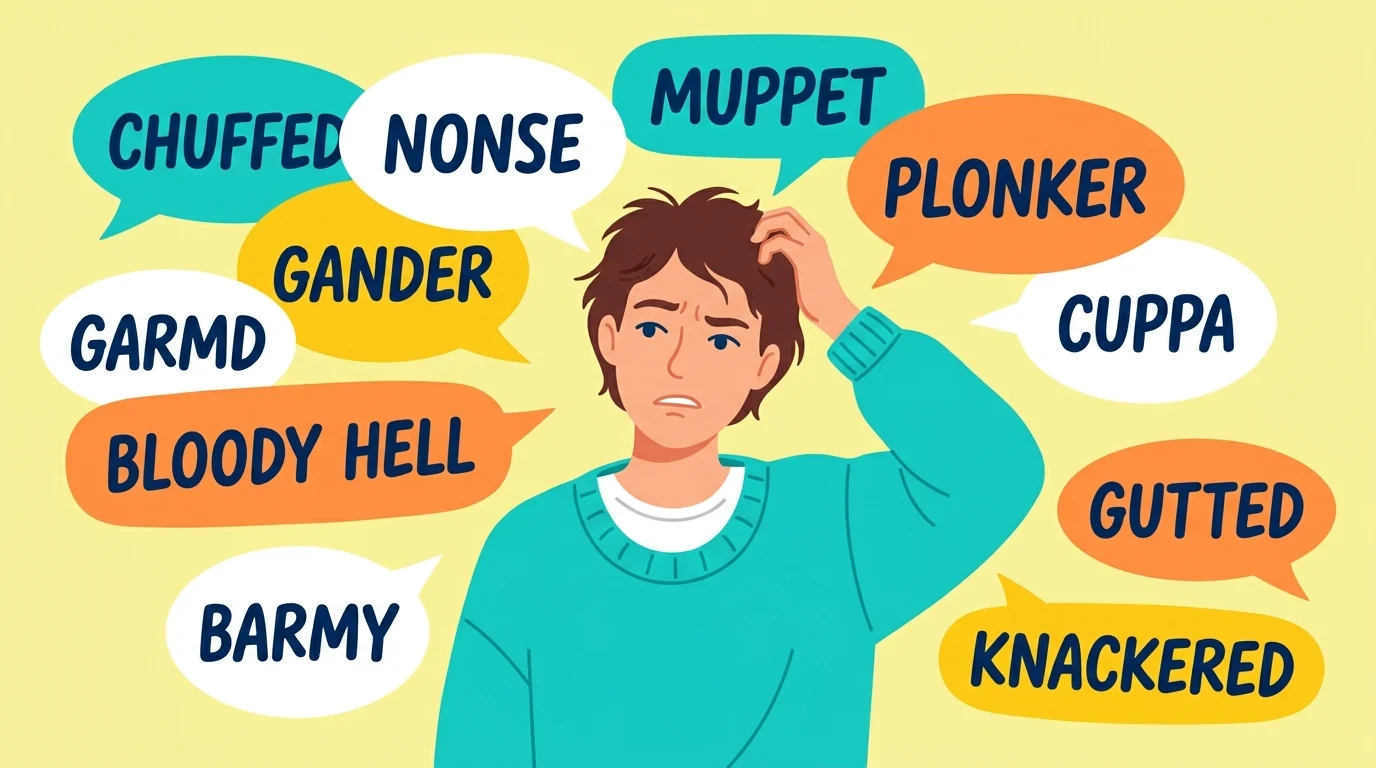

Nonse (also spelled nonce) is British slang that primarily refers to a sex offender or someone considered foolish or contemptible. In UK prison culture, it is one of the most serious insults. In casual usage, it can simply mean an idiot or someone acting cluelessly. The term carries heavy weight and should be used with extreme caution.
Ever heard someone drop the word “nonse” in a conversation and wondered what it meant? You are not alone. This British slang term has a layered and often misunderstood meaning. Depending on the context, it can be a grave accusation or a lighthearted jab at a friend’s silly mistake.
This guide breaks down everything you need to know about the word “nonse.” From its serious origins to its modern day usage, we will cover the definition, context, examples, and platform specific meanings. By the end, you will understand exactly what it means and when (or if) you should ever use it.
Quick Answer
| Aspect | Details |
|---|---|
| Meaning | A sex offender (primary); a foolish person (secondary). |
| Context | UK slang, prison culture, casual insults, internet banter. |
| Usage | Almost always derogatory. Can be playful among friends but very offensive otherwise. |
| Platforms | Social media (Twitter, TikTok), messaging apps, UK based forums. |
| Example | “He left the oven on all night? What a nonse.” |
| Tone | Insulting, derogatory, cautionary, playful (rarely). |
What Does “Nonse” Mean?
The word “nonse” is a variant spelling of “nonce.” In British English, it carries two distinct meanings.
Primary Definition (Serious)
The primary and most serious definition of “nonse” is a sex offender, particularly one who targets children. This meaning is deeply entrenched in UK prison culture, where “nonces” are considered the lowest of the low and are often targets of violence. In this context, the word is not slang; it is a severe label with life altering implications.
Secondary Definition (Casual)
In casual, everyday conversation, “nonse” has evolved to mean a foolish, or inept person. Think of it as a stronger version of “idiot” or “moron.” This usage is common among younger generations in the UK and has spread through social media. When used this way, it is often less about literal criminality and more about pointing out someone’s lack of common sense.
The Connection
How does a word for a severe criminal become a term for a fool? The logic is that someone who commits such a crime must be severely mentally deficient or morally bankrupt. Over time, the connotation split off from the “criminal” connotation, creating two separate but related meanings.
Full Definition and Origin
To fully grasp the word, we need to look at its history and linguistic roots.
Etymology
The exact origin of “nonce” is debated, but there are two primary theories.
- Prison Slang Theory: The most widely accepted theory is that it comes from prison slang, derived from the phrase “not on normal communal exercise.” In UK prisons, sex offenders were often kept separate from the general population for their own safety, meaning they were “not on normal exercise.” This acronym supposedly morphed into the word “nonce.
- Derogatory Slang Theory: Another theory suggests it comes from the older English word “nonce” meaning “the present occasion” or “for the once.” However, this is considered less likely. The prison origin theory is the most commonly cited and accepted.
Evolution of Meaning
The word’s journey from a prison classification to a general insult is a classic example of linguistic broadening.
- 1970s 1990s: The word was almost exclusively used in prison contexts. It was a dangerous word to use, carrying severe implications.
- 2000s 2010s: As British pop culture (like the TV show “The Inbetweeners”) popularized the term, it began to seep into mainstream youth slang. The “fool” meaning became more prominent.
- 2020s Present: Today, “nonse” is commonly used on social media platforms like TikTok and Twitter. While the serious meaning still exists, the casual usage is far more prevalent among Gen Z and Millennials.
Regional Variations
“Nonse” is predominantly a UK term. While it is understood in other English speaking countries (like the US, Canada, and Australia) due to internet culture, it is not natively used. In the US, the equivalent slang for a foolish person might be “dummy,” “moron,” or “idiot.” Using “nonse” in America might lead to confusion or, worse, accidental offense.
Context and Usage
Understanding context is everything with this word. Using it incorrectly can land you in hot water.
When It’s Serious
You should never use “nonse” to refer to an actual sex offender in casual conversation. This is a legal and moral minefield. Accusing someone of being a nonse (in the criminal sense) is defamatory and could have serious repercussions.
When It’s Casual (and Potentially Okay)
Among close friends in the UK, calling someone a “nonse” for doing something is common banter. For example, if a friend trips over their own feet, you might say, “Alright, nonse, watch where you’re going.”
However, even in casual usage, you must be careful:
- Know Your Audience: Only use it with people who understand the casual context and are comfortable with that type of humor.
- Tone Matters: The tone of voice and the situation dictate whether it’s funny or offensive.
- Avoid in Professional Settings: Never use this word at work, in formal writing, or with strangers.
The Power of the Word
The word “nonse” retains a lot of its original sting. Even when used casually, it carries a weight that other insults like “idiot” do not. This is because the serious meaning is always lurking in the background. Using it is a form of dark humor that acknowledges the taboo nature of the word.
Real-Life Examples
To see how “nonse” is used in the wild, let’s look at some realistic conversation examples.
1: Casual Banter Among Friends
Scenario: Two friends, Alex and Jamie, are playing video games.
Alex: “Dude, you just ran off the cliff again. What are you doing?”
Jamie: “I thought there was a bridge there!”
Alex: “You absolute nonse. How do you miss a whole bridge?”
2: Expressing Frustration
Scenario: Sarah is telling her friend about her day.
Sarah: “I can’t believe I locked my keys in the car. Again.”
Friend: “Oh no, not again!”
Sarah: “I know. I feel like such a nonse. I literally did this last week.”
3: Online Gaming
Scenario: Two gamers are on a voice chat.
Gamer 1: “Where are you going? The objective is the other way!”
Gamer 2: “I’m flanking!”
Gamer 1: “You’re not flanking, you’re walking into a wall. Stop being a nonse and follow me.”
4: Social Media Comment
Scenario: A user posts a video of a failed DIY project.
User Post: “Tried to hang a shelf. It fell down immediately.”
Comment: “Haha, what a nonse. You didn’t even use the right screws.”
5: A Warning
Scenario: Two people are discussing a controversial figure.
Person A: “Did you see what that guy posted online?”
Person B: “Yeah, he’s a complete nonse. I can’t believe people follow him.”
(In this context, the speaker is using “nonse” to mean a contemptible or morally bankrupt person, leaning closer to the serious definition but used metaphorically.)
Platform-Specific Meaning
The way “nonse” is used can vary depending on the platform.
TikTok
On TikTok, “nonse” is often used in comedic skits or reaction videos. A user might film themselves doing something clumsy and caption it “I am such a nonse.” It is part of the platform’s lexicon of self deprecating humor. It is also used in comment sections to call out someone for a particularly bad take or action.
Twitter (X)
On Twitter, the word is used both seriously and casually. In political or social discourse, it might be used to insult a public figure. In more casual threads, it is used as a playful jab. The character limit of Twitter makes slang like “nonse” appealing because it conveys a lot of meaning in a single word.
WhatsApp and Messaging Apps
In private messages, “nonse” is a staple of British banter. It is often used between friends to mock each other. The informality of messaging apps makes it a go-to insult for lighthearted teasing.
On UK based subreddits (like r/CasualUK), “nonse” appears frequently. It is used in the same casual, self deprecating, or banter filled way as in real life. However, on more serious subreddits, the word might be banned or heavily moderated due to its offensive connotations.
Gaming Platforms
In online gaming (Xbox, PlayStation, PC), “nonse” is a common insult. Gamers use it to call out teammates for making mistakes or playing poorly. The competitive and high stress environment of gaming makes insults like this common, though it can sometimes cross the line into toxicity.
Alternative Meanings and Related Terms
While “sex offender” and “fool” are the primary meanings, there are a few other ways the word is used.
“Nonce” in Cryptography
In the world of computer science and cryptography, a “nonce” is a number used once. It is a random or semi-random number generated for a specific use, often in authentication protocols to prevent replay attacks. This meaning is entirely separate from the slang and has no offensive connotations.
“For the Nonce”
In older, more formal English, the phrase “for the nonce” means “for the present purpose” or “temporarily.” This usage is archaic and rarely seen today. It shares the same spelling but is pronounced differently (rhyming with “ponce”) and has nothing to do with the slang.
Related Slang Terms
- “Noncy”: An adjective meaning “foolish” or “acting like a nonse.” Example: “Stop being so noncy.”
- “Muppet”: A common British slang term for a foolish person. It is much milder and safer to use than “nonse.”
- “Plonker”: Another mild British insult meaning a person.
- “Bellend”: A harsher British insult, but still generally less severe than the serious meaning of “nonse.”
How to Respond If Someone Calls You a Nonse
Being called a “nonse” can be confusing, especially if you are not from the UK. Your response should depend on the context.
1: Playful Banter with Friends
If a friend calls you a nonse for making a silly mistake, the best response is to laugh it off and lean into it.
- Response: “I know, I know. I’m the biggest nonse ever.”
- Response: “Takes one to know one, mate.”
- Response: “Shut up, you literally did the same thing yesterday.”
2: Serious Accusation
If someone calls you a nonse with clear malicious intent, implying the criminal definition, you need to shut it down immediately.
- Response: “That is a serious accusation. I would appreciate it if you would not use that word to describe me.”
- Response: “That is completely out of line. Do not call me that.”
3: You Don’t Understand the Context
If you are not sure if it’s a joke or not, it is best to ask for clarification.
- Response: “Wait, are you joking or are you being serious?”
- Response: “I’m not from the UK. What does that mean?”
Misinterpretations to Avoid
Because “nonse” is a loaded word, there are several common misinterpretations.
1: It’s Just a Silly Word
False. While it is used playfully, it is never “just” a silly word. The serious meaning is always attached to it. Using it flippantly can make you seem ignorant or insensitive.
2: It’s a General Insult Like “Idiot”
Partially True. In casual settings, yes, it functions like “idiot.” However, you cannot use it in the same contexts. You can call a colleague an “idiot” (though not advised) in a moment of frustration. Calling them a “nonse” would be a career ending move.
3: It’s Used the Same Way in the US
False. The word is not commonly used in the US. If you use it in America, you will likely be met with confusion. If the person you are speaking to has heard it, they probably know the criminal definition, which could lead to a very awkward conversation.
4: It’s Okay to Use on the Internet
Proceed with Caution. Just because you see it on TikTok doesn’t mean it’s free to use. The internet is global. You never know who is reading your comment or what their background is.
When NOT to Use It
There are clear boundaries for when this word should be avoided entirely.
In the Workplace
Absolutely never use “nonse” at work. It is unprofessional, offensive, and could easily be construed as harassment. HR will not see the funny side.
With Strangers or Acquaintances
If you do not know someone well, do not use this word. Banter requires a level of intimacy and trust. Using it with a stranger is a recipe for conflict.
In Formal Writing
Do not use “nonse” in essays, articles (unless quoting someone), business emails, or any formal communication.
In the Presence of Children
Given the serious meaning of the word, it is highly inappropriate to use around children.
When You Are Angry
If you are genuinely angry at someone, using “nonse” will escalate the situation. It is a provocative word that can turn a minor disagreement into a major confrontation.
Usage Tips
If you are going to use “nonse,” do so wisely.
1: Know Your Audience
This is the golden rule. Only use the word with people who understand and appreciate the casual, ironic context. If you are in any doubt, just don’t use it.
2: Use It Sparingly
Like any strong insult, its power diminishes with overuse. If you call everyone a nonse, the word loses its impact. Save it for moments that genuinely warrant a strong reaction.
3: Self-Deprecation is Safest
The safest way to use “nonse” is to use it on yourself. Calling yourself a nonse for a silly mistake is a form of self-deprecating humor that is generally well-received and unlikely to offend.
4: Understand the Subtext
When you use “nonse,” you are engaging in a specific type of dark humor. You are playing with the taboo nature of the word. Make sure you and your audience are on the same page regarding that subtext.
5: Have an Escape Plan
If you use the word and someone gets offended, be prepared to apologize sincerely. Do not double down. Say something like, “I’m really sorry, I was just joking. I didn’t mean to offend you.”
FAQs
Is “nonse” a bad word?
Yes, “nonse” is a bad word. It is a strong insult that refers to a sex offender. Even when used casually, it is considered offensive and inappropriate in most formal or public settings.
What does “nonse” mean in British slang?
In British slang, “nonse” means a foolish or person. However, its primary and more serious meaning is a sex offender, particularly one who targets children.
What is the difference between “nonce” and “nonse”?
“Nonce” is the original and more common spelling. Nonse” is a variant spelling that has emerged in recent years, particularly in text speak and on social media. They mean the same thing.
Is “nonse” used in America?
No, “nonse” is not commonly used in America. It is a British term. Using it in the US would likely cause confusion.
Can I use “nonse” to describe a friend?
You can use “nonse” to describe a friend in a joking manner, but only if you are both very comfortable with each other and understand the casual context. It is a risky word and can easily be misinterpreted.
Where did the word “nonce” come from?
The most common theory is that it comes from UK prison slang, standing for “Not On Normal Communal Exercise,” referring to sex offenders who were kept separate from other inmates for their safety.
What is a “nonce” in cryptography?
In cryptography, a “nonce” is a number used once. It is a random or semi-random number used in authentication protocols to ensure that old communications cannot be reused in a “replay attack.” This meaning is completely unrelated to the slang.
What are some safer alternatives to “nonse”?
Safer alternatives include “idiot,” “fool,” “muppet,” “plonker,” or “dummy.” These words are much milder and do not carry the serious connotations of “nonse.”
Is “nonse” a slur?
While not a slur in the traditional sense (like a racial or ethnic slur), “nonse” is a highly derogatory and offensive term. It is considered a severe insult in the UK.
How do you pronounce “nonse”?
“Non” is pronounced like “non” in “nonstop.” The “se” is pronounced like “se” in “sense.” It rhymes with “ponce.”
Conclusion
“Nonse” is a word of extremes. On one hand, it is a severe label for a sex offender, a term steeped in the harsh realities of prison culture. On the other, it has become a staple of British banter, used to mock friends for minor foolishness. Understanding this duality is the key to using and interpreting the word correctly.
If you are not from the UK, it is generally best to avoid using the word altogether. The risk of causing offense or being misunderstood is simply too high. If you are in the UK and using it among friends, remember the golden rule: know your audience. Use it sparingly, use it with care, and always be ready to apologize if you misjudge the room.
Language is a powerful tool, and “nonse” is a prime example of a word that carries a heavy load. Use it wisely, or better yet, use a milder alternative.