
You may see someone called a “fascist” during a political argument, in a history discussion, or even in a heated social media comment. The fascist meaning refers to a person who supports fascism or, more broadly, someone described as supporting an authoritarian, ultranationalist political system associated with dictatorship and suppression of opposition. The word has a specific historical and political meaning, so using it simply to mean “strict” can be misleading. Understanding the difference between its literal political meaning and its casual or exaggerated use can help you interpret the word correctly and avoid using it inaccurately.
What Does Fascist Mean?
A fascist is a person who supports fascism, a political ideology characterized historically by authoritarian leadership, extreme nationalism, political repression, and the subordination of individual freedoms to the state or nation. The word can also be used more loosely as an accusation against someone perceived as extremely authoritarian or controlling.
| Detail | Explanation |
|---|---|
| Most common meaning | A person who supports fascism or fascist political ideas |
| Full form | Not an abbreviation; there is no “full form” |
| Tone | Usually serious, critical, or accusatory |
| Common contexts | Politics, history, news, debate, social media |
| Formal or informal | Formal political term, but often used informally as an insult |
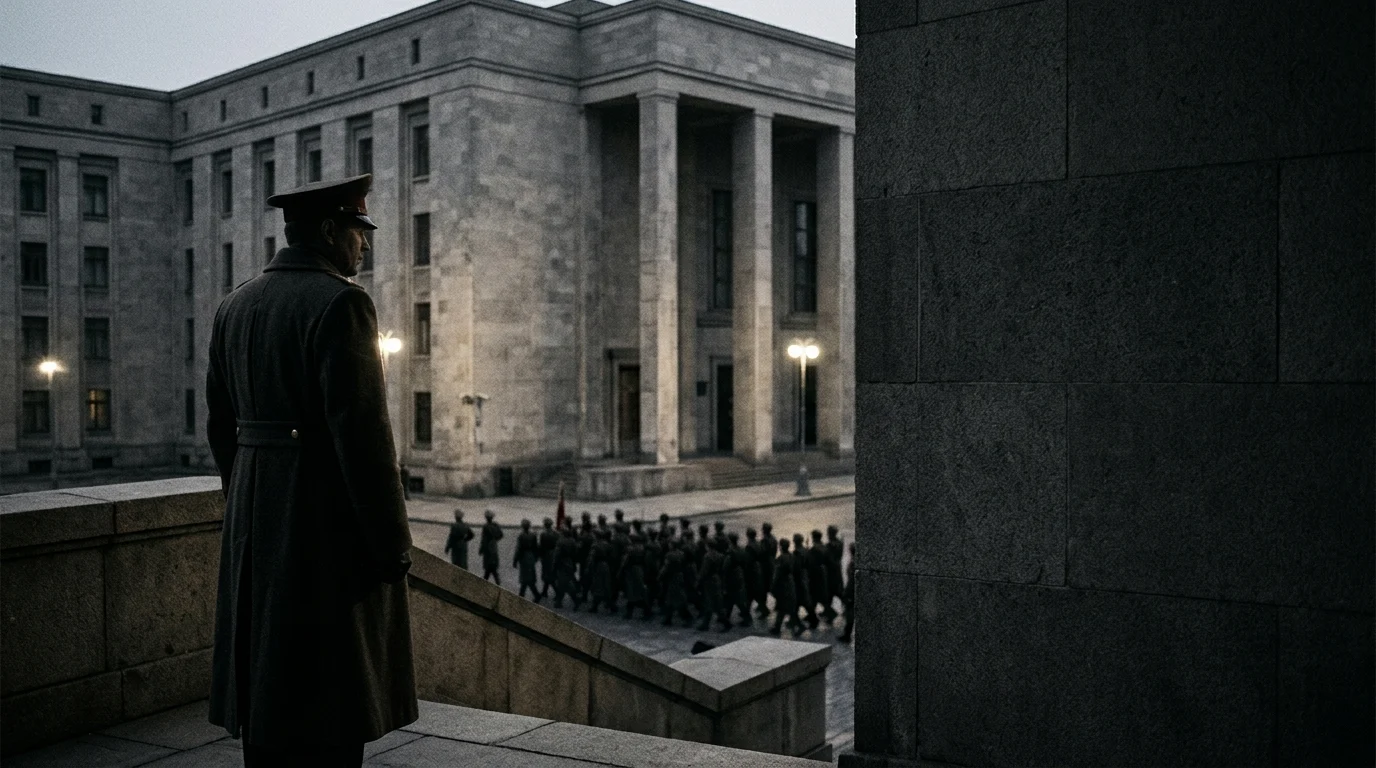
The term is closely connected to fascism, a family of far-right authoritarian political movements that emerged prominently in Europe during the early 20th century. Italian Fascism under Benito Mussolini is the classic historical example.
Calling someone a fascist therefore carries much more weight than simply calling them strict, bossy, or conservative. Whether the word is being used accurately depends heavily on the person’s political beliefs and actions.
For example:
“The historian described Mussolini as a fascist.”
Here, the word has its direct historical meaning because Mussolini led Fascist Italy.
What Is the Fascist Meaning in Politics?
In political and historical discussions, “fascist” has a more specific meaning than it does in everyday arguments. Fascist movements have historically emphasized authoritarian leadership, intense nationalism, political unity, obedience, and the suppression of opponents.
Fascism is not defined by just one characteristic. A government being authoritarian, nationalist, or repressive does not automatically make it fascist. Historical and political analysis considers the broader ideology, movement, institutions, and methods involved.
This distinction matters because people sometimes use “fascist” as a general synonym for “bad government” or “dictator.” That broad usage may communicate strong disapproval, but it can lose the historical meaning of the term.
Is Fascist the Same as Authoritarian?
No. Authoritarian and fascist overlap, but they are not interchangeable.
An authoritarian system generally concentrates political power and restricts political freedom or opposition. Fascism refers to a particular ideological tradition that historically combines authoritarianism with features such as intense nationalism, mass political mobilization, and rejection of liberal democratic pluralism.
Someone can therefore describe a government as authoritarian without necessarily calling it fascist.
For example, saying “the regime is authoritarian” may describe its concentration of power without making the broader ideological claim contained in “fascist.”
How Context Changes the Meaning
The surrounding conversation can tell you whether “fascist” is being used historically, politically, or as an exaggerated insult.
1. Historical context
“The documentary examines fascist Italy.”
Here, “fascist” identifies the political system associated with Mussolini.
2. Political debate
“The opposition accused the government of fascist policies.”
This is a political characterization or accusation, so the surrounding argument matters. It does not automatically establish that the government is fascist.
3. Casual exaggeration
“My coach is a fascist about being five minutes early.”
The speaker probably means the coach is extremely strict, not that the coach literally supports fascism.
4. Online argument
“Stop acting like a fascist.”
Punctuation and wording can also affect tone. “You’re a fascist.” sounds more direct and hostile than “That rule feels a little fascist,” which may be exaggerated criticism of a particular rule.
Fascist Meaning in Text and Online Chat
In texts, group chats, comments, and direct messages, fascist usually keeps its standard political meaning, but people often use it hyperbolically.
Someone might call a friend “fascist” because the friend controls the playlist, enforces strict rules, or refuses to compromise. In these situations, the speaker may be using the word for dramatic effect rather than making a literal political claim.
For example:
Friend A: “No phones during dinner. Hand them over.”
Friend B: “Okay, fascist 😂”
The second person is probably joking about the strict rule. The laughing emoji and casual relationship signal that the word is being used humorously.
Still, context should not be ignored. In a political discussion, the same word could be a serious accusation.
Fascist Meaning on Social Media
On TikTok, Instagram, Snapchat, Reddit, Discord, and other platforms, the basic definition does not fundamentally change. What changes is how casually the word may be used.
Social media conversations often compress complicated political arguments into short labels.
A useful rule is to look for the behavior or belief the speaker is describing.If someone is joking about household rules, it is more likely hyperbolic.
Real Conversation Examples
1: History class
Person A: “Why is Mussolini described as fascist?”
Person B: “Because he led Italy’s Fascist movement and established an authoritarian regime.”
Meaning: Here, “fascist” is being used as a historical and political classification.
2: Friends joking
Person A: “Everyone has to submit their movie choice before Friday.”
Person B: “Our group chat has become fascist 😂”
Meaning: The speaker is exaggerating for humor and comparing strict group rules to authoritarian control.
3: Political discussion
Person A: “They are calling the movement fascist.”
Person B: “What specific policies or beliefs are they referring to?”
What Tone Does “Fascist” Have?
The tone depends strongly on context.
- Neutral or academic: In historical writing, “fascist” can be a descriptive political term.
- Serious: Political discussions may use it to characterize an ideology, movement, or political actor.
- Critical: The word generally carries strongly negative associations.
- Sarcastic: Friends may use it jokingly to describe someone enforcing strict rules.
- Offensive or hostile: Calling a person a fascist can be a severe personal accusation, particularly during an argument.
Is Fascist Rude?
It can be. Calling someone a fascist in an argument usually sounds hostile because the term carries serious political and historical implications. Using it jokingly among close friends can be less aggressive when the context clearly signals humor.
Is Fascist an Insult?
It can function as an insult when directed at someone personally, especially when the speaker provides no serious political reasoning. However, the word is also a legitimate historical and political descriptor, so it is not inherently an insult in every context.
How to Reply When Someone Calls You a Fascist
Your best response depends on whether the person is joking, making a political accusation, or simply using the word loosely.
If You Want Clarification
- “What specifically makes you say that?”
- “Which policy or behavior are you referring to?”
- “Do you mean that literally or are you joking?”
They Are Joking
- “Strict, maybe. Fascist is a little dramatic.”
- “I prefer ‘organized authoritarian’ 😂.”
- “Fine, but the rules stay.”
If It Is a Serious Political Argument
- “I disagree with that characterization. Which specific position are you referring to?”
- “Let’s discuss the actual policy instead of using labels.”
- “If you think that term applies, explain what you mean by it.”
These responses keep the conversation focused on the actual behavior or political position rather than escalating the label.
When to Use the Term
Use “fascist” when the historical or political context genuinely supports the term. It is appropriate in discussions of fascist movements, political history, authoritarian ideology, and serious analysis of political behavior.
In casual conversations, people may use it jokingly, but you should remember that the word has a much stronger meaning than “strict” or “controlling.” If your audience may interpret the term literally, clearer wording can prevent unnecessary conflict.
When to Avoid the Term
Avoid using “fascist” as a casual substitute for every person who is strict, conservative, controlling, or difficult. Doing so can obscure the distinction between fascism and other political positions or forms of authority.
In professional emails, academic work, workplace communication, or sensitive political discussions, use specific language whenever possible. Instead of simply labeling someone fascist, explain the policy, behavior, or political belief you are criticizing.
Common Mistakes
| Common Mistake | Correct Understanding |
| Treating “fascist” as another word for strict | Strict behavior alone does not establish fascist ideology |
| Assuming fascist and authoritarian mean exactly the same thing | Authoritarianism is broader; fascism refers to a specific ideological tradition |
| Using the word without considering context | A historical description and a personal insult can have very different meanings |
Another common mistake is assuming every use online is a serious political claim. Social media users sometimes exaggerate for humor, but you should not assume that without considering the surrounding conversation.
Similar Political Terms
| Term | Meaning | Main Difference |
| Fascist | Supporter of fascism or associated with fascist politics | Refers to a specific ideological tradition |
| Authoritarian | Favoring concentrated power and limited political freedom | Broader category than fascism |
| Totalitarian | Seeking extensive control over political and social life | Describes an extreme form of political control |
| Dictator | A ruler who holds extensive power, often without democratic accountability | Refers primarily to a ruler or governing arrangement |
| Extremist | Someone holding views far outside a perceived mainstream | Broad label that does not specifically mean fascist |
These terms can overlap in some contexts, but replacing one with another without explanation can change the meaning of a statement.
Origin and Historical Use
The word “fascist” comes from fascism, which is derived from the Italian fascismo. The term became strongly associated with Benito Mussolini’s political movement in Italy during the early 20th century.
Its historical development is more complicated than a single definition or event. That is why serious political discussions often examine specific characteristics rather than relying on the label alone.
Today, “fascist” can therefore have both a historical meaning and a broader rhetorical use.
Quick Recap
- Fascist meaning primarily refers to a person who supports fascism or fascist political ideas.
- Fascism is associated historically with authoritarianism, extreme nationalism, political repression, and opposition to liberal democratic pluralism.
- “Fascist” is not simply a synonym for strict, authoritarian, conservative, or dictatorial.
- Online, people sometimes use the word jokingly or hyperbolically.
- Context determines whether the word is being used historically, politically, sarcastically, or as an insult.
Frequently Asked Questions
What does fascist mean in text?
In text messages, fascist usually means a supporter of fascism but can jokingly describe someone acting extremely strict or controlling.
Is fascist rude?
Calling someone fascist can sound highly insulting when used personally, although historical and academic uses can remain neutral.
What does fascist mean on TikTok?
On TikTok, fascist generally retains its political meaning but may also appear as exaggerated criticism during casual arguments.
How should you reply to fascist?
Ask what specific behavior or belief prompted the label, especially when the person appears to be making a serious political accusation.
Can fascist have different meanings?
Yes, fascist can describe fascist politics literally or serve as humorous exaggeration when someone is portrayed as unusually strict.
Final Thoughts
The fascist meaning is rooted in a specific political and historical tradition rather than simply describing someone who is strict or unpleasant. In serious contexts, it refers to support for or association with fascism, while casual online conversations may use the word more loosely or sarcastically. Context, wording, and the relationship between speakers help reveal which sense is intended. If you use the term yourself, be precise about the behavior or political ideas you mean. When someone calls you a fascist, asking for clarification can help distinguish a genuine political accusation from casual exaggeration.
Discover More Post:
Cooked Meaning Slang | What It Means & How to Use It
Habibi Meaning Slang | The Guide to Arabic’s Favorite Term of …
ISO Meaning Slang | The Complete Guide to “In Search Of” in …