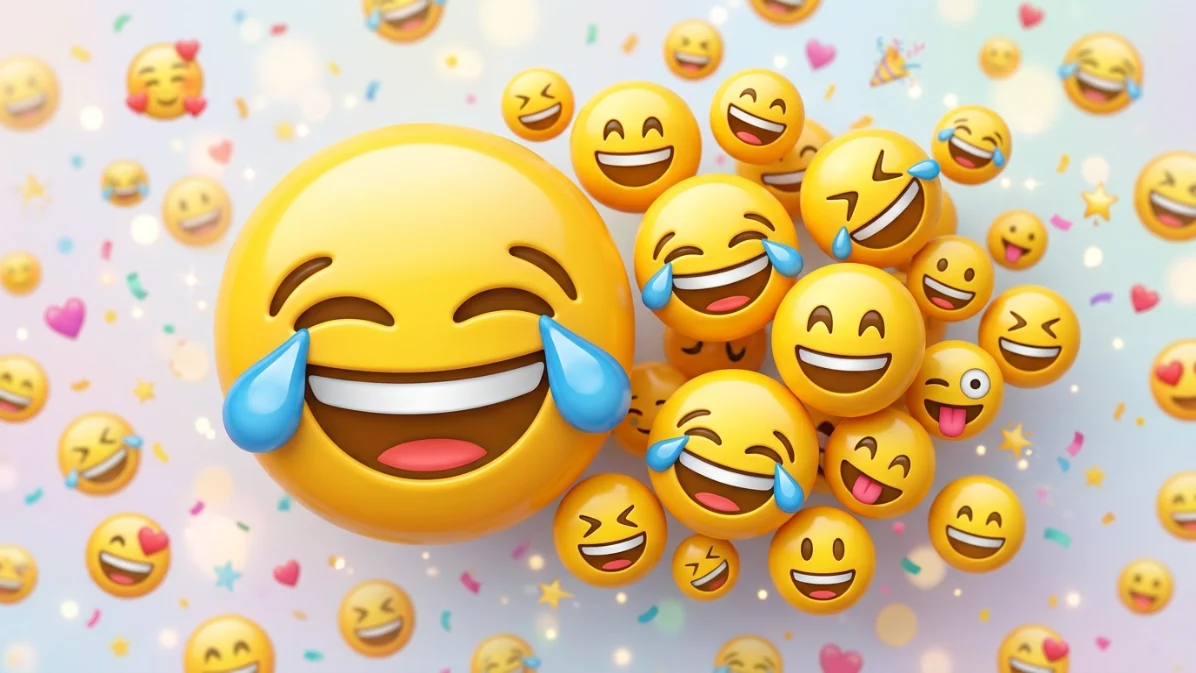

The laughing emoji 😂 usually means that something is very funny, amusing, or joyfully ridiculous. Its official name is Face with Tears of Joy, and its expression represents someone laughing so hard that tears come from their eyes.
In most messages, 😂 has a positive and playful tone. However, it can also soften teasing, show that a statement is not serious, or make a sarcastic response feel more obvious. The surrounding words and the relationship between the people matter more than the emoji alone.
Quick Answer
😂 commonly expresses strong laughter or amusement. It can mean:
- “That is really funny.”
- “I cannot stop laughing.”
- “I am joking.”
- “That situation is ridiculous.”
- “I am laughing at what just happened.”
It does not automatically mean the sender is flirting, mocking you, or being dishonest. Those interpretations depend on the full conversation.
What Is the Laughing Emoji?
Although people call it the laughing emoji, its official Unicode name is Face with Tears of Joy. It has the code point U+1F602 and was approved as part of Unicode 6.0 in 2010. It was later included in Emoji 1.0 in 2015.
The design normally shows:
- A wide, open smile
- Closed or smiling eyes
- Raised eyebrows
- A tear on each side of the face
The tears are meant to represent intense laughter rather than sadness.
What Does 😂 Mean in Texting?
In a text message, 😂 usually works like a stronger version of “LOL.” It tells the other person that the sender found something genuinely funny or wants the message to feel lighthearted.
Its exact meaning changes with the words placed before it.
Genuine laughter
“The dog ran away with my sandwich 😂”
Likely meaning: The sender finds the situation very funny.
Why: The emoji reacts directly to a humorous event.
Playful teasing
“You really thought the meeting was tomorrow 😂”
Likely meaning: The sender is gently teasing someone about a mistake.
Why: The emoji shows that the comment is meant playfully rather than as a harsh criticism.
Laughing at yourself
“I spent ten minutes looking for my phone while holding it 😂”
Likely meaning: The sender is amused by their own mistake.
Why: The emoji adds self-deprecating humor and shows that the sender is not embarrassed in a serious way.
Exaggerated disbelief
“They want me to finish all of that by noon 😂”
Likely meaning: The sender thinks the request is unrealistic or absurd.
Why: The laughter is directed at the situation, not necessarily at a joke.
Sarcastic laughter
“Sure, because that worked so well last time 😂”
Likely meaning: The sender probably does not believe the statement.
Why: The sarcastic wording changes the emoji from cheerful laughter to amused disbelief.
Can the Laughing Emoji Be Rude?
Yes, but it is not naturally rude.
😂 may feel dismissive when it is used in response to something serious, personal, or upsetting. For example:
“I was really nervous during my presentation.”
A reply containing only “😂” could seem as though the sender is laughing at the person rather than supporting them.
It can also feel mocking during an argument:
“You honestly believe that? 😂”
Here, the emoji may suggest ridicule or disrespect because it appears after a direct challenge.
When the tone is unclear, look at:
- What the sender is replying to
- Whether the conversation is serious or playful
- How the person normally uses emojis
- Whether the message contains teasing, criticism, or an inside joke
- Whether other words clarify the intention
Research on emoji interpretation has found that many emojis become harder to interpret when they are shown without surrounding context.
Is 😂 Friendly or Flirty?
The laughing emoji is usually friendly rather than romantic.
Someone may use it while flirting because humor is part of the conversation, but 😂 alone does not prove attraction. A friend, coworker, relative, or romantic interest may all use it in the same way.
For example:
“You always know how to make me laugh 😂”
This could be friendly or flirty. The meaning depends on the relationship, previous messages, timing, and any other affectionate language.
A message such as:
“You looked really good tonight 😂”
may feel more confusing because the laughter could suggest nervousness, teasing, or an attempt to reduce the seriousness of the compliment. It is better to interpret the whole exchange rather than treating one emoji as a definite romantic signal.
Laughing Emoji Compared With Similar Emojis
The official names below follow Unicode and CLDR terminology. Each emoji can take on additional meanings depending on the conversation.
| Emoji | Official Name | Common Meaning | Tone | Where or When It Is Used |
|---|---|---|---|---|
| 😂 | Face with Tears of Joy | Something is extremely funny | Joyful, playful | Jokes, funny stories, teasing, amusing mistakes |
| 🤣 | Rolling on the Floor Laughing | Laughter that feels even more intense than 😂 | Exaggerated | Extremely funny reactions, memes, wild stories |
| 😆 | Grinning Squinting Face | Hearty laughter, excitement, or delight | Energetic, cheerful | Good news, playful excitement, lighter laughter |
| 😅 | Grinning Face with Sweat | Nervous laughter, relief, or mild embarrassment | Awkward, relieved | Close calls, mistakes, uncomfortable jokes |
| 😭 | Loudly Crying Face | Strong sadness or an overwhelming emotional reaction; sometimes intense laughter | Dramatic, emotional | Sad news, emotional moments, exaggerated laughter |
| 😹 | Cat with Tears of Joy | A cat-style version of laughing with tears | Silly, playful | Cat jokes, cute reactions, humorous comments |
| 😄 | Grinning Face with Smiling Eyes | Warm happiness and friendly amusement | Positive, welcoming | Greetings, good news, friendly conversations |
| 🙃 | Upside-Down Face | Irony, silliness, sarcasm, or “everything is fine” humor | Ironic, awkward | Frustration disguised as humor, dry jokes, sarcasm |
🤣 is the closest alternative to 😂, but it usually suggests a stronger or more exaggerated reaction. Emojipedia describes it as laughter that is often more intense than Face with Tears of Joy.
😆 shows laughter without tears and may feel more cheerful or excited. 😅 adds nervousness, embarrassment, or relief rather than pure amusement.
😭 is the easiest emoji to misunderstand. Its official expression represents loud crying, but it can also communicate overwhelming joy or uncontrollable laughter. The words around it are needed to tell which emotion is intended.
😂 vs. 🤣: What Is the Difference?
Both emojis express laughter, but their intensity is slightly different.
😂 Face with Tears of Joy usually means:
- “That is really funny.”
- “I am laughing hard.”
- “That made my day.”
🤣 Rolling on the Floor Laughing usually means:
- “That is unbelievably funny.”
- “I am completely losing it.”
- “I cannot handle how funny this is.”
Use 😂 for strong but common laughter. Use 🤣 when you want the reaction to feel bigger, more dramatic, or deliberately exaggerated.
😂 vs. 😭: Laughter or Crying?
The facial designs help separate them:
- 😂 has a wide grin with a tear beside each eye.
- 😭 has an open, wailing mouth with heavy streams of tears.
😂 almost always points toward laughter or amusement. 😭 can express sadness, emotional overwhelm, pride, joy, or intense laughter.
Consider these messages:
“That video was too funny 😂”
The meaning is clearly laughter.
“That video was too funny 😭”
This also probably means laughter, but the reaction feels more dramatic or overwhelmed.
“I cannot believe she is gone 😭”
Here, the surrounding words clearly signal grief.
What Multiple Laughing Emojis Mean
Using several laughing emojis usually increases the emotional intensity:
“Stoppp 😂😂😂”
This often means the sender finds something extremely funny and wants to emphasize the reaction.
However, repeated emojis can also be intentionally dramatic. Someone may send five laughing faces even when they only found the message mildly amusing. Repetition shows emphasis, but it does not measure how much someone actually laughed.
In a disagreement, repeated 😂 emojis may feel more mocking than one:
“That is your argument? 😂😂😂”
The repetition can make the response sound dismissive or insulting.
How to Respond to the Laughing Emoji
The best reply depends on what made the person laugh.
Continue the joke
“I knew you would find that funny.”
“It gets worse—wait until you hear the rest.”
Match the playful tone
“I was laughing at myself too 😂”
“Honestly, I deserved that.”
Accept friendly teasing
“Okay, okay, you got me.”
“I will never make that mistake again.”
Clarify a confusing reaction
“Are you laughing at the situation or at me?”
“I cannot tell whether you are joking.”
Address a rude response
“I was being serious.”
“That response feels a little dismissive.”
You do not need to respond with another emoji. A normal sentence is often clearer, especially when the original message could be interpreted in more than one way.
Does the Laughing Emoji Look Different on Different Devices?
The basic expression remains recognizable, but Apple, Google, Samsung, Microsoft, WhatsApp, and other platforms create their own artwork. Details such as the shape of the eyes, position of the tears, teeth, eyebrows, and angle of the face can vary.
These design differences normally do not change the basic meaning of 😂. However, research has shown that platform-specific emoji designs can sometimes affect how people judge an emoji’s emotional tone.
This means the emoji you send may not look exactly the same on the recipient’s phone.
Copy and Paste the Laughing Emoji
Copy the emoji here:
😂
Official name: Face with Tears of Joy
Unicode code point: U+1F602
Frequently Asked Questions
What does 😂 mean from someone?
It usually means the person found something funny, amusing, or ridiculous. It may also soften teasing or show that a message is not meant seriously. The sender’s gender does not determine its meaning.
Does 😂 mean someone is laughing at me?
Not necessarily. The person may be laughing with you, reacting to the situation, or showing that they understood a joke. It is more likely to feel mocking when it follows criticism, an argument, or something you said seriously.
Can 😂 be sarcastic?
Yes. Sarcastic wording can turn it into a reaction of disbelief or ridicule.
For example:
“What a brilliant idea 😂”
Without more context, this may be genuine praise or sarcasm. The previous conversation will usually make the intention clearer.
What does a single 😂 reply mean?
A single emoji reply usually means “That was funny” or “I am laughing.” It can also be a quick acknowledgment when the sender has nothing else to add.
Is 😂 stronger than LOL?
It often feels more expressive than writing “LOL,” but that depends on the sender’s habits. Some people use 😂 for genuine laughter, while others use it as a routine friendly reaction.
Which emoji means laughing the hardest?
🤣 Rolling on the Floor Laughing generally communicates more intense or exaggerated laughter than 😂. However, people may also use repeated 😂 emojis or 😭 to show an overwhelming reaction.
Conclusion
The laughing emoji 😂 usually communicates strong amusement, joyful laughter, or a playful reaction. It can also soften teasing, express disbelief, or add sarcasm. To understand it correctly, consider the surrounding words, the seriousness of the conversation, and how the sender normally communicates.
Brief Source Note
Official name, code point, and Unicode details were verified through the Unicode Consortium. Meaning and closely related emoji distinctions were checked through Emojipedia. Context and platform-interpretation guidance was supported by published research on emoji ambiguity and cross-platform design differences.