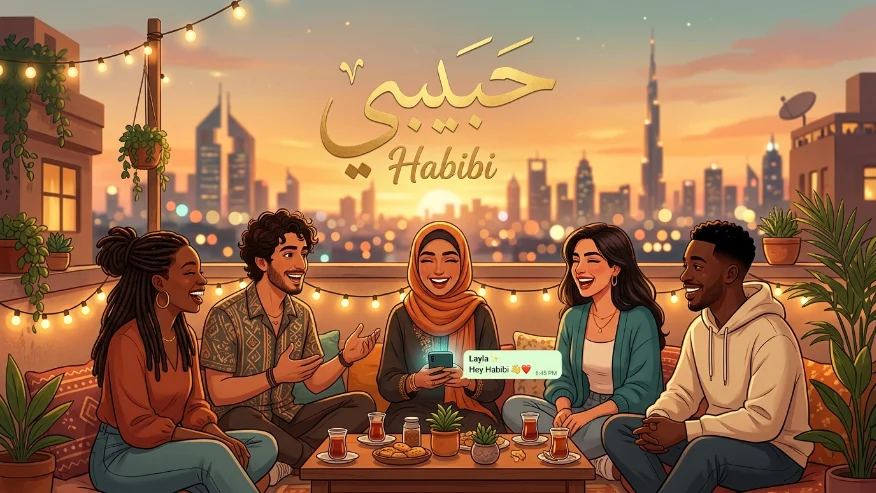

Habibi (حبيبي) is an Arabic term of endearment that literally translates to “my love,” “my beloved,” or “my dear.” It comes from the Arabic root word ḥubb (حب), meaning “love,” with the possessive suffix *-i* (“my”) attached to habib (“beloved” or “loved one”). While the masculine form habibi is used for males, the feminine counterpart is habibti for females.
In modern usage especially on social media and in casual conversation habibi is often used in a gender-neutral way among friends, family members, romantic partners, and even acquaintances to express warmth, affection, or camaraderie.
If you’ve spent any time on social media, scrolled through TikTok, or exchanged texts with someone from the Middle East, chances are you’ve come across the word habibi. Maybe a friend called you that in a group chat. Maybe you heard it in a song. Or maybe you just saw it in a meme and wondered what it actually means.
Here’s the short answer: habibi means “my love” in Arabic. But that simple translation doesn’t quite capture how versatile and widely used this word really is.
In this guide, we’ll break down everything you need to know about the habibi meaning from its literal definition and cultural roots to how it’s used across different platforms, relationships, and contexts. Whether you want to use it correctly in a text, understand what someone meant when they called you habibi, or just impress your friends with your knowledge of Arabic slang, you’re in the right place.
Quick Answer
| Aspect | Details |
| Meaning | “My love,” “my beloved,” “my dear,” or “my darling” |
| Language | Arabic |
| Root Word | Ḥubb (حب) = love |
| Masculine Form | Habibi (for males) |
| Feminine Form | Habibti (for females) |
| Common Contexts | Friends, family, romantic partners, colleagues, strangers (in some cultures) |
| Platforms | WhatsApp, Snapchat, TikTok, Instagram, texts, gaming chats, in-person conversation |
| Example Usage | “Hey habibi, how are you?” / “Relax, habibi.” / “Miss you, habibi ❤️” |
| Tone | Warm, affectionate, casual, playful, sometimes flirty |
What Does Habibi Mean?
At its most basic level, the habibi meaning is “my love” or “my beloved.” The word comes from the Arabic root *ḥ-b-b* (حب), which is all about love, affection, and endearment. In Arabic, adding the possessive suffix *-i* to habib (“beloved” or “loved one”) turns it into “my beloved.”
But here’s the thing: habibi isn’t just for romantic partners. Depending on who’s saying it and how they say it, habibi can mean anything from “my dear friend” to “bro” to “sweetheart” to “babe.” It’s one of those rare words that works across multiple relationships and emotional registers.
Habibi vs. Habibti: What’s the Difference?
Arabic is a gendered language, which means the form of a word often changes depending on whether you’re addressing a male or female.
- Habibi (حبيبي) = masculine form. Used when addressing a male.
- Habibti (حبيبتي) = feminine form. Used when addressing a female.
However, in casual conversation especially among younger people and on social media many Arabic speakers and non-native users use habibi in a gender-neutral way. It’s not uncommon to see someone call a female friend habibi in a text or comment, even though the grammatically correct form would be habibti.
Origin and Cultural Background
The word habibi has deep roots in the Arabic language, stretching back centuries. It appears in classical Arabic literature, poetry, and songs, where it’s used to express love, longing, and deep emotional connection.
The root *ḥ-b-b* is one of the most common and emotionally charged roots in Arabic. It’s used to form words like ḥubb (love), maḥbūb (beloved or loved one), and taḥabbub (endearment). This isn’t a casual slang term that emerged recently it’s a foundational piece of the language that carries real weight.
Over time, habibi spread beyond the Arab world through migration, music, film, and now social media. Today, it’s recognized and used by millions of people who don’t speak a word of Arabic. It’s become a global term of endearment, popping up everywhere from Hollywood movies to TikTok trends.
One major moment that brought habibi to a global audience was Egyptian superstar Amr Diab’s 1996 hit “Nour El Ain,” where he repeatedly sings “Ya Habibi, Ya Habibi” in the chorus. The song became an international sensation and introduced the word to millions of non-Arabic speakers.
Context and Usage: When and How to Use Habibi
One of the most important things to understand about the habibi meaning is that context is everything. The same word can mean something completely different depending on who’s saying it, who they’re saying it to, and the situation they’re in.
1. Romantic Context
In a romantic relationship, habibi is the Arabic equivalent of “baby,” “babe,” “sweetheart,” or “my love.” Partners use it to express affection, intimacy, and emotional closeness.
Example: “I love you, habibi. You’re everything I wanted in a man.”
2. Friends and Family
Among friends and family members, habibi is used casually to show warmth and affection. It’s similar to calling someone “buddy,” “bro,” “dude,” or “hon.” In many Arab cultures, it’s completely normal for male friends to call each other habibi without it being romantic or awkward.
Example: “Habibi, are we playing FIFA tonight?”
3. Professional and Formal Settings
While habibi is common in casual conversation, it’s generally not appropriate in formal professional settings especially with superiors, clients, or people you don’t know well. In some Middle Eastern workplaces, however, colleagues who are close friends might use it informally.
Tip: When in doubt, don’t use habibi with your boss, a client, or someone you’ve just met in a formal context.
4. With Strangers (In Some Cultures)
In certain parts of the Arab world like Lebanon, Egypt, and the UAE it’s common to use habibi with strangers to soften interactions. It’s similar to how someone in the southern United States might call a stranger “hon” or “sweetie.”
Example: A shopkeeper might say, “Habibi, let me help you find what you need.”
5. De-escalating Tension
Habibi can also be used to calm someone down or diffuse a tense situation. Adding habibi to a statement softens the tone and makes it feel less confrontational.
Example: “Relax, habibi. It’s not that serious.”
Real-Life Examples
Let’s look at some realistic conversational examples to see how habibi works in practice.
Example 1: Between Friends (Casual)
A: “Bro, did you see the game last night?”
B: “Of course, habibi! That last goal was wild.”
A: “Right? I can’t believe we won.”
B: “Habibi, we always win when I’m watching.”
Example 2: Romantic Partner
A: “I had such a rough day today.”
B: “I’m sorry, habibi. Come here. Let me make you some tea.”
A: “You’re the best. Thank you.”
B: “Anything for you, habibi. I love you.”
Example 3: Texting
A: “Can you send me the notes from class?”
B: “Sure, habibi! I got you.”
A: “You’re a lifesaver.”
B: “Anytime, habibi 🙌”
Example 4: Playful/Teasing
A: “What are you doing, habibi?”
B: “Nothing, just chilling. Why?”
A: “Just checking on you. You’ve been quiet all day.”
B: “Habibi, I’m fine. Don’t worry about me.”
Example 5: Family
Parent: “Habibi, did you eat dinner yet?”
Child: “Not yet, Mom.”
Parent: “Come to the kitchen. I made your favorite.”
Child: “Thanks, habibi!” (Note: A child might call their parent habibi in some families as a term of endearment, though this varies by culture.)
Platform-Specific Meaning
The way habibi is used can vary depending on the platform you’re on. Here’s how it typically shows up across different digital spaces.
On WhatsApp, habibi is commonly used in personal texts between friends, family, and romantic partners. It often serves as a greeting or a way to check in on someone.
Example: “Habibi, how are you?” / “Habibi, are we still meeting at 7?”
Snapchat
On Snapchat, habibi often appears in captions, streaks, or snaps sent to close friends. It’s used to maintain a playful, affectionate tone in what’s already a very casual platform.
TikTok
TikTok has played a huge role in popularizing habibi outside the Arab world. You’ll see it in captions, comments, duets, and trending sounds. Influencers often use it to create a playful or affectionate vibe.
On Instagram, habibi appears in comments, DMs, and captions especially on posts featuring friends, couples, or travel content from the Middle East. It’s a way to show appreciation or affection publicly.
Gaming Chats
In online gaming, habibi is often used among friends as a playful term of camaraderie. It’s not uncommon to hear someone say, “Nice shot, habibi!” or “Habibi, cover me!” in a multiplayer game.
Alternative Meanings and Related Terms
While the primary habibi meaning is “my love” or “my beloved,” the word can take on slightly different shades of meaning depending on context.
Variations
| Term | Meaning | Usage |
| Habibi | My love / my dear (masculine) | Addressing a male |
| Habibti | My love / my dear (feminine) | Addressing a female |
| Ya Habibi | Oh my dear / oh my love | Playful or emphatic expression |
| Habib | Beloved / loved one | General term (without possessive) |
| Hubb | Love | The root word |
Related Slang Terms
- Yalla: Means “let’s go” or “hurry up.” Often used alongside habibi.
- Wallah: Means “I swear to God.” Used for emphasis. Often paired with habibi in casual speech.
- Akh / Ukht: Means “brother” and “sister.” Used to show close friendship.
How to Respond When Someone Calls You Habibi
If someone calls you habibi, how should you respond? It depends on the context and your relationship with the person.
If It’s a Friend
You can respond with a casual “Hey!” or “What’s up?” or even call them habibi back. It’s a sign of friendship and warmth, so matching their tone is usually the way to go.
Example: “Habibi, how are you?” → “I’m good, habibi! How about you?”
If It’s a Romantic Partner
If your romantic partner calls you habibi, it’s a term of affection. You can respond with something loving in return habibi, “I love you,” or another term of endearment.
Example: “I miss you, habibi.” → “I miss you too, habibi. Can’t wait to see you.”
If It’s a Stranger
If a stranger like a shopkeeper or waiter calls you habibi, it’s usually a friendly gesture meant to make you feel welcome. You can smile, acknowledge it, and continue the conversation naturally. No need to overthink it.
If You’re Uncomfortable
If someone uses habibi with you and it feels too familiar or inappropriate, it’s okay to politely steer the conversation to a more formal tone. In most cases, though, it’s meant as a compliment.
Misinterpretations to Avoid
Because habibi is so versatile, there are a few common misunderstandings to watch out for.
1. “Habibi Is Only for Romantic Partners”
False. While habibi is used in romantic relationships, it’s also widely used among friends, family members, and even acquaintances. Don’t assume someone is hitting on you just because they called you habibi.
2. “Habibi Is Only for Men”
Partly true, but oversimplified. Grammatically, habibi is the masculine form. But in casual and social media usage, it’s often used in a gender-neutral way. The feminine form is habibti, but many people use habibi for everyone.
3. “Habibi Means the Same Thing as ‘Baby’”
Not exactly. While habibi can mean “baby” in a romantic context, it has a much broader range of meanings. It can mean “bro,” “dude,” “buddy,” “sweetheart,” or “dear” depending on the situation.
4. “Using Habibi Is Always Appropriate”
False. Habibi is informal and casual. Using it in a formal setting, with a superior, or with someone you don’t know well can come across as disrespectful or overly familiar.
When NOT to Use Habibi
Knowing when not to use habibi is just as important as knowing when to use it.
❌ In Formal Emails or Professional Correspondence
Stick to professional language like “Dear,” “Hello,” or “Good morning.” Save habibi for casual texts and conversations.
❌ With Someone You’ve Just Met (In Formal Contexts)
If you’re meeting someone for the first time in a business or professional setting, avoid using habibi. It can come across as presumptuous or unprofessional.
❌ In Serious or Urgent Situations
Habibi is warm and affectionate. If you’re delivering bad news, having a serious conversation, or dealing with an emergency, it’s not the right word to use.
❌ If You’re Not Sure How It Will Be Received
If you’re unsure whether someone will appreciate being called habibi, err on the side of caution and don’t use it. It’s better to be safe than to accidentally offend someone.
Usage Tips for Non-Arabic Speakers
If you’re not a native Arabic speaker but want to use habibi naturally, here are a few tips to keep in mind.
1. Start with People You Know
Use habibi with close friends, family members, or romantic partners first. It’s an intimate word, and using it with strangers (outside of certain cultural contexts) can feel odd.
2. Match the Tone
Pay attention to how the other person is using habibi. If they’re using it casually, you can use it casually. If they’re using it romantically, respond accordingly.
3. Don’t Overuse It
Like any term of endearment, habibi loses its impact if you use it too often. Sprinkle it in naturally rather than forcing it into every sentence.
4. Learn the Feminine Form
If you’re addressing a woman, consider using habibti instead of habibi. It shows that you understand the gendered nature of the language and are making an effort to use it correctly.
5. Embrace the Versatility
Remember that habibi can mean different things in different contexts. Don’t get stuck on the literal translation focus on the vibe and the relationship.
Frequently Asked Questions
1. What does habibi mean in English?
Habibi translates to “my love,” “my beloved,” or “my dear” in English. It’s a term of endearment used to express affection.
2. Can I use habibi for friends?
Yes. Habibi is commonly used among friends to show warmth and camaraderie, not just romantic interest.
3. Is habibi only for men?
Grammatically, habibi is the masculine form. The feminine form is habibti. However, in casual and social media usage, habibi is often used in a gender-neutral way.
4. What does habibti mean?
Habibti is the feminine form of habibi. It means “my love” or “my dear” and is used when addressing a female.
5. Is habibi formal or informal?
Habibi is informal and casual. It’s not appropriate for formal or professional settings.
6. Can I use habibi with my boyfriend/girlfriend?
Absolutely. Habibi is a very common term of endearment between romantic partners.
7. What does “ya habibi” mean?
“Ya habibi” translates to “oh my dear” or “oh my love.” It’s often used playfully or emphatically.
8. Where does the word habibi come from?
Habibi comes from the Arabic root *ḥ-b-b* (حب), which means “love.” The word has been used for centuries in Arabic literature, poetry, and everyday speech.
9. Is it okay to use habibi if I’m not Arabic?
Yes, but use it respectfully and in appropriate contexts. It’s widely used by non-native speakers, especially in multicultural and online spaces. Just be mindful of tone and setting.
10. What’s the difference between habibi and habibti?
Habibi is used for males; habibti is used for females. Both mean “my love” or “my dear.”
11. Can I use habibi in a professional email?
No. Habibi is casual and informal. Stick to professional language in work emails.
12. Why is habibi so popular on social media?
Habibi has a warm, melodic sound and carries emotional weight. It’s versatile, works across many contexts, and feels personal and affectionate perfect for social media.
Conclusion
So, what’s the habibi meaning? At its heart, it’s a word about love but not just romantic love. It’s about friendship, family, warmth, and human connection. It’s a word that can mean “my dear” when you’re comforting a friend, “babe” when you’re talking to your partner, and “buddy” when you’re joking around in a group chat.
What makes habibi so special is its versatility. It bends and shifts depending on who’s saying it, who they’re saying it to, and the situation they’re in. It’s a tone-shifter a word that softens, warms, and personalizes whatever you’re saying.
Whether you’re texting a friend, sending a romantic message, or just trying to understand what someone meant when they called you habibi, now you know exactly what it means and how to use it.
So go ahead drop a “Habibi, how are you?” in your next text. Or reply with a warm “Habibi, I’m good!” when someone says it to you. Just remember: use it with warmth, use it with the right people, and don’t overthink it. That’s the beauty of habibi.