
“What’s for dinner?”
It is one of the most common questions asked in homes around the world. Kids ask it. Partners ask it. Even roommates ask it every single day. Sometimes you have a real answer. Other times, you just want to have a little fun.
If you are looking for funny responses to what’s for dinner, this guide is packed with creative ideas that can turn an ordinary question into a laugh-out-loud moment. Whether you are texting, sitting at the dinner table, or talking with family, these playful responses can make mealtime much more entertaining.
In this article, you will find 25 funny responses, each with a mini story, bold examples, and guidance on when to use them and when to avoid them.
What Does Funny Responses to What’s for Dinner Mean?
Funny responses to what’s for dinner are humorous answers given when someone asks what meal is being served.
Instead of giving a direct answer, you respond with a joke, exaggeration, or playful comment that makes people smile.
These responses can:
- Make dinner conversations more fun
- Reduce stress after a long day
- Create memorable family moments
- Add humor to everyday life
The best funny responses are lighthearted, friendly, and easy for everyone to understand.
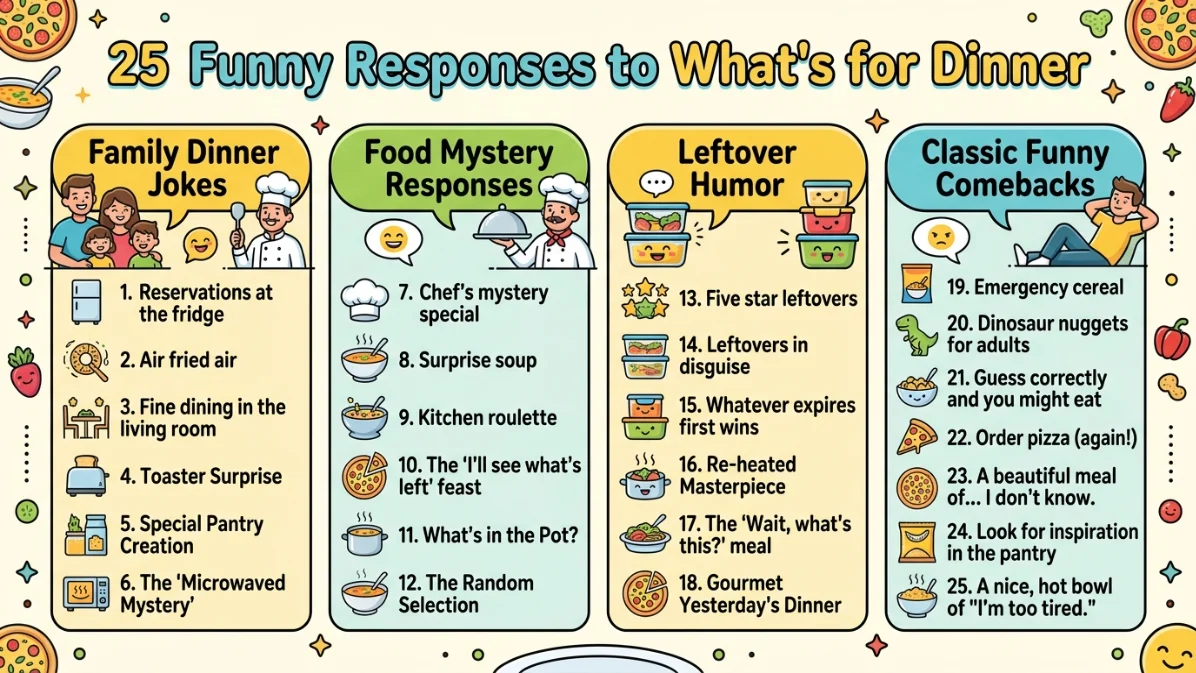
25 Funny Responses to What’s for Dinner
1. The Same Thing We Had Yesterday
Scenario: Your family asks what is for dinner before you have even entered the kitchen. Everyone knows you are joking because yesterday’s dinner leftovers are long gone. Instead of giving a serious answer, you decide to keep the mystery alive. The table gets quiet for a second before everyone realizes you are kidding. Suddenly, people are laughing and guessing what you might actually cook.
“The same thing we had yesterday.”
“Surprise and confusion are the appetizers.”
✔ Use when: Family members enjoy playful jokes
❌ Don’t use when: Someone genuinely needs meal information
2. Reservations at the Fridge
Scenario: Everyone is hungry and waiting for dinner plans. Rather than naming a dish, you pretend the refrigerator is a fancy restaurant. The idea of people making reservations for leftovers creates instant laughter around the room. It turns an ordinary question into a silly dining experience.
“We have reservations at the fridge tonight.”
“Dress code is pajamas.”
✔ Use when: Everyone is relaxed and joking around
❌ Don’t use when: Guests are expecting a serious answer
3. Whatever You Cook
Scenario: Someone asks what is for dinner while sitting comfortably on the couch. You quickly turn the responsibility back on them with a playful response. Suddenly, everyone laughs because they know they were hoping someone else would handle dinner.
“Whatever you cook will be perfect.”
“The chef has been selected.”
✔ Use when: Joking with family or roommates
❌ Don’t use when: The person is already stressed
4. Air Fried Air
Scenario: Dinner is still undecided, and someone asks the big question. You pretend you have prepared the most budget-friendly meal ever invented. The image of serving actual air makes everyone laugh immediately.
“Tonight we are having air fried air.”
“Extra crispy and calorie free.”
✔ Use when: Everyone enjoys silly humor
❌ Don’t use when: People are genuinely hungry and annoyed
5. A Bowl of Expectations
Scenario: Your family keeps asking for dinner updates every ten minutes. You decide to serve a joke instead of a menu. The response catches everyone off guard and gets a laugh before the real food appears.
“A bowl of expectations.”
“Hopefully it tastes better than it sounds.”
✔ Use when: People are impatient but playful
❌ Don’t use when: Guests expect a serious answer
6. Chef’s Mystery Special
Scenario: You are experimenting with ingredients and even you are not sure how dinner will turn out. Instead of admitting uncertainty, you make it sound like a fancy restaurant special.
“Chef’s mystery special.”
“Even the chef is surprised.”
✔ Use when: Trying a new recipe
❌ Don’t use when: Food allergies are involved
7. The Last Slice of Pizza
Scenario: Everyone expects a homemade meal, but you know there is one lonely slice of pizza left in the fridge. The thought of splitting it among several people is ridiculous enough to earn a laugh.
“The last slice of pizza.”
“Good luck winning it.”
✔ Use when: Family enjoys teasing each other
❌ Don’t use when: There is actual competition over food
8. Dinosaur Nuggets for Adults
Scenario: Dinner conversations have become boring lately. You decide to bring back childhood memories by suggesting a kid favorite in the funniest way possible.
“Dinosaur nuggets for adults.”
“Because growing up is optional.”
✔ Use when: Family enjoys nostalgic humor
❌ Don’t use when: Someone dislikes processed food jokes
9. A Culinary Adventure
Scenario: You open the pantry and start combining random ingredients. Nobody knows what the result will be. Instead of explaining, you make dinner sound like an exciting expedition.
“A culinary adventure.”
“Map not included.”
✔ Use when: Experimenting with recipes
❌ Don’t use when: People want a predictable meal
10. Whatever Is Expiring First
Scenario: You are cleaning out the fridge and trying to reduce food waste. Rather than admitting that, you make it sound like a competitive event.
“Whatever expires first wins.”
“Tonight’s champion gets served.”
✔ Use when: Family enjoys practical humor
❌ Don’t use when: Guests are visiting
11. Invisible Lasagna
Scenario: Dinner is not ready yet, but questions keep coming. You invent a magical meal nobody can see.
“Invisible lasagna.”
“Trust me, it looks amazing.”
✔ Use when: Waiting for food to finish cooking
❌ Don’t use when: Children might actually believe you
12. Leftovers in Disguise
Scenario: Last night’s meal is making a comeback. Instead of calling them leftovers, you give them a brand-new identity.
“Leftovers in disguise.”
“They have a new name now.”
✔ Use when: Reusing food creatively
❌ Don’t use when: Someone hates leftovers
13. The Family Cooking Olympics
Scenario: Nobody wants to cook. Rather than deciding yourself, you imagine a competition where the winner gets kitchen duty.
“The Family Cooking Olympics begin now.”
“May the best chef survive.”
✔ Use when: Everyone enjoys playful competition
❌ Don’t use when: People are tired
14. Gourmet Peanut Butter
Scenario: You have very little food at home. Instead of apologizing, you pretend a simple snack is a luxury experience.
“Gourmet peanut butter.”
“Five stars and very sticky.”
✔ Use when: Joking about simple meals
❌ Don’t use when: Guests expect something fancy
15. Spaghetti Surprise
Scenario: Dinner is still being prepared and nobody knows the final result. The mystery becomes part of the joke.
“Spaghetti surprise.”
“The surprise is for everyone.”
✔ Use when: Cooking creatively
❌ Don’t use when: Someone has dietary restrictions
16. A Plate of Good Intentions
Scenario: You planned an amazing meal but never got around to making it. Instead of feeling guilty, you turn it into a joke.
“A plate of good intentions.”
“Served fresh daily.”
✔ Use when: Family appreciates sarcasm
❌ Don’t use when: People are already frustrated
17. Emergency Cereal
Scenario: It has been a busy day and cooking feels impossible. The backup dinner plan becomes comedy material.
“Emergency cereal protocol activated.”
“Spoons ready.”
✔ Use when: Casual family night
❌ Don’t use when: Guests are present
18. Kitchen Roulette
Scenario: You randomly choose ingredients from the pantry. Nobody knows what is coming next.
“Welcome to kitchen roulette.”
“Place your bets.”
✔ Use when: Experimenting in the kitchen
❌ Don’t use when: People dislike surprises
19. Five Star Leftovers
Scenario: Leftovers are making another appearance. This time, they get a luxury rebrand.
“Five star leftovers.”
“Yesterday’s food, today’s masterpiece.”
✔ Use when: Reheating food creatively
❌ Don’t use when: Someone already complained
20. Whatever the Dog Isn’t Eating
Scenario: Everyone asks what’s for dinner. You glance at the family pet and deliver a perfectly timed joke.
“Whatever the dog isn’t eating.”
“Competition is fierce.”
✔ Use when: Pet lovers are around
❌ Don’t use when: People are sensitive about pets
21. The Chef’s Day Off
Scenario: Nobody wants to cook tonight. Instead of saying that directly, you make it sound official.
“The chef is on vacation.”
“Please lower expectations.”
✔ Use when: Ordering takeout
❌ Don’t use when: Guests expect a homemade meal
22. Surprise Soup
Scenario: You toss ingredients into a pot and hope for the best. Nobody knows exactly what is inside.
“Surprise soup.”
“Even the soup is surprised.”
✔ Use when: Making homemade soup
❌ Don’t use when: Allergies are involved
23. Winner’s Choice
Scenario: The family cannot decide on dinner. You turn the decision into a game.
“Winner’s choice tonight.”
“Now we just need a winner.”
✔ Use when: Family enjoys games
❌ Don’t use when: Time is limited
24. Fine Dining in the Living Room
Scenario: Dinner is simple, but you describe it like a luxury restaurant experience.
“Fine dining in the living room.”
“Reservations are highly recommended.”
✔ Use when: Creating a fun atmosphere
❌ Don’t use when: Someone takes food very seriously
25. Guess and You Might Eat
Scenario: Everyone keeps asking for hints about dinner. Instead of answering, you make it a challenge.
“Guess correctly and you might eat.”
“Wrong answers get extra vegetables.”
✔ Use when: Family enjoys playful teasing
❌ Don’t use when: Young children are already upset
Top 10 Editor’s Choice Responses
- “We have reservations at the fridge tonight.”
- “Air fried air. Extra crispy and calorie free.”
- “Chef’s mystery special. Even the chef is surprised.”
- “Dinosaur nuggets for adults. Growing up is optional.”
- “A culinary adventure. Map not included.”
- “Emergency cereal protocol activated.”
- “Kitchen roulette. Place your bets.”
- “Five star leftovers. Today’s masterpiece.”
- “Fine dining in the living room.”
- “Guess correctly and you might eat.”
FAQs
1. What is a funny response to what’s for dinner?
A funny response is a playful answer like “Air fried air” or “We have reservations at the fridge tonight.”
2. Why do people use funny dinner responses?
They make everyday conversations more entertaining and help create family memories.
3. Are funny dinner responses good for texting?
Yes. They work well in family group chats, text messages, and casual conversations.
4. Can I use these responses with kids?
Absolutely. Many of these jokes are family friendly and easy for children to understand.
5. When should I avoid funny responses?
Avoid them when someone needs serious information about dinner plans.
6. What makes a dinner response funny?
Unexpected answers, exaggeration, and relatable situations usually create the biggest laughs.
7. Can funny dinner responses improve family bonding?
Yes. Shared laughter often creates positive memories and stronger connections.
Final Thoughts
The next time someone asks, “What’s for dinner?”, you do not have to give a boring answer.
A playful joke can turn an ordinary conversation into a memorable moment. Whether you choose “Air fried air”, “Chef’s mystery special”, or “Fine dining in the living room”, the goal is simple: make people smile before the food even arrives.
Sometimes the best thing served at dinner is laughter.