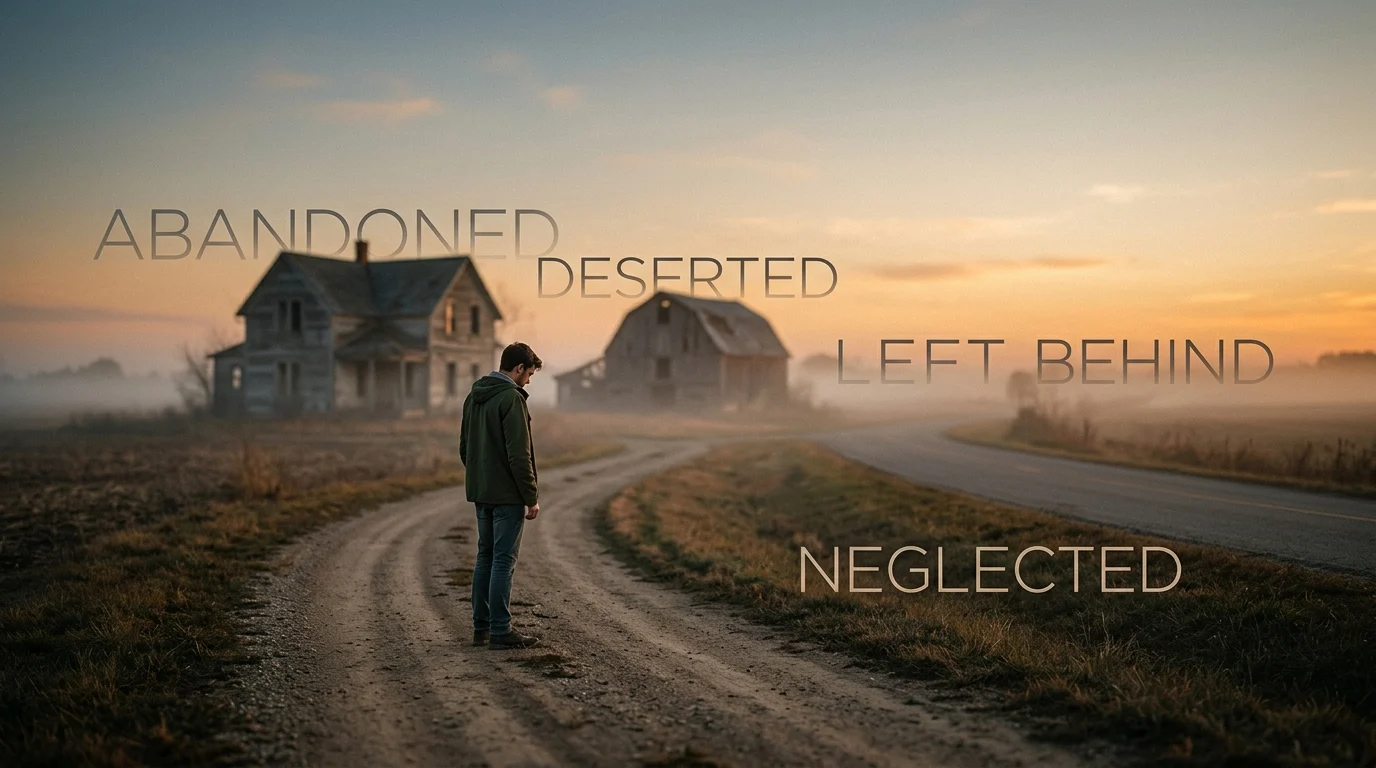

Reading the word forsaken can feel confusing because it appears in novels, songs, religious texts, and everyday conversations. In simple terms, the forsaken meaning is “abandoned,” “deserted,” or “left without help or support.” The exact emotion behind the word depends on the context, making it stronger than simply saying someone was left alone.
Whether you’ve seen it in a text message, a social media caption, or a book, understanding the surrounding words helps you interpret its intended meaning. Below, you’ll learn what forsaken means, how people use it, when it sounds dramatic, and how to respond naturally.
What Does Forsaken Mean?
The word forsaken is the past participle and adjective form of the verb forsake, which means to abandon, desert, or give up completely.
It is not an internet acronym or abbreviation, and it does not have a full form.
| Detail | Explanation |
|---|---|
| Most Common Meaning | Abandoned or deserted |
| Full Form | None |
| Tone | Usually serious, emotional, or literary |
| Common Contexts | Everyday speech, books, religion, social media |
| Formal or Informal | Used in both, though more common in formal or expressive writing |
In everyday language, forsaken often emphasizes deep loneliness, rejection, or abandonment rather than a temporary absence.
The Main Meaning of Forsaken
The primary forsaken meaning is being abandoned by someone or something that once offered support, care, or companionship.
Unlike words such as left or ignored, forsaken carries stronger emotional weight. It suggests that the abandonment feels complete or deeply painful.
For example:
“After everyone canceled their plans, I felt completely forsaken.”
Here, the speaker does not necessarily mean they were physically abandoned forever. Instead, they are expressing strong feelings of loneliness or disappointment.
The word also appears frequently in literature and religious writing to describe emotional, spiritual, or physical abandonment.
Alternative Meanings of Forsaken
Although the core idea remains the same, forsaken can describe different situations depending on the setting.
| Meaning | Context | Tone | Example |
|---|---|---|---|
| Abandoned by people | Everyday conversation | Emotional | “He felt forsaken by his friends.” |
| Deserted place | Travel or description | Neutral | “They found a forsaken village.” |
| Spiritually abandoned | Religious or literary writing | Serious | “She believed she had been forsaken.” |
These uses all revolve around the central idea of being left behind, neglected, or deserted.
How Context Changes the Meaning
Context is essential because forsaken can describe emotions, people, places, or beliefs.
Here are several examples:
- “I felt forsaken after the breakup.”
The speaker is expressing emotional abandonment. - “The cabin looked forsaken.”
The word describes an empty or neglected place. - “Why have you forsaken me?”
This often expresses deep emotional or spiritual distress. - “That old amusement park has been forsaken for years.”
The focus is on a place that has been abandoned.
Notice how surrounding words completely change what is being abandoned.
Other clues include:
- Emotional language often indicates personal abandonment.
- References to buildings or locations usually describe deserted places.
- Religious wording may point to spiritual meaning.
- Capitalization rarely changes the definition, although punctuation and wording can increase emotional intensity.
Forsaken Meaning in Text Messages and Social Media
Unlike many modern slang terms, forsaken keeps essentially the same meaning across platforms. However, the tone may become more dramatic, humorous, or exaggerated online.
Text Messages, WhatsApp, and Instagram
People often use forsaken playfully to exaggerate disappointment.
Example:
“You all went out without me? I’m forsaken.”
The speaker is probably joking while expressing mild frustration.
TikTok and Other Social Platforms
On TikTok and similar platforms, forsaken frequently appears in dramatic captions, memes, or storytelling.
Example:
“Me after my favorite show ends: utterly forsaken.”
The meaning is still “abandoned,” but the exaggeration is usually intentional for humor.
Gaming Communities
In gaming, forsaken may simply describe abandoned locations, forgotten characters, or story elements. It can also appear in game titles or character names, where the meaning depends on that specific game rather than slang usage.
Real Conversation Examples
Example 1: Friends
Person A: “Nobody invited me to dinner.”
Person B: “You weren’t forsaken—they thought you were out of town.”
Meaning: The speaker uses forsaken to describe feeling abandoned.
Example 2: Family
Person A: “That old farmhouse looks forsaken.”
Person B: “No one has lived there for decades.”
Meaning: The word describes a deserted place.
Example 3: Social Media
Person A: “My coffee spilled before work.”
Person B: “You’re feeling completely forsaken today.”
Meaning: The term is used humorously to exaggerate bad luck.
Tone and Emotional Meaning
The tone of forsaken depends largely on the situation.
Is Forsaken Rude?
Generally, no.
The word itself is not offensive or insulting. However, telling someone they have “forsaken” another person may sound like a serious accusation.
For example:
- “You forsook your responsibilities.”
- “You forsook your family.”
These statements carry strong emotional weight.
Is Forsaken Funny?
Sometimes.
Online, people often exaggerate everyday disappointments by saying they feel forsaken. In these situations, the word becomes humorous because the reaction is intentionally dramatic.
For example:
“The restaurant ran out of fries. I have been forsaken.”
Is Forsaken Offensive?
Usually not.
The word can sound harsh in emotionally sensitive conversations because it implies severe abandonment. It is best used carefully when discussing real relationships or personal struggles.
How to Reply to Forsaken
Your response should match the speaker’s tone.
Friendly Replies
- “You’re definitely not alone.”
- “I’m here if you need me.”
- “Things will get better.”
- “Let’s figure it out together.”
Funny Replies
- “We’ll rebuild from this tragedy.”
- “Justice for your missing fries!”
- “The comeback starts now.”
- “You’re only slightly forsaken.”
Replies When You’re Confused
- “What happened?”
- “What makes you feel that way?”
- “Can you explain what you mean?”
When to Use the Term
Forsaken works well when you want to express stronger emotions than words like left or ignored.
Appropriate situations include:
- Emotional conversations
- Storytelling
- Literature discussions
- Social media captions
- Casual conversations with friends
- Creative writing
Because the word is expressive, it often adds dramatic emphasis.
When to Avoid the Term
Choose simpler wording when clarity matters most.
Avoid using forsaken in:
- Professional emails
- Business reports
- Academic writing that requires plain language
- Customer support messages
- Sensitive conversations where dramatic wording may seem exaggerated
In formal workplace communication, words like abandoned, discontinued, or left are often clearer.
Common Mistakes
| Common Mistake | Correct Understanding |
|---|---|
| Thinking it is internet slang | It is a standard English word with long-established usage. |
| Assuming it always describes people | It can also describe places, ideas, or emotional states. |
| Believing it always sounds rude | The tone depends on context and intention. |
Similar Words and Related Terms
| Term | Meaning | Main Difference |
|---|---|---|
| Abandoned | Left behind | More neutral and common. |
| Deserted | Empty or left alone | Often describes places. |
| Neglected | Not properly cared for | Focuses on lack of attention. |
| Rejected | Refused or not accepted | Emphasizes refusal rather than abandonment. |
| Isolated | Separated from others | Does not necessarily mean abandoned. |
Although these words overlap, forsaken usually conveys the strongest emotional impact.
Origin and Popularity
Forsaken comes from the English verb forsake, which has existed for centuries. The word has long appeared in literature, poetry, and religious texts, where it often expresses profound abandonment or separation.
Today, people still use it in modern writing and conversation, although it is less common than everyday alternatives like abandoned. On social media, it often appears in humorous or dramatic captions to exaggerate ordinary disappointments.
Quick Recap
- Forsaken means abandoned, deserted, or left without support.
- It is a regular English word, not slang or an abbreviation.
- Context determines whether it refers to people, places, or emotions.
- Online, it is sometimes used dramatically for humor.
- Respond according to whether the speaker is being serious or joking.
Frequently Asked Questions
What does forsaken mean in text?
It usually means abandoned, ignored, or emotionally left behind, often with dramatic or expressive wording.
What does forsaken stand for?
It does not stand for anything because it is a regular English word rather than an acronym.
What does forsaken mean on TikTok?
It usually expresses exaggerated disappointment, loneliness, or abandonment in humorous or dramatic captions.
How should you reply to forsaken?
Respond with empathy if someone is serious, or playful humor when the context is clearly lighthearted.
Can forsaken have different meanings?
Yes, it can describe abandoned people, deserted places, or feelings of emotional and spiritual abandonment depending on context.
Final Thoughts
The forsaken meaning centers on being abandoned, deserted, or left without support, making it one of the more emotionally powerful words in English. Although it appears in books, conversations, and social media, its core definition remains consistent across different settings. Paying attention to context, tone, and surrounding words helps you understand whether someone is speaking literally, emotionally, or humorously. Once you recognize those clues, you’ll be able to interpret and use forsaken naturally in both everyday conversations and written communication.