
You may see cornichon on a restaurant menu, in a French conversation, or as an unexpected insult and wonder what it means. The most common cornichon meaning refers to a small cucumber that has been pickled, especially the crisp, tangy French-style pickle served with foods such as pâté, cheese, and sandwiches. In informal French, however, cornichon can also describe someone viewed as foolish or silly. The intended meaning comes from context, language, and tone. Understanding both uses helps you avoid confusing a food reference with the French slang meaning.
What Does Cornichon Mean?
Cornichon is a French word whose most common literal meaning is a small pickled cucumber, particularly the small, crisp pickles associated with French cuisine. In informal French, cornichon can also be used figuratively for a foolish, silly, or somewhat ridiculous person.
| Detail | Explanation |
|---|---|
| Most common meaning | A small pickled cucumber |
| Language | French |
| Informal meaning | A foolish or silly person |
| Tone | Culinary and neutral; slang use can be teasing or insulting |
| Formal or informal | Both, depending on the meaning |
So, if you see cornichons listed beside cheese or charcuterie, it almost certainly refers to pickles. If someone calls another person un cornichon, the word is being used figuratively.
Cornichon Meaning in Food
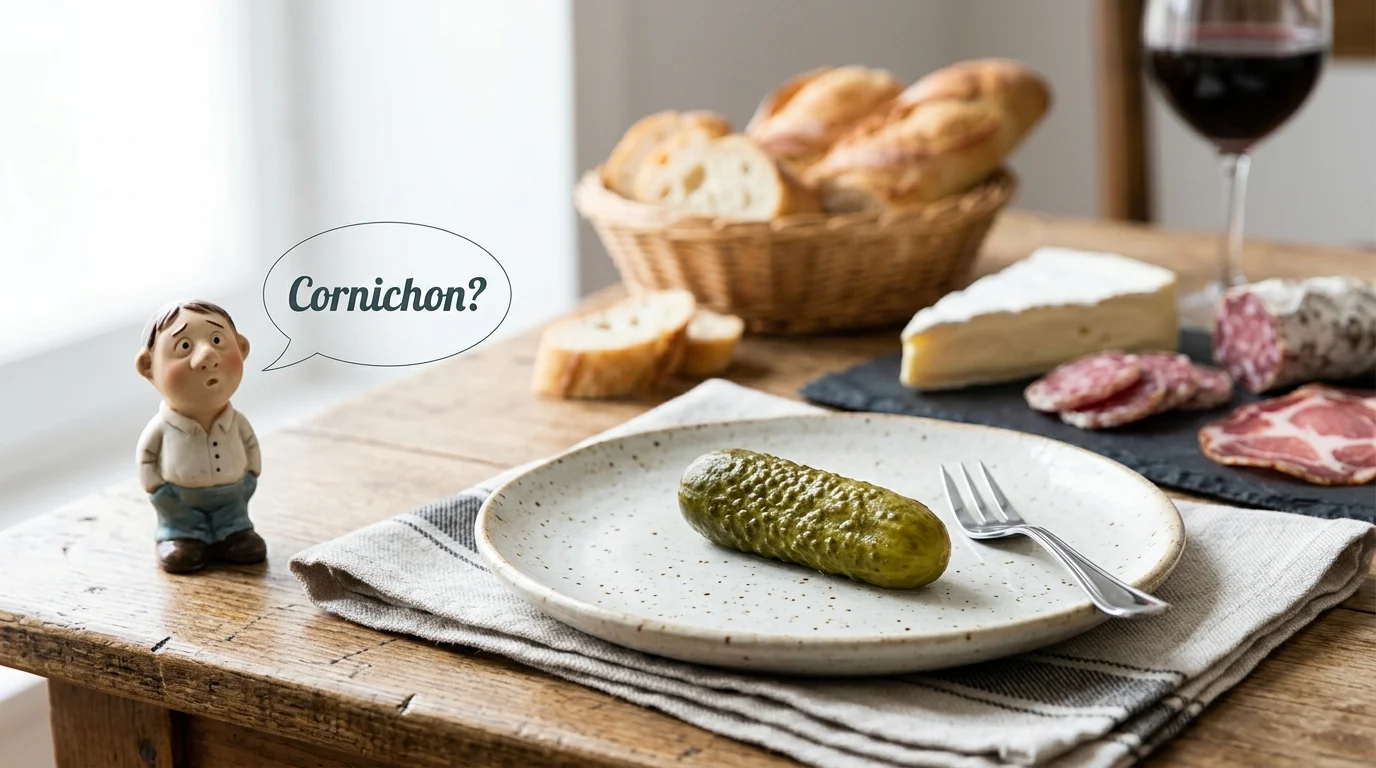
In food contexts, cornichon means a small cucumber that has been preserved in vinegar or another pickling solution. The plural form is cornichons.
French-style cornichons are usually smaller and more sharply tart than many large dill pickles commonly found in American cuisine. They are often served alongside rich or savory foods because their acidity provides a crisp contrast.
For example:
“The restaurant served cornichons with the pâté.”
Here, cornichons simply means small pickles. There is no slang or insulting meaning involved.
You may encounter the word on French menus, deli counters, cheese boards, charcuterie platters, and recipes. In these settings, the culinary meaning should be your first interpretation.
Cornichon Slang Meaning in French
The cornichon slang meaning is quite different. In informal French, cornichon can describe someone who is foolish, silly, or acting like an idiot.
It is generally an insult, but its severity depends heavily on the situation. Among people who know each other well, it may be used teasingly rather than aggressively. In a serious argument, however, calling someone un cornichon can sound genuinely disrespectful.
For example:
“Quel cornichon ! Il a oublié ses clés encore.”
This could be understood roughly as, “What a fool! He forgot his keys again.”
The word does not mean that the person literally resembles a pickle. It is a figurative expression, and the surrounding conversation makes that clear.
Does Cornichon Have More Than One Meaning?
Yes. The two meanings worth knowing are the literal food meaning and the informal figurative meaning.
| Meaning | Context | Tone | Example |
|---|---|---|---|
| Small pickled cucumber | Food, menus, recipes | Neutral | “J’adore les cornichons.” |
| Foolish or silly person | Informal French conversation | Teasing or insulting | “Ne sois pas cornichon.” |
The culinary meaning is straightforward and does not normally carry an emotional message. The figurative meaning is more sensitive because the speaker is commenting on someone’s behavior or intelligence.
How Context Changes the Meaning
Context is especially important with cornichon because the same word can refer to food or a person.
1. Food context
“Ajoute quelques cornichons au sandwich.”
The reference is clearly to pickles because the surrounding topic is food.
2. A comment about someone’s behavior
“Tu es vraiment un cornichon aujourd’hui.”
Here, the speaker is not talking about food. They are calling the person silly or foolish.
3. A playful exchange
“J’ai encore pris le mauvais train.”
“Quel cornichon !”
The insult may be affectionate teasing between friends rather than serious hostility.
4. A serious disagreement
If someone uses cornichon during an argument, the same word can feel more insulting because the relationship and emotional tone have changed.
Look at the words around the term, who is speaking, and what the conversation is about. Emojis and punctuation can also provide clues. A laughing emoji may make a remark feel playful, while an angry message can make it sound much harsher.
Cornichon Meaning on Different Platforms
Unlike many internet slang terms, cornichon does not have a widely established platform-specific meaning that changes between TikTok, Snapchat, Instagram, or texting.
Text Messages and Chat
In a French-language text, cornichon may refer to pickles when discussing food. It can also be a playful insult when someone is joking about another person’s mistake.
“T’as oublié le pain, cornichon 😂”
The emoji and familiar relationship make the insult sound more teasing.
TikTok and Instagram
On social media, the meaning still depends on the content. A cooking video may use cornichon literally, while a French-language joke or caption may use it as an insult.
There is no special TikTok or Instagram definition that automatically replaces the ordinary French meanings.
Snapchat and Casual Messaging
The same distinction applies on Snapchat. If someone sends a picture of lunch with cornichons, they mean pickles. If they call a friend cornichon, the figurative meaning is more likely.
Real Conversation Examples
Example 1: Food
Person A: “What are those little pickles on the plate?”
Person B: “They’re cornichons. They’re really good with cheese.”
Meaning: Cornichons refers to small pickled cucumbers.
Example 2: Friends joking
Person A: “I left my phone at home again.”
Person B: “Quel cornichon 😂”
Meaning: The speaker is playfully calling their friend foolish for forgetting the phone.
Example 3: French-language conversation
Person A: “Il a tried to fix the printer without reading the instructions.”
Person B: “Quel cornichon.”
Meaning: The speaker is describing the person as silly or foolish, not talking about food.
What Tone Does Cornichon Have?
The tone depends on which meaning is intended.
When cornichon refers to a pickle, it is neutral and ordinary. There is no insult involved.
When used for a person, it can be funny, teasing, mildly insulting, or rude. Among friends, it may function like calling someone “silly” or “you fool.” Between strangers, coworkers, or people in a tense situation, it can sound more disrespectful.
Is Cornichon Rude?
It can be rude when used about a person, because it suggests that someone is foolish or silly. However, it is not automatically harsh; friendly relationships and joking tone can soften the expression considerably.
Is Cornichon Flirty?
Cornichon is not inherently flirty. If it appears during playful flirting, the surrounding conversation may make the remark feel affectionate or teasing, but the word itself does not communicate romantic interest.
Is Cornichon Offensive?
It can be mildly offensive when directed at someone seriously, especially if the person does not know the speaker well. The food meaning, of course, is not offensive.
How to Reply to Cornichon
Your response should match the intended meaning and tone.
Friendly Replies
If a friend is clearly teasing you, you can play along:
- “Haha, okay, okay.”
- “I know, I messed up.”
- “Takes one to know one.”
- “At least I’m entertaining.”
Funny Replies
If the exchange is joking, you can answer with humor:
- “A very sophisticated cornichon, thank you.”
- “Better a cornichon than a boring person.”
- “I prefer ‘culinary genius.’”
Replies When You Are Confused
If you cannot tell whether the person means the food or the insult, ask directly:
- “Wait, do you mean the pickle or me?”
- “Are you calling me a cornichon?”
- “What do you mean by cornichon here?”
These responses are especially useful when you are learning French and are unsure about the figurative meaning.
When to Use the Term
Use cornichon freely when you are clearly talking about the food. It is a normal culinary word and can appear in recipes, menus, shopping conversations, and casual discussions about meals.
The figurative meaning is better reserved for informal situations where the people involved understand the tone. If you use it jokingly with a friend who speaks French, the meaning may be obvious from context.
If you are learning French, pay attention to the article and surrounding wording. Expressions referring to food will usually make the literal meaning clear, while references to someone’s behavior can signal the figurative use.
When to Avoid the Term
Avoid using cornichon as an insult in professional emails, academic writing, client communication, or other formal situations. Even if you intend it as a joke, the recipient may interpret it as disrespectful.
It is also better to avoid figurative use with unfamiliar French speakers until you understand the relationship and tone. If your goal is clear communication, simply saying that someone made a mistake or acted foolishly is often safer.
The culinary meaning does not require the same caution. Ordering or discussing cornichons is simply a food-related use.
Common Mistakes About Cornichon
| Common Mistake | Correct Understanding |
|---|---|
| Assuming it only means “pickle” | It can also be an informal French insult for a foolish person. |
| Assuming every use is an insult | Food-related uses normally refer literally to small pickles. |
| Treating it as internet slang | Its figurative meaning comes from informal French usage, not a special social-media definition. |
Another common mistake is assuming that cornichon has a fixed emotional intensity. The same word can be affectionate teasing between friends or an actual insult in a tense conversation.
Similar Terms to Cornichon
A few French words may appear similar in meaning, but they are not interchangeable in every situation.
| Term | Meaning | Main Difference |
|---|---|---|
| Cornichon | Pickle; foolish person | Can be literal or figurative |
| Idiot | Idiot | More direct and generally harsher |
| Imbécile | Fool/imbecile | A clearer, stronger insult |
| Niais | Naive or silly | Often emphasizes naivety or lack of sophistication |
| Sottise | Foolishness/nonsense | Usually refers to an action, idea, or statement rather than a person |
These distinctions matter because choosing a different French insult can change the intensity or implication of what you are saying.
Origin and Usage
The literal French word cornichon is established culinary vocabulary for the small cucumber used in pickling. The figurative use developed from the word’s association with a foolish or silly person.
The exact historical development of the figurative sense is not something you need to know to understand modern usage. What matters in everyday French is recognizing whether the speaker is discussing food or commenting on someone’s behavior.
Quick Recap
- Cornichon most commonly refers to a small pickled cucumber in French.
- In informal French, it can also mean a foolish or silly person.
- The culinary meaning is neutral, while the figurative meaning can be teasing or insulting.
- Context, relationship, wording, emojis, and conversation topic help reveal the intended meaning.
- When someone calls you cornichon, a playful response may be appropriate if the conversation is clearly joking.
Frequently Asked Questions
What does cornichon mean in text?
In French texts, cornichon can mean a small pickle or, informally, a foolish person depending on the conversation.
Is cornichon rude?
The figurative use can be mildly rude because it describes someone as foolish, although friends may use it playfully.
What does cornichon mean on TikTok?
On TikTok, cornichon generally keeps its ordinary French meanings rather than having a separate established platform-specific definition.
How should you reply to cornichon?
If someone is joking, respond playfully; if the meaning is unclear, ask whether they mean the pickle or the insult.
Can cornichon have different meanings?
Yes, cornichon can describe a small pickled cucumber or, in informal French, someone considered silly or foolish.
Final Thoughts
The cornichon meaning is easiest to understand when you look at the surrounding conversation. In food-related contexts, it simply means a small pickled cucumber, while informal French speakers may use the word figuratively to call someone foolish or silly. That second use can be playful among friends but may sound insulting in a serious or unfamiliar interaction. If you encounter cornichon in a text, comment, or conversation, check the topic and tone before deciding what the speaker means. Understanding that distinction will help you interpret the word accurately and use it appropriately.
Discover More Post:
BTA Meaning Slang | What It Means in Text, Chat, and Social …
SSA Meaning Slang | What It Means in Text and Social Media
What Does Affinity Mean? – TextingRoast.com –