
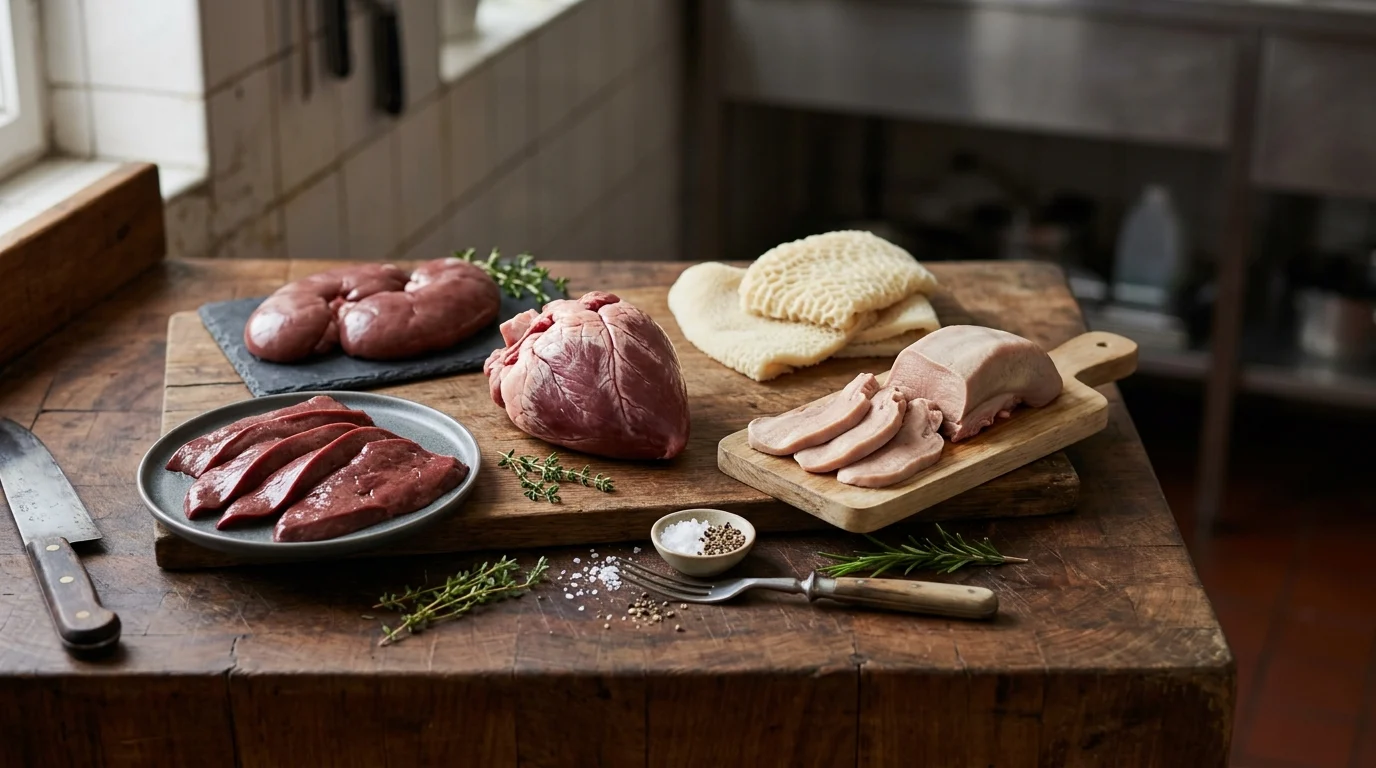

If you have seen the word “offal” on a restaurant menu, in a recipe, or at a butcher shop, you may wonder exactly what it refers to. The offal meaning is the edible internal organs and other usable parts of a butchered animal that are not ordinary muscle meat. Common examples include liver, kidneys, heart, tongue, tripe, and sweetbreads. The term is mainly used in cooking, but its exact scope can vary by culinary tradition and context. Understanding what counts as offal makes menus, recipes, and food discussions much easier to follow.
What Does Offal Mean?
Offal refers to the edible organs and other non-muscle parts of an animal that are prepared and eaten as food. It is a culinary and butchery term rather than slang or an abbreviation, so there is no “offal full form.”
| Detail | Explanation |
|---|---|
| Meaning | Edible organs and other usable non-muscle parts of butchered animals |
| Full form | Not applicable; offal is a standalone word |
| Common examples | Liver, kidneys, heart, tongue, tripe, sweetbreads |
| Tone | Neutral and culinary |
| Formal or informal | Standard English food and butchery term |
The word can describe several different parts depending on the animal and culinary tradition. Liver and kidneys are familiar examples, while terms such as tripe and sweetbreads refer to more specific types of offal.
For example, a menu might say, “grilled lamb offal with herbs.” This indicates that the dish contains edible lamb organs or other non-muscle parts rather than ordinary cuts such as leg or loin.
What Is Considered Offal?
The most common forms of offal are organs and certain other edible parts removed during animal processing. Different cultures use different selections, so there is no single universal list covering every cuisine.
Liver is one of the best-known types. Beef, lamb, chicken, and pork liver can all be cooked in different ways, including frying, grilling, pâté, and stewing.
Kidneys are also commonly classified as offal. They may be grilled, fried, braised, or incorporated into pies and stews.
Heart is another example. Although it is technically an organ, its firm muscular texture makes it quite different from softer organs such as liver.
Tripe generally refers to the edible stomach lining of certain animals, particularly cattle. It appears in soups, stews, and other traditional dishes.
Sweetbreads are a culinary term generally referring to the thymus or pancreas of certain animals. Despite the name, they are neither sweet nor bread.
Other parts that may be described as offal include tongue, brain, cheek, spleen, and some forms of intestines. Whether a particular part is grouped under offal can depend on the culinary or regional context.
Offal Meaning in Food and Cooking
In food-related conversations, offal is used as a broad category rather than the name of one particular ingredient.
You might encounter the word in a cookbook, butcher shop, restaurant description, food documentary, or culinary discussion. A recipe calling for “beef offal” could therefore require several types of edible organs rather than one specific cut.
For example:
“The butcher sells fresh offal for traditional soups and stews.”
Here, offal refers collectively to edible animal organs or similar usable parts.
The word is usually neutral when used by cooks, but some people may associate it with less familiar or unusual foods. That reaction comes from personal food preferences rather than from the word itself.
Does Offal Have Different Meanings?
Unlike many internet terms, offal does not normally have separate meanings on social media platforms. Its primary meaning remains connected to food, animal processing, cooking, and butchery.
There is, however, an important distinction between the broad category and specific types of offal.
| Term | Meaning | Typical Context |
|---|---|---|
| Offal | Broad category of edible organs and non-muscle animal parts | Cooking, butchery |
| Liver | An edible organ | Recipes and dishes |
| Kidney | An edible organ | Cooking and butchery |
| Tripe | Edible stomach lining | Traditional dishes |
| Sweetbreads | Culinary term for thymus or pancreas | Fine dining and traditional cooking |
So, if someone says “I bought some offal,” you may need the surrounding context to know which particular organs they mean.
How Context Changes the Offal Meaning
Context usually makes the intended meaning straightforward because offal meaning is strongly associated with food.
On a restaurant menu
“Roasted offal” means the dish contains edible animal organs or similar non-muscle parts.
At a butcher shop
“Offal available” may refer to organs and other usable parts sold separately from standard meat cuts.
In a recipe
“Add the offal” may refer to specific organs mentioned earlier in the recipe, such as liver, heart, or kidneys.
In a casual conversation
Someone saying, “I don’t eat offal,” generally means they avoid foods made from animal organs or related parts.
Capitalization, emojis, or punctuation normally do not create a new slang meaning for the word. If you see “OFFAL” in a message, the surrounding subject matter is still more important than capitalization.
Offal in Different Food Contexts
The meaning stays broadly consistent across food-related settings, but the specific parts included can vary.
Restaurants
Menus may use “offal” as a general description for dishes featuring organs. Restaurants may also name the exact ingredient, such as chicken liver or beef heart, rather than using the broader term.
Butcher Shops
Butchers may use offal to distinguish organs and other edible parts from conventional muscle-meat cuts.
Recipes
Recipes may use the term collectively when several organs are involved. If the recipe specifies liver, heart, or kidneys individually, those ingredients are more precise than simply saying offal.
Food Discussions
People discussing traditional cuisines may use offal to describe ingredients that are valued in particular dishes and culinary traditions.
Real Conversation Examples
Person A: “What exactly is offal?”
Person B: “It usually means edible animal organs, like liver, kidneys, and heart.”
Meaning: The speaker is asking for the basic food definition.
Person A: “The restaurant has an offal stew on the menu.”
Person B: “I wonder which organs they use.”
Meaning: Here, offal describes the main category of ingredients, while the exact organs remain unspecified.
Person A: “I don’t usually eat offal, but I really like liver.”
Person B: “Liver is actually one of the common types of offal.”
Meaning: The conversation shows that offal is a category that includes particular ingredients such as liver.
Is Offal a Negative or Rude Word?
Offal is not inherently rude or offensive. It is a standard culinary and butchery term.
However, it can sound less appetizing to someone unfamiliar with organ meats because the word immediately suggests animal organs. A restaurant might therefore name the specific ingredient instead—for example, “chicken liver pâté” rather than simply “offal.”
The tone depends more on how the speaker uses the word than on the word itself. In a recipe, “offal” is neutral and descriptive. In a joke intended to make food sound disgusting, the same word could be used negatively.
How to Talk About Offal Clearly
If you are discussing food with someone who may not know the term, the clearest approach is to explain the category and give examples.
Instead of simply saying:
“It contains offal.”
You could say:
“It contains edible organs such as liver and kidneys.”
That wording removes ambiguity and helps the listener understand exactly what they are eating.
When reading a menu, you can also look for the specific organ named after the broader category. This is especially useful because “offal” can cover several different ingredients.
When to Use the Term
The word offal is appropriate when discussing:
- Cooking and recipes
- Butchery
- Meat preparation
- Restaurant menus
- Traditional cuisines
- Food history
- Animal processing
- Culinary ingredients
It is particularly useful when you want to refer to several edible organs collectively rather than listing each one.
For example, a chef might say, “We use the animal’s offal in several dishes,” when discussing a cooking approach that includes multiple organs.
When to Avoid the Term
There is generally no need to avoid the word in ordinary food discussions because it is a standard English term. However, specific wording can be clearer when your audience may not recognize it.
In a customer-facing menu, for example, naming the exact ingredient can make the dish easier to understand. Likewise, in a formal explanation for someone unfamiliar with culinary terminology, “edible animal organs” may be clearer than using “offal” alone.
The term is also not a substitute for identifying an ingredient when allergies, dietary restrictions, or food preferences make precise information important.
Common Mistakes About Offal
| Common Mistake | Correct Understanding |
|---|---|
| Thinking offal means only liver | Liver is one type of offal, but the category includes several other parts |
| Assuming every organ is automatically included | What counts as offal can vary with culinary and regional usage |
| Treating offal as slang | Offal is a standard food and butchery term, not internet slang |
| Assuming “sweetbreads” means bread | Sweetbreads are a culinary name for certain animal glands |
One common misunderstanding is assuming that “offal” identifies one particular food. It does not. It is a broad category, much like saying “vegetables” without naming the specific vegetable.
Similar Food Terms
Some food terms can seem similar to offal, but they are not interchangeable.
| Term | Meaning | Main Difference |
|---|---|---|
| Offal | Broad category of edible organs and other non-muscle parts | General category |
| Organ meat | Meat from an animal’s organs | Overlaps heavily with offal but emphasizes organs |
| Variety meats | Culinary term for various non-muscle animal parts | Often used similarly to offal |
| By-products | Materials produced during processing | Not necessarily edible or intended as food |
| Meat | Animal flesh used as food | Usually refers to muscle tissue rather than offal |
“Organ meat” is particularly close in meaning, although offal can sometimes cover edible parts beyond organs. “By-products,” meanwhile, is much broader and does not necessarily mean something is edible.
Origin and Use of the Word Offal
The word offal is an established English term associated with animal processing and food. Its historical use is much older than modern internet language, so it should not be treated as a newly created food trend or social-media abbreviation.
The exact boundaries of the category have varied across culinary traditions. That is why different recipes, regions, and food cultures may use the term somewhat differently.
Quick Recap
- Offal meaning: edible animal organs and certain other usable non-muscle parts.
- Common examples include liver, kidneys, heart, tongue, tripe, and sweetbreads.
- Offal is a standard culinary term, not slang or an abbreviation.
- The exact parts included can vary by cuisine and context.
- Specific names such as “liver” or “tripe” are more precise than the broad word offal.
Frequently Asked Questions
What does offal mean in text?
Offal means edible animal organs and related non-muscle parts when used in ordinary food-related conversations.
Is offal a rude word?
Offal is a neutral culinary term, although some people may find the subject unpleasant because it refers to animal organs.
What does offal mean on TikTok?
On TikTok, offal generally retains its standard food meaning rather than having a separate established platform-specific definition.
How should you explain offal to someone?
Explain that offal refers to edible animal organs and give familiar examples such as liver, kidneys, or heart.
Can offal have different meanings?
Offal has one primary food meaning, but the specific parts included can vary according to culinary or regional context.
Final Thoughts
The offal meaning is straightforward: it describes edible animal organs and certain other usable parts that are not ordinary muscle-meat cuts. Liver, kidneys, heart, tripe, tongue, and sweetbreads are familiar examples, although the exact definition can vary between culinary traditions. Unlike internet slang or text abbreviations, offal does not normally change meaning across TikTok, Snapchat, texting, or other platforms. When you encounter the term, focus on the food context and any specific ingredients mentioned nearby. If precision matters, naming the exact organ is usually clearer than using the broader category alone.