
You may encounter the word “nymph” in a mythology story, fantasy novel, poem, biology lesson, or online conversation and wonder what it means. The most common nymph meaning refers to a female nature spirit in ancient Greek mythology, often associated with places such as forests, mountains, rivers, springs, and meadows. The word also has a separate scientific meaning: a young insect that resembles the adult form but has not yet reached maturity. Because these meanings are quite different, context matters. Understanding where you saw the word can quickly tell you whether it refers to mythology, biology, literature, or figurative language.
What Does Nymph Mean?
The word nymph most commonly describes a nature spirit from Greek mythology, traditionally portrayed as a female supernatural being connected with the natural world. Nymphs appear in myths involving forests, water, mountains, and other landscapes. In biology, a nymph is an immature insect that resembles the adult but develops gradually without a pupal stage.
| Detail | Explanation |
|---|---|
| Most Common Meaning | A female nature spirit in Greek mythology |
| Scientific Meaning | An immature insect resembling the adult |
| Tone | Neutral, literary, mythological, or scientific |
| Common Contexts | Mythology, literature, fantasy, biology |
| Formal or Informal | Depends on context; the word itself is standard English |
The Main Nymph Meaning in Mythology
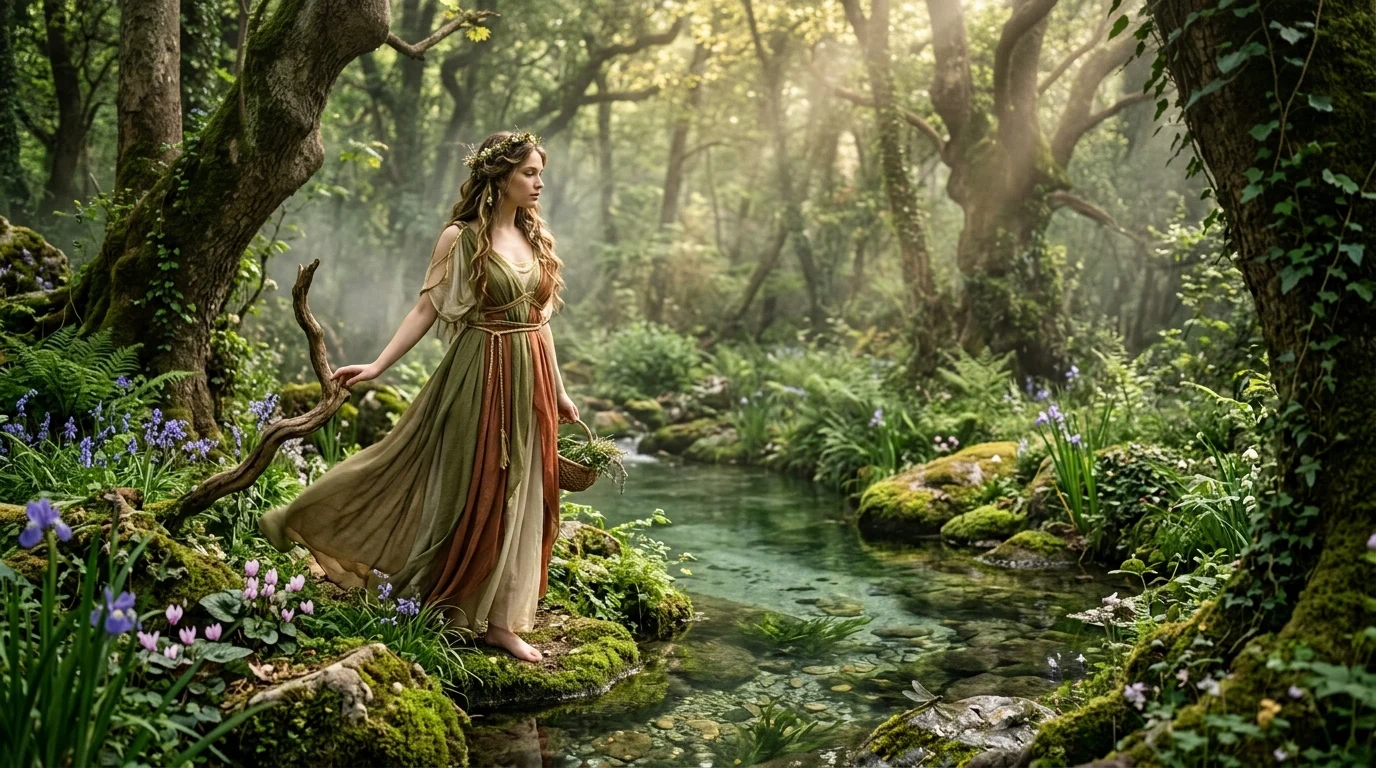
In Greek mythology, a nymph is a supernatural female figure associated with nature. Unlike major gods and goddesses, nymphs are generally portrayed as lesser divine or semi-divine beings connected to particular natural environments.
Different types of nymphs were associated with different parts of nature. For example, naiads were linked with freshwater sources such as springs, rivers, and fountains. Oreads were associated with mountains and rocky landscapes, while dryads were connected with trees and forests.
Nymphs are often depicted as youthful, beautiful, and closely tied to the natural places they inhabit. However, their roles vary considerably across individual myths. They may appear as companions of gods, participants in legendary stories, or figures involved in relationships with heroes and other supernatural beings.
For example:
“The poet described the river nymph as a guardian of the hidden spring.”
Here, “nymph” refers to a mythological nature spirit rather than an ordinary person.
The word is therefore often used today when discussing Greek mythology, classical literature, fantasy, art, and stories inspired by ancient traditions.
Nymph in Biology: A Different Meaning
The nymph meaning in biology has nothing to do with Greek mythology.
In entomology, a nymph is an immature stage of certain insects that generally resembles a smaller version of the adult. Nymphs gradually develop through a series of molts rather than passing through a pupal stage.
Grasshoppers, cockroaches, termites, and dragonflies are examples of insects whose young stages can be described as nymphs.
A dragonfly nymph, for instance, lives underwater and looks very different from the winged adult in some respects, but it develops gradually until it reaches adulthood.
Example:
“The biologist found a dragonfly nymph beneath the surface of the pond.”
In this sentence, “nymph” clearly has a scientific meaning. The surrounding words—“biologist,” “dragonfly,” and “pond”—make the intended definition obvious.
Nymph Meaning in Literature and Fantasy
Writers frequently use nymph in literary and fantasy settings because the word carries strong associations with nature, beauty, mystery, and ancient mythology.
A fantasy author might describe a forest nymph as a magical being living among trees. A poem might use “nymph” as a classical image for a beautiful woman associated with water or nature.
This literary usage does not necessarily mean the character follows every detail of ancient Greek mythology. Modern fiction often adapts mythological concepts to create its own magical worlds.
For example:
“A silver-haired nymph emerged from the forest and disappeared between the trees.”
Here, the word creates a mythological or fantasy atmosphere. The reader is expected to understand that the character is supernatural or nature-associated.
How Context Changes the Meaning
The word nymph can be interpreted correctly by looking at the words surrounding it.
1. Mythology context
“The hero encountered a nymph beside the sacred spring.”
References to heroes, gods, sacred places, or ancient stories usually indicate the mythological meaning.
2. Biology context
“The insect remains a nymph until its final molt.”
Words such as “insect,” “molt,” “species,” and “development” signal the scientific definition.
3. Fantasy context
“The forest nymph protected the enchanted kingdom.”
Words such as “magic,” “forest,” “enchanted,” and “kingdom” suggest a fictional or fantasy interpretation.
4. Literary context
“The poet compared the dancer to a woodland nymph.”
Here, “nymph” is being used as a literary or figurative comparison rather than as a scientific term.
The capitalization usually does not determine the meaning. Instead, the subject of the conversation and surrounding vocabulary provide the strongest clues.
Is Nymph a Slang Word?
“Nymph” is not primarily an internet slang term or texting abbreviation. Its established meanings come from mythology, biology, and literary usage.
However, you may occasionally see the word used figuratively in fiction or informal discussions to describe someone as unusually beautiful, graceful, or associated with nature. That use is generally literary or metaphorical rather than a standard slang definition.
It is also important not to assume that every online use has a special hidden meaning. If someone uses “nymph” in a fantasy discussion, for example, the ordinary mythological or fictional meaning is usually the most relevant interpretation.
Is Nymph Rude or Offensive?
The word nymph itself is not inherently rude or offensive. In mythology, literature, and biology, it is a normal descriptive term.
Tone can change when someone uses it to describe a real person. Calling someone a “nymph” may sound poetic or complimentary in one context but strange, objectifying, or suggestive in another, particularly if the speaker is commenting on someone’s appearance or sexuality.
For that reason, context and relationship matter more than the dictionary definition.
In a biology class:
“The nymph has not reached adulthood.”
This is completely neutral.
In a personal conversation:
“You look like a nymph.”
The statement may sound poetic, flirtatious, unusual, or suggestive depending on the speaker’s intent and the relationship between the people involved.
Is Nymph Flirty?
The word can have a flirtatious or romantic tone when it is used figuratively toward a person, but that is not its primary meaning.
Someone describing a person as a “nymph” may be making a poetic comparison to beauty, nature, or an idealized mythological figure. However, you should not automatically interpret the word as flirting without considering the rest of the conversation.
For example, a fantasy-themed conversation might use “nymph” simply because the participants are discussing mythology. In contrast, a direct comment about someone’s appearance may carry a more personal tone.
Real Conversation Examples
1: Mythology
Person A: “Who was the woman living near the river in the story?”
Person B: “She was described as a nymph.”
Meaning: The word refers to a mythological nature spirit associated with the river.
2: Biology
Person A: “Why doesn’t this insect have wings yet?”
Person B: “It’s still a nymph.”
Meaning: The insect is immature and has not developed into its adult form.
3: Fantasy
Person A: “What kind of creature is protecting the forest?”
Person B: “The story says she’s a nymph.”
Meaning: The word describes a fictional nature spirit inspired by mythology.
How to Reply When Someone Says “Nymph”
Your response should match the context rather than assuming the word has a slang meaning.
When You Are Confused
- “Do you mean a mythological nymph or the insect stage?”
- “Are you talking about the mythology term?”
It Is About Mythology or Fantasy
- “Oh, like a nature spirit?”
- “That sounds like a dryad or another type of nymph.”
- “I know the mythology version—you mean the nature spirit.”
When It Is Used About You
- “What do you mean by nymph?”
- “Is that supposed to be a compliment?”
- “Interesting choice of words—what made you say that?”
These replies let you clarify the intended meaning without making assumptions about someone’s tone.
When to Use the Term
“Nymph” works naturally when you are discussing Greek mythology, classical literature, fantasy, art, entomology, or biology.
It can also appear in creative writing when you want to evoke a mythological or nature-inspired image. If you are using it figuratively to describe a person, however, make sure the audience understands the comparison and that the context is appropriate.
The scientific meaning is especially useful in educational and biological contexts, where “nymph” has a precise definition.
When to Avoid the Term
You do not need to avoid the word generally, but clearer wording may be better when your audience could misunderstand it.
For example, in a formal explanation about insects, saying “immature insect” may be clearer for readers who are unfamiliar with entomological terminology. Likewise, using “nymph” as a personal compliment may create confusion if the other person does not recognize the mythological reference.
In professional, academic, or unfamiliar settings, use enough surrounding context to make your intended meaning clear.
Common Mistakes About Nymph
| Common Mistake | Correct Understanding |
|---|---|
| Assuming nymph only refers to mythology | It also has an established biological meaning for certain immature insects. |
| Treating every use as slang | “Nymph” is primarily a standard mythology, literary, and scientific term. |
| Assuming it always describes beauty | Beauty is common in mythological portrayals, but the word fundamentally refers to a type of nature spirit or immature insect. |
Another common misunderstanding is confusing nymph with a specific type of mythological creature. Nymph is a broad category, while terms such as dryad and naiad identify particular kinds of nymphs.
Similar Terms to Nymph
| Term | Meaning | Main Difference |
|---|---|---|
| Dryad | A tree or woodland nymph | Refers to a specific type of nymph |
| Naiad | A freshwater nymph | Specifically associated with springs, rivers, and other freshwater |
| Oread | A mountain nymph | Associated with mountains and rocky landscapes |
| Sprite | A small supernatural or fairy-like being | Broader term that is not limited to Greek nymphs |
| Faun | A mythological nature being associated with the countryside | Traditionally depicted differently and is not a nymph |
These terms can overlap in fantasy writing, but they are not interchangeable in every mythological context.
Origin and Meaning in Classical Tradition
The word nymph comes through Latin nympha from Greek nymphē. In ancient Greek tradition, nymphs were associated with the natural world and appeared in numerous myths and literary works.
The category includes different groups connected with particular environments. Classical sources do not always portray every nymph in exactly the same way, so modern descriptions may simplify or reinterpret their roles.
The biological use of “nymph” developed separately as a scientific term for an immature insect stage. Although the two meanings share the same word, their contexts are distinct.
Quick Recap
- Nymph meaning most commonly refers to a female nature spirit in Greek mythology.
- In biology, a nymph is an immature insect that develops toward adulthood without a pupal stage.
- Dryads, naiads, and oreads are specific types of mythological nymphs.
- The word is standard English rather than primarily internet slang.
- Context tells you whether “nymph” refers to mythology, biology, fantasy, or figurative language.
- When someone uses it about a person, the tone can be poetic, complimentary, unusual, or suggestive depending on context.
Frequently Asked Questions
What does nymph mean in text?
In text, nymph usually refers to a mythological nature spirit unless the surrounding conversation clearly concerns insects or biology.
Is nymph rude?
Nymph is not inherently rude, although using it about someone’s appearance can sound unusual, suggestive, or overly poetic.
What does nymph mean on TikTok?
On TikTok, nymph generally retains its ordinary mythological or literary meaning rather than having one universal platform-specific definition.
How should you reply to nymph?
Ask for clarification if the context is unclear, especially when someone uses the word directly to describe you.
Can nymph have different meanings?
Yes, nymph can describe a mythological nature spirit or an immature insect, with context identifying the intended meaning.
Final Thoughts
The nymph meaning depends mainly on context. In mythology, a nymph is a female nature spirit associated with places such as forests, mountains, rivers, and springs, while biology uses the word for an immature insect that develops toward adulthood. Literature and fantasy also use “nymph” to evoke nature, beauty, and supernatural imagery. The term is not primarily internet slang, although figurative uses can appear in casual conversations. If you encounter the word in a message, story, classroom, or social post, look at the surrounding language before deciding what it means.