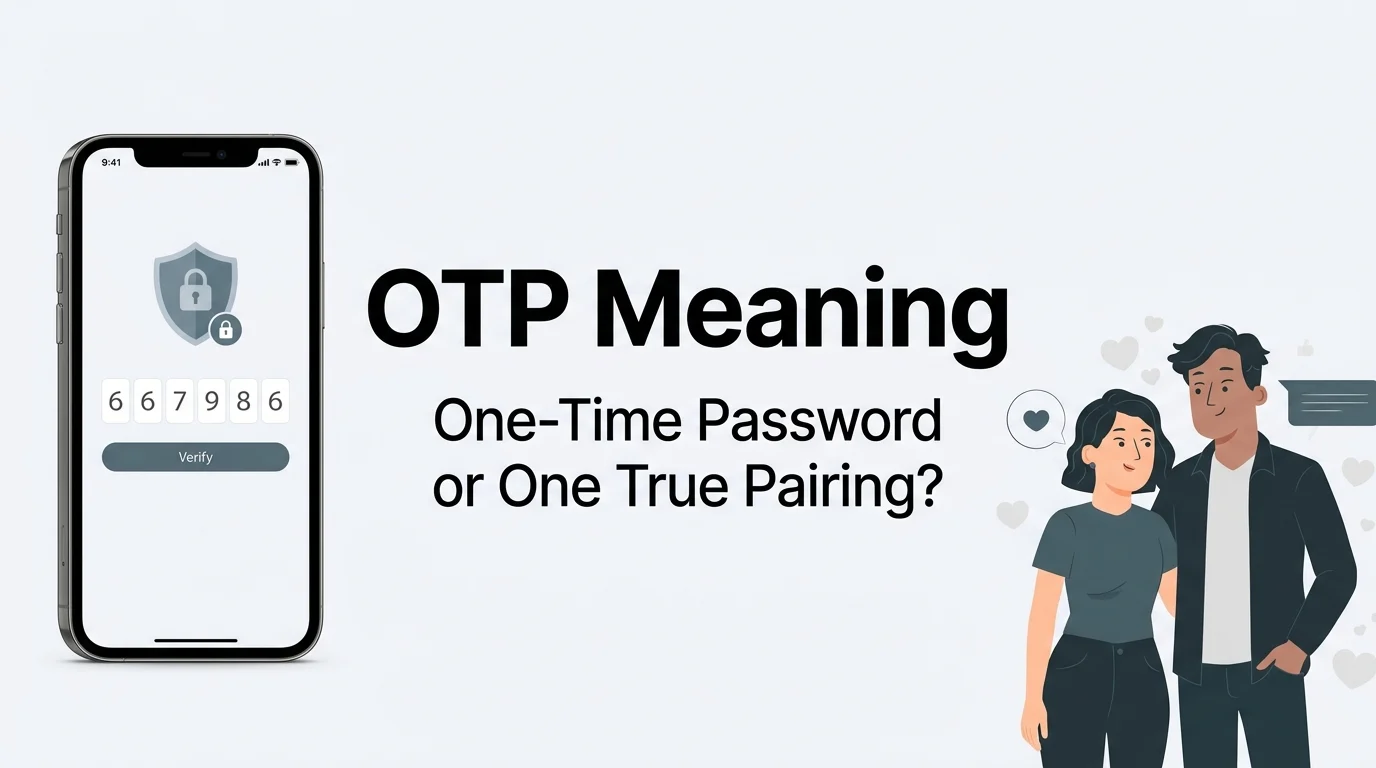

You may see “OTP” in a text, TikTok comment, or group chat and wonder what the sender means. The most common OTP meaning is “one-time password,” especially when discussing account security or login codes. In fandom and social media conversations, however, OTP can also mean “one true pairing,” referring to a favorite fictional or celebrity couple. The surrounding conversation usually makes the intended meaning clear. This guide explains both meanings, how OTP is used in text and online communities, what it sounds like, common misunderstandings, and how to respond when someone uses it.
What Does OTP Mean?
OTP has two widely recognized meanings, and the correct one depends heavily on context.
In security-related messages, OTP means “one-time password”—a temporary verification code used to confirm your identity when logging into an account or completing an action.
In fandom and social media discussions, OTP means “one true pairing,” describing a romantic pairing that someone strongly supports.
| Detail | Explanation |
|---|---|
| Most common meaning | One-time password |
| Fandom meaning | One true pairing |
| Tone | Neutral, practical, or enthusiastic depending on context |
| Common platforms | Text, apps, social media, fandom communities |
| Formal or informal | Depends on the meaning and situation |
If someone says, “Enter the OTP sent to your phone,” they mean a one-time password. If someone posts, “They’re my OTP,” they probably mean one true pairing.
OTP Meaning in Text: The Two Main Uses
The most common OTP meaning in text is one-time password. Banks, websites, apps, and other services often send a temporary numerical code by text message, email, or an authentication app.
For example:
“Did you get the OTP? I need the code to finish logging in.”
Here, OTP clearly refers to the temporary security code.
The second major meaning is one true pairing. Fans use it to describe two characters or people they believe make an ideal romantic couple.
For example:
“Those two characters are absolutely my OTP.”
The speaker is expressing strong support for that pairing, usually within a fandom.
Because these meanings are quite different, context matters more than the abbreviation itself.
One-Time Password vs. One True Pairing
| Meaning | Context | Tone | Example |
|---|---|---|---|
| One-time password | Login, banking, verification, security | Neutral and practical | “Enter the OTP you received.” |
| One true pairing | Fandom, entertainment, fictional relationships | Enthusiastic or playful | “They’re my OTP!” |
The security meaning is usually easy to identify because words such as code, login, verify, account, phone, security, or verification appear nearby.
The fandom meaning often appears alongside words such as ship, couple, characters, fandom, romance, or favorite.
How Context Changes the OTP Meaning
The same three letters can communicate completely different ideas. Look at the surrounding words before deciding what someone means.
Example 1
“The app sent me an OTP.”
This almost certainly means one-time password, because an app is sending a verification code.
Example 2
“I can’t believe they finally kissed. OTP forever!”
This refers to one true pairing, with an enthusiastic fandom tone.
Example 3
“Please enter the OTP before the timer expires.”
The mention of a timer strongly points to a temporary security code.
Example 4
“What’s your favorite OTP from the show?”
The reference to a show and favorite pairing indicates the fandom meaning.
Capitalization usually does not settle the question. Someone can write “otp,” “OTP,” or “Otp,” so the conversation itself is more useful than the lettering.
OTP Meaning on Different Platforms
OTP generally keeps the same two meanings across platforms, but the surrounding community can make one meaning more likely.
Text Messages and WhatsApp
In ordinary texts, one-time password is especially common when someone is talking about a bank, website, delivery service, account, or login.
“Send me the OTP when it arrives.”
However, friends discussing movies, shows, books, or anime may use OTP to mean one true pairing.
TikTok and Instagram
On social media, both meanings can appear. Fandom content makes the one true pairing meaning particularly relevant when people discuss fictional couples, celebrities, or “ships.”
“This couple is my OTP.”
In a security-related post, however, OTP still means one-time password.
Snapchat
On Snapchat, context determines the meaning. A message about signing in or verifying an account points toward one-time password, while entertainment or fandom conversations can use one true pairing.
Discord and Fandom Communities
In fandom-focused servers, OTP often means one true pairing. Users may discuss which characters they ship or which fictional relationship they support most strongly.
In technical or gaming communities, the security meaning can still appear when users discuss authentication or account access.
Real Conversation Examples
1: Account verification
Person A: “I’m trying to log in, but it’s asking for an OTP.”
Person B: “Check your phone. The verification code should be there.”
Meaning: OTP means one-time password.
2: Fandom discussion
Person A: “Who’s your OTP in the series?”
Person B: “Definitely Maya and Alex. Their chemistry is perfect.”
Meaning: OTP means one true pairing.
3: Group chat
Person A: “They finally made them a couple!”
Person B: “I knew it! They’ve been my OTP since episode one.”
Meaning: The speaker strongly supports the fictional pairing.
What Tone Does OTP Have?
The tone depends entirely on which meaning is intended.
One-time password is normally neutral and practical. It appears in functional conversations about verification, authentication, accounts, payments, or security.
One true pairing is usually enthusiastic, playful, or affectionate. Fans may use it to show strong emotional support for a fictional or celebrity pairing.
OTP itself is not inherently rude, offensive, or flirty. The fandom meaning can involve romantic relationships, but using OTP does not automatically make a message romantic toward the person receiving it.
Is OTP Rude?
No. OTP is generally neutral when it means one-time password and enthusiastic or playful when it means one true pairing.
A security-related OTP should be treated as private information. If someone asks you to share a verification code, make sure you understand why before providing it.
How to Reply to OTP
Your response should match the meaning you identify from the conversation.
When OTP Means One-Time Password
If someone asks whether you received a code, you can reply:
- “Yep, I just got it.”
- “Not yet. I’ll check again.”
- “It came through a second ago.”
- “I received the code.”
If the message is unclear, ask:
- “Do you mean the verification code?”
- “Which OTP are you referring to?”
When OTP Means One True Pairing
For a fandom conversation, natural responses include:
- “Same! They’re my favorite too.”
- “Absolutely, their chemistry is unmatched.”
- “I can see why you ship them.”
- “That pairing makes so much sense.”
If you disagree:
- “I like them, but they’re not my OTP.”
- “I ship a different pairing.”
When to Use OTP
Use OTP when your audience is likely to understand the abbreviation from context.
For one-time password, OTP is common in casual conversations involving account verification and digital services. It is also widely used in security-related instructions where the abbreviation has a clear meaning.
For one true pairing, OTP works naturally in fandom discussions, social media posts, group chats, and communities where people discuss fictional relationships.
The key is audience familiarity. If the other person may interpret OTP differently, spelling out the phrase can prevent confusion.
When to Avoid OTP
Avoid unexplained abbreviations when clarity matters more than brevity.
For example, professional emails, academic writing, client communication, formal announcements, and messages to unfamiliar people may benefit from writing one-time password instead of OTP.
Similarly, if you’re discussing fandom relationships with someone who does not participate in that community, “favorite pairing” may be clearer than OTP.
Slang and abbreviations are not automatically inappropriate. The issue is whether your audience understands them.
Common Mistakes About OTP
| Common Mistake | Correct Understanding |
|---|---|
| Assuming OTP always means one-time password | Fandom communities commonly use it for one true pairing. |
| Assuming OTP always means one true pairing | Security and login conversations usually mean one-time password. |
| Believing the capitalization determines the meaning | Context and surrounding words are more reliable indicators. |
Another common mistake is assuming every abbreviation has only one accepted interpretation. OTP demonstrates why checking the subject of the conversation is important.
Similar Slang Terms
Several terms are related to the fandom meaning of OTP, but they are not interchangeable in every situation.
| Term | Meaning | Main Difference |
|---|---|---|
| Ship | A relationship someone supports | Broader and more commonly used than OTP |
| Shipping | Supporting or imagining a relationship | Describes the activity or preference |
| NOTP | A pairing someone strongly dislikes | Opposite sentiment from an OTP |
| BroTP | A favorite non-romantic relationship | Usually emphasizes friendship rather than romance |
“Ship” is especially important because someone can have multiple ships, while OTP often identifies a particularly favored pairing.
Origin and Popularity of OTP
The two major meanings have different histories, and their exact origins should not be confused.
One-time password is a technical security term used for temporary authentication credentials. It is associated with authentication systems rather than internet slang.
One true pairing developed within fandom culture as fans discussed preferred romantic pairings between fictional characters or public figures. The exact origin of the abbreviation is not something that should be reduced to a single verified creator or date without reliable historical evidence.
Because both meanings are established, context remains the safest way to interpret OTP.
Quick Recap
- OTP most commonly means “one-time password” in security, login, banking, and verification conversations.
- In fandom communities, OTP can mean “one true pairing.”
- Words around the abbreviation usually reveal which meaning is intended.
- OTP is generally neutral in security contexts and enthusiastic or playful in fandom discussions.
- If the meaning is unclear, asking what the sender means is better than guessing.
Frequently Asked Questions
What does OTP mean in text?
OTP usually means one-time password in security-related texts, while fandom conversations commonly use it for one true pairing.
Is OTP rude?
OTP is not inherently rude; its tone is normally neutral for passwords and enthusiastic when describing a favorite fictional pairing.
What does OTP mean on TikTok?
On TikTok, OTP can mean one true pairing in fandom content or one-time password when discussing account verification.
How should you reply to OTP?
Reply according to context by confirming the verification code or sharing your opinion about the pairing being discussed.
Can OTP have different meanings?
Yes, OTP commonly means one-time password or one true pairing, with surrounding conversation identifying the intended meaning.
Final Thoughts
The OTP meaning depends on where and how you encounter it. In security-related conversations, OTP almost always refers to a one-time password, while fandom and entertainment discussions often use it to mean one true pairing. The easiest way to tell the difference is to look at nearby words, the platform, and the subject being discussed. If someone mentions a code, login, or verification, think security. If they are talking about characters, couples, or shipping, think fandom. When the context is unclear, a quick clarification is the most reliable response.