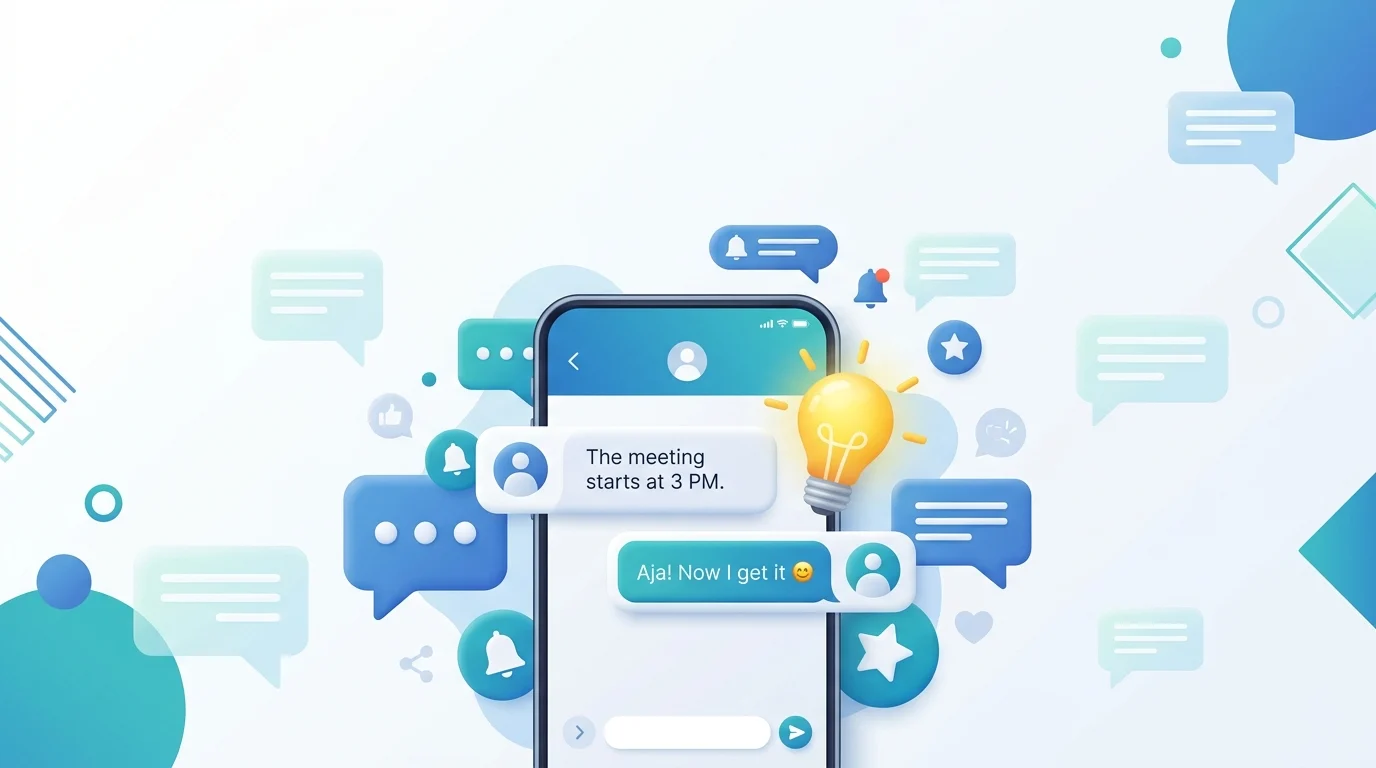

Seeing “AJA” in a message can be confusing because it does not have one universal slang meaning. In most casual online conversations, AJA is commonly used as an expression similar to “Aha!” or “Ah, yes!” to show realization, agreement, or excitement. However, in some conversations, “Aja” is simply a person’s name or refers to an organization, making context essential before deciding what someone means.
Understanding the surrounding conversation helps you avoid misunderstandings. Below, you’ll learn the most common AJA meaning, where it’s used, how to recognize alternative meanings, and how to respond naturally.
What Does AJA Mean?
The most common AJA meaning in casual chat is an informal reaction expressing sudden understanding, recognition, or enthusiastic agreement. Rather than being a fixed acronym, it is usually an expressive word people type during conversations.
| Detail | Explanation |
|---|---|
| Most Common Meaning | An expression like “Aha!” or “Ah, yes!” |
| Full Form | No universally accepted full form |
| Tone | Friendly, positive, conversational |
| Common Platforms | Text messages, WhatsApp, Instagram, Discord |
| Formal or Informal | Informal |
If someone texts “AJA, now I understand,” they’re showing they’ve realized something or finally understood the point.
The Main Meaning of AJA
Unlike many internet abbreviations, AJA is not widely recognized as having one official full form in online slang. Instead, people often type “Aja!” as a quick reaction.
You might see it used when someone:
- Understands an explanation.
- Remembers something.
- Agrees enthusiastically.
- Reacts positively to good news.
For example:
Friend: “The meeting starts at 3, not 4.”
You: “Aja! That explains why everyone was leaving early.”
Here, “Aja!” simply signals that the speaker suddenly understands the situation.
Its tone is usually friendly, lighthearted, and conversational.
Alternative Meanings of AJA
Although the expressive meaning is common in casual chat, AJA meaning can change depending on where you see it.
| Meaning | Context | Tone | Example |
| “Aha!” or realization | Texting and chats | Friendly | “Aja! I get it now.” |
| Personal name (Aja) | Everyday conversation | Neutral | “Aja sent the files.” |
| Organization or brand abbreviation | Professional or specific industries | Neutral | “The AJA conference begins tomorrow.” |
When someone writes “Aja” with normal capitalization, it may simply be referring to a person instead of expressing surprise.
Avoid assuming every appearance of “AJA” is internet slang.
How Context Changes the Meaning
Context is the easiest way to identify what “AJA” means.
Consider these clues:
- Surrounding words: “Aja, thanks!” usually expresses understanding.
- Conversation topic: A work discussion may refer to an organization instead.
- Capitalization: “Aja” may be someone’s name, while “AJA!” can appear more expressive.
- Punctuation: An exclamation mark makes it feel energetic.
- Relationship: Friends use expressive reactions more often than coworkers.
Examples:
“AJA! That’s why it wasn’t working.”
Meaning: Sudden realization.
“I’ll ask Aja tomorrow.”
Meaning: Referring to a person named Aja.
“The AJA meeting starts at noon.”
Meaning: Likely an organization or acronym.
“Aja 😊 I understand now.”
Meaning: Friendly acknowledgment.
Does AJA Mean Different Things on Different Platforms?
Unlike many internet abbreviations, AJA generally keeps the same conversational meaning across platforms when used as an expression. The biggest difference is how often people use it.
Text Messages and WhatsApp
People use “Aja!” to acknowledge something they’ve just understood.
Example:
“I finally found the settings.”
“Aja! Thanks.”
The tone is relaxed and friendly.
Instagram and Facebook
It often appears in comments when someone realizes a joke or understands a post.
Example:
“Aja 😂 I finally got the reference.”
Discord and Gaming Chats
Gamers occasionally use it as a quick reaction after understanding instructions or solving a problem.
Example:
“Aja! Let’s try that strategy.”
Professional Communication
In work-related conversations, AJA is more likely to represent an organization, company, or event than internet slang. Reading the surrounding text becomes especially important.
Real Conversation Examples
Friends
Person A: “The restaurant moved across town.”
Person B: “Aja! That’s why I couldn’t find it.”
Meaning: Realization after receiving new information.
Family
Person A: “Your package arrived yesterday.”
Person B: “Aja! I’ll pick it up after work.”
Meaning: Understanding the situation.
Group Chat
Person A: “The homework is due Friday.”
Person B: “Aja, thanks for reminding everyone.”
Meaning: Friendly acknowledgment and appreciation.
Tone and Emotional Meaning
Most of the time, AJA sounds positive and casual.
Is AJA Rude?
No. On its own, AJA is not considered rude. It usually communicates understanding or agreement.
However, if someone responds only with “AJA.” in a short or abrupt way, the conversation may feel less enthusiastic, although that comes from the overall tone rather than the word itself.
Is AJA Funny?
It can be.
People sometimes type “Aja!” after finally understanding a joke or meme, making the reaction feel playful.
Is AJA Offensive?
No.
There is no commonly accepted offensive slang meaning associated with AJA in everyday online conversations.
How to Reply to AJA
Your response should match the conversation rather than the word itself.
Friendly Replies
- “Glad that helped!”
- “Exactly!”
- “You’ve got it.”
- “Happy to explain.”
- “That’s right.”
Polite Replies
- “You’re welcome.”
- “Thanks for understanding.”
- “Let me know if you need anything else.”
- “I’m glad it’s clear now.”
Replies When You’re Confused
If you’re unsure what someone means, asking politely is perfectly acceptable.
- “Do you mean you understand now?”
- “Could you clarify what you mean by AJA?”
- “Are you referring to someone named Aja?”
When to Use the Term
AJA works best in informal conversations where a quick reaction feels natural.
Suitable situations include:
- Casual text messages
- Group chats
- Conversations with friends
- Family chats
- Social media comments
- Gaming discussions
Use it only when you’re confident the other person will understand the intended meaning.
When to Avoid the Term
Choose clearer wording in situations where ambiguity could create confusion.
Examples include:
- Professional emails
- Client communication
- Academic writing
- Formal reports
- Job applications
- Important announcements
Instead of writing “AJA,” simply say “I understand,” “That makes sense,” or “I see.”
Common Mistakes
| Common Mistake | Correct Understanding |
| Assuming AJA always has a full form | It usually functions as an expression rather than a fixed acronym. |
| Ignoring context | It may refer to a person, organization, or reaction depending on the conversation. |
| Using it in formal writing | Clear language is generally better for professional communication. |
Similar Slang Terms
| Term | Meaning | Main Difference |
| Aha | Sudden realization | Nearly identical in meaning. |
| Oh | General reaction | Broader and less specific. |
| Yep | Agreement | Shows confirmation rather than realization. |
| I see | Understanding | More formal and explicit. |
| Got it | Understanding instructions | More direct than AJA. |
Origin and Popularity
The exact origin of using “Aja!” as an online reaction is uncertain. It resembles natural spoken expressions people use when they suddenly understand something, which explains why it appears in text messages and online chats.
Unlike well-defined internet acronyms, AJA does not have one standardized slang definition across all online communities. Because of that, context remains the best guide to its meaning.
Quick Recap
- AJA most commonly expresses realization or understanding, similar to “Aha!”
- It does not have one universally accepted slang full form.
- Sometimes “Aja” simply refers to a person’s name or an organization.
- Context, capitalization, and conversation topic determine the intended meaning.
- Reply according to the conversation rather than the word itself.
Frequently Asked Questions
What does AJA mean in text?
Most commonly, it expresses realization or understanding and functions similarly to saying “Aha!” during casual conversations.
Does AJA stand for anything?
No universally accepted full form exists, and it is usually used as an expressive reaction instead of an acronym.
What does AJA mean on social media?
It generally keeps the same meaning as in texting, showing understanding, agreement, or recognition within casual conversations.
How should you reply to AJA?
Respond naturally to the discussion by acknowledging the person’s understanding or continuing the conversation with helpful information.
Can AJA have different meanings?
Yes, it may represent a reaction, a person’s name, or an organization depending on the surrounding conversation and context.
Final Thoughts
The most common AJA meaning is a simple expression of realization or understanding, much like saying “Aha!” in everyday conversation. Unlike many internet abbreviations, it does not have one official full form, so context plays a major role in interpreting it correctly. Looking at the conversation, capitalization, and topic will usually reveal the intended meaning. When used in casual chats, AJA sounds friendly and natural, while clearer wording is usually the better choice in formal communication.