
Contingent means dependent on something else that may or may not happen. When an event or situation is contingent, it will only occur if certain conditions are met first. For example, a job offer that is contingent on passing a background check means you only get the job if the check comes back clear.
You are reading through a contract, scanning a job offer, or listening to someone explain a plan, and you hear the word “contingent.” It sounds official. Maybe even a little intimidating. But here is the truth: contingent is a simple word with a straightforward meaning. Once you understand it, you will notice it everywhere, in emails, legal documents, news articles, and even casual conversations.
This guide breaks down everything you need to know about contingent meaning. You will learn the definition, see real examples, understand how to use it correctly, and discover when to avoid it. By the end, you will be confident using this word in any situation.
Quick Answer
| Element | Details |
|---|---|
| Meaning | Dependent on something else; conditional; not guaranteed |
| Context | Formal and professional settings; contracts; job offers; plans |
| Usage | “The deal is contingent on approval.” |
| Platforms | Work emails, legal docs, news, professional chats |
| Example | “My promotion is contingent on my performance this quarter.” |
| Tone | Neutral to formal |
What Does Contingent Mean?
The word contingent describes something that depends on another factor. If a plan is contingent, it means the plan will only move forward if something else happens first. Nothing is guaranteed. Everything is conditional.
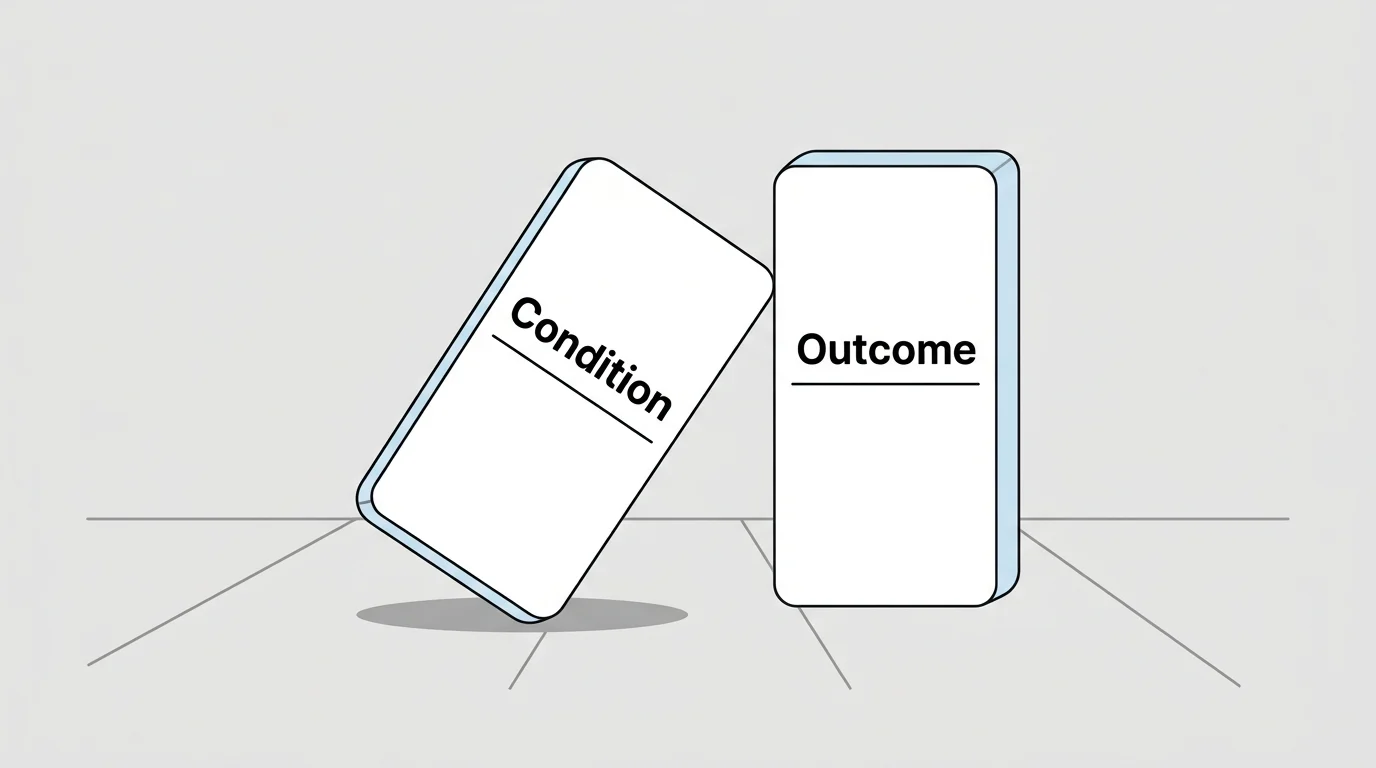
Think of contingent as a domino effect. One thing must fall before the next thing can move. If the first domino does not fall, nothing else happens.
For example, imagine you are planning a beach trip. You tell your friends, “The trip is contingent on the weather.” That means if it rains, the trip is off. If the sun comes out, you go. The trip depends entirely on the weather forecast.
In simple terms, contingent means “it depends.”
Full Definition
Merriam-Webster defines contingent as “depending on something else that might or might not happen.” Dictionary.com adds that it means “dependent for existence, occurrence, character, etc., on something not yet certain; conditional.”
There are a few layers to this definition:
Adjective Uses
- Conditional: Something that will happen only if another thing happens first. Example: “Our plans are contingent on the weather.”
- Possible but uncertain: Something that may or may not occur. Example: “They had to plan for contingent expenses.”
- Accidental or by chance: Happening without a known cause. Example: “Contingent occurrences.”
- Logical: In logic, a contingent proposition is one that is neither necessarily true nor necessarily false. Its truth can only be established through observation.
Noun Uses
As a noun, contingent refers to a group of people representing a larger organization. For example, “The American contingent will stay overnight in London.” It can also mean a quota of troops or a representative group at a gathering.
The word comes from the Latin contingere, meaning “to touch” or “to befall.” It entered English in the 14th century.
Context and Usage
Contingent appears in many different contexts. Understanding where and how to use it will help you communicate more clearly.
Professional and Formal Settings
Contingent is most at home in formal environments. You will see it in:
- Job offers: “This offer is contingent on passing a background check.”
- Contracts: “Payment is contingent on project completion.”
- Real estate: “The sale is contingent on the buyer securing financing.”
- Business deals: “The merger is contingent on regulatory approval.”
- Academic settings: “Admission is contingent on meeting all requirements.”
Everyday Conversations
While contingent is formal, people do use it in everyday speech, especially when discussing plans that are not final. You might hear:
- “Dinner is contingent on my meeting ending on time.”
- “Our weekend plans are contingent on the kids’ schedule.”
- “I am coming, but it is contingent on my ride showing up.”
News and Media
Journalists use contingent to describe events that depend on uncertain factors:
- “The ceasefire is contingent on both sides agreeing to withdraw.”
- “Funding for the project is contingent on congressional approval.”
Tone and Formality
Contingent carries a neutral to formal tone. It is not slang. It is not casual. Using it in a text message to a friend might sound stiff or overly serious. However, in professional writing, it adds precision and clarity.
Real-Life Examples
Seeing contingent in action makes the meaning click. Here are five realistic conversation examples.
1: Work Email
Subject: Job Offer Update
Dear Marcus,
We are pleased to offer you the position of Marketing Coordinator. This offer is contingent on the successful completion of a background check and verification of your references. Once these steps are cleared, we will send your official start date.
Best regards,
HR Team
2: Group Chat About Plans
Alex: “Is everyone still down for the cabin trip next weekend?”
Jordan: “I am in, but it is contingent on me getting my car fixed by Friday.”
Taylor: “Same here. My attendance is contingent on my boss approving my time off.”
Alex: “Got it. Let me know by Wednesday so I can finalize the booking.”
3: Real Estate
Buyer: “We love the house. When can we move in?”
Agent: “The sale is contingent on the home inspection and appraisal. Once those come back clear, we can set a closing date.”
Buyer: “So it is not guaranteed yet?”
Agent: “Correct. Everything is contingent right now.”
4: Academic Setting
Professor: “Your grade in this course is contingent on your performance on the final exam. If you do not pass the exam, you do not pass the class.”
Student: “So the exam is the deciding factor?”
Professor: “Exactly. Everything else is preparation.”
5: Casual Conversation
Mia: “Are you coming to the concert on Saturday?”
Eli: “It is contingent on whether I can get tickets. They are selling out fast.”
Mia: “Let me know. I can grab you one if you want.”
Eli: “Appreciate that. I will let you know by tonight.”
Platform-Specific Meaning
Contingent is not platform-specific slang. It is a standard English word used across all communication channels. However, the way it appears and the frequency of use vary by platform.
On WhatsApp, contingent shows up in professional group chats, family planning discussions, and logistics coordination. You are more likely to see it in messages about travel plans, event coordination, or work-related updates. It is not common in casual banter or playful exchanges.
Example WhatsApp message: “Flight is booked but contingent on my visa coming through. Will update the group once I know more.”
Snapchat
Snapchat is primarily a visual platform with casual, ephemeral messaging. Contingent rarely appears here. When it does, it is usually in a caption or a text overlay on a Snap about plans that are not certain. For example, a photo of a suitcase with the caption: “Trip is contingent on my friend getting off work.”
TikTok
TikTok comments and captions sometimes use contingent when discussing trends, challenges, or plans. Creators might say, “This video is contingent on me not messing up the dance.” It adds a humorous, self-aware tone to content that feels uncertain.
Email and Professional Platforms
This is where contingent thrives. In Outlook, Gmail, Slack, and Microsoft Teams, contingent appears in formal communications about deadlines, approvals, and conditional agreements. It is a staple of professional vocabulary.
Text Messaging (SMS)
In standard text messages, contingent is less common. Most people opt for simpler words like “depends” or “if.” However, in texts about serious topics like contracts, job offers, or major life decisions, contingent fits naturally.
Alternative Meanings
Contingent has a few alternative meanings depending on the context.
As a Noun: A Group or Delegation
When used as a noun, contingent refers to a group of people representing a larger body. For example:
- “The Canadian contingent at the Olympics marched first.”
- “A contingent of journalists waited outside the courthouse.”
- “The company sent a contingent of engineers to the conference.”
In Logic and Philosophy
In logic, a contingent statement is one that is true in some situations and false in others. It is not necessarily true or false. Its truth depends on facts about the world.
In Metaphysics
In philosophy, contingent beings are things that exist but do not have to exist. They depend on something else for their existence. This is contrasted with necessary beings, which must exist.
In Law
In legal terms, a contingent debt or obligation is one that depends on an uncertain future event. For example, a contingent fee is a lawyer’s fee that is paid only if the case is won.
Related Terms and NLP Variations
Understanding synonyms and related terms helps you use contingent more flexibly.
Synonyms
| Word | Meaning | When to Use |
|---|---|---|
| Conditional | Based on certain conditions | Formal writing |
| Dependent | Relying on something else | General use |
| Subject to | Limited by rules or conditions | Contracts |
| Pending | Waiting for something to happen | Updates, emails |
| Uncertain | Not guaranteed | General use |
| Provisional | Temporary, conditional | Plans, appointments |
Antonyms
| Word | Meaning |
|---|---|
| Certain | Guaranteed; sure to happen |
| Unconditional | No conditions attached |
| Absolute | Not dependent on anything |
| Guaranteed | Promised; assured |
Common Phrases
- Contingent on: The most common usage. “The deal is contingent on approval.”
- Contingent upon: Same meaning, slightly more formal. “Payment is contingent upon delivery.”
- Contingent plan: A backup plan for if things do not go as expected.
- Contingent liability: A potential financial obligation that may or may not happen.
Lexical Variations
- Contingency (noun): A possible future event or condition. “We need to plan for every contingency.”
- Contingently (adverb): In a conditional manner. “The funds were contingently allocated.”
- Contingentness (noun): The state of being contingent.
How to Respond When Someone Uses “Contingent”
When someone tells you something is contingent, they are communicating uncertainty. Your response should acknowledge that uncertainty and ask for clarity.
Response Strategies
- Ask for the condition: “What is it contingent on?”
- Confirm your understanding: “So it depends on X happening first?”
- Ask for timing: “When will you know for sure?”
- Offer alternatives: “Is there a backup plan if that does not happen?”
- Express flexibility: “No problem. Just let me know when you know more.”
Example Responses
- “Got it. So the whole trip depends on your vacation being approved?”
- “Okay, contingent on the inspection. When will you have the results?”
- “Understood. Keep me posted on the visa situation.”
- “That makes sense. Let me know if there is anything I can do to help.”
When to Avoid Using “Contingent”
Contingent is not for every situation. Here is when to skip it:
- Casual chats with friends: “Depends” sounds more natural.
- Playful or emotional messages: Contingent feels too formal.
- Text slang: “It depends tbh” works better than “It is contingent.”
- When you want simplicity: “If” or “based on” are clearer.
Misinterpretations and Common Mistakes
Even though contingent is straightforward, people still get it wrong. Here are the most common mistakes.
1: Using It as Slang
Contingent is not slang. It is a formal word. Using it in a text like “Movie night is contingent lol” sounds awkward. Save it for appropriate contexts.
2: Confusing “Contingent” with “Contingency”
These are related but different. Contingent is an adjective meaning conditional. Contingency is a noun meaning a possible future event. You do not say, “The plan is contingency.” You say, “The plan is contingent.”
3: Forgetting the Preposition
Contingent is almost always followed by on or upon. Saying “The deal is contingent the approval” is incorrect. The correct phrasing is “contingent on approval” or “contingent upon approval.”
4: Using It When You Mean “Likely”
Contingent does not mean “likely.” It means “conditional.” A contingent event is not guaranteed. It may or may not happen. If you mean something is probable, use “likely” instead.
5: Overusing It
Contingent is precise, but overusing it makes your writing sound stiff. Mix it with synonyms like “depends” or “conditional” to keep your language natural.
When NOT to Use Contingent
Knowing when not to use contingent is just as important as knowing when to use it.
Casual Conversations
If you are texting a friend about weekend plans, “depends” is better. “I might come, it depends on my schedule” sounds natural. “I might come, it is contingent on my schedule” sounds like a robot.
Emotional or Personal Messages
Contingent feels clinical. If you are talking about feelings or relationships, softer language works better. Instead of “My happiness is contingent on your response,” try “Your response means a lot to me.”
Social Media Posts
On platforms like Instagram or Twitter, contingent feels out of place. Keep it simple. “Plans might change” or “TBD” are more appropriate.
When You Want to Sound Approachable
Contingent can make you sound distant or overly formal. If you want to be warm and approachable, use simpler words.
Usage Tips
Here are practical tips for using contingent correctly and effectively.
1: Always Include the Condition
When you say something is contingent, always specify what it depends on. “The event is contingent” is vague. “The event is contingent on the venue being available” is clear.
2: Use It for Important Matters
Contingent works best for serious topics: contracts, job offers, legal agreements, major plans. For small decisions, use simpler language.
3: Pair It with Clear Timing
If something is contingent, people want to know when they will have an answer. Add a timeline. “The offer is contingent on the background check, which takes 3 to 5 business days.”
4: Offer a Backup Plan
When you announce that something is contingent, it helps to offer a contingency plan. “The picnic is contingent on the weather. If it rains, we will move it indoors.”
5: Practice with Synonyms
Expand your vocabulary by practicing with synonyms. Write sentences using “conditional,” “dependent,” and “subject to” to see which fits best.
FAQs
1. What does contingent mean in simple terms?
Contingent means something depends on something else. If a plan is contingent, it will only happen if certain conditions are met. For example, “The trip is contingent on good weather” means you only go if the weather is nice.
2. Is contingent a positive or negative word?
Contingent is neutral.simply describes a conditional situation. It is not good or bad. It just means “not guaranteed.”
3. What is the difference between contingent and contingency?
Contingent is an adjective meaning conditional. Contingency is a noun meaning a possible future event or a backup plan. “The plan is contingent” versus “We need a contingency plan.”
4. Can contingent be used in casual conversation?
Yes, but it sounds formal. In casual chats, words like “depends” or “if” are more natural. Use contingent when you need precision or are in a professional setting.
5. What does contingent mean in a job offer?
A contingent job offer means you get the job only if certain conditions are met. Common conditions include passing a background check, verifying references, or completing a drug test.
6. What does contingent mean in real estate?
In real estate, a contingent offer means the sale depends on certain conditions. Common contingencies include home inspection, appraisal, and financing. The deal only goes through if these conditions are satisfied.
7. What is a contingent plan?
A contingent plan is a backup plan. It is what you will do if your main plan does not work out. For example, “If the outdoor venue is unavailable, our contingent plan is to use the indoor hall.”
8. Is contingent the same as conditional?
Yes, contingent and conditional are very similar. Both mean something depends on something else. Conditional is more common in formal writing, while contingent is used in both formal and professional contexts.
9. What does contingent mean in law?
In law, contingent refers to something that depends on an uncertain future event. A contingent debt, for example, is a debt that only becomes payable if a specific event occurs.
10. How do you pronounce contingent?
Contingent is pronounced “kuhn-TIN-juhnt.” The stress is on the second syllable.
11. What is the opposite of contingent?
The opposite of contingent is unconditional, certain, or guaranteed. If something is unconditional, it does not depend on anything else.
12. Can contingent be used as a noun?
Yes, as a noun, contingent means a group of people representing a larger organization. For example, “The French contingent at the summit included the foreign minister.”
13. What does contingent mean in philosophy?
In philosophy, a contingent being is one that exists but does not have to exist. It depends on something else for its existence. This is contrasted with a necessary being, which must exist.
14. Is contingent a common word?
Contingent is moderately common. It appears frequently in professional, legal, and academic contexts. It is less common in everyday casual speech.
15. What are some synonyms for contingent?
Common synonyms include conditional, dependent, subject to, pending, and provisional.
Conclusion
Contingent is a valuable word that adds precision to your communication. It means something depends on something else. Nothing is guaranteed until the conditions are met. Whether you are reading a contract, discussing plans, or writing a professional email, understanding contingent meaning helps you navigate uncertain situations with confidence.
Remember these key points:
- Contingent means conditional or dependent.
- It is formal and works best in professional settings.
- Always specify what something is contingent on.
- Use simpler words like “depends” in casual conversations.
- Know the difference between contingent (adjective) and contingency (noun).
Now you have a complete understanding of contingent meaning. You can spot it in the wild, use it correctly, and explain it to anyone who asks. Next time someone says, “The plan is contingent,” you will know exactly what they mean and how to respond.