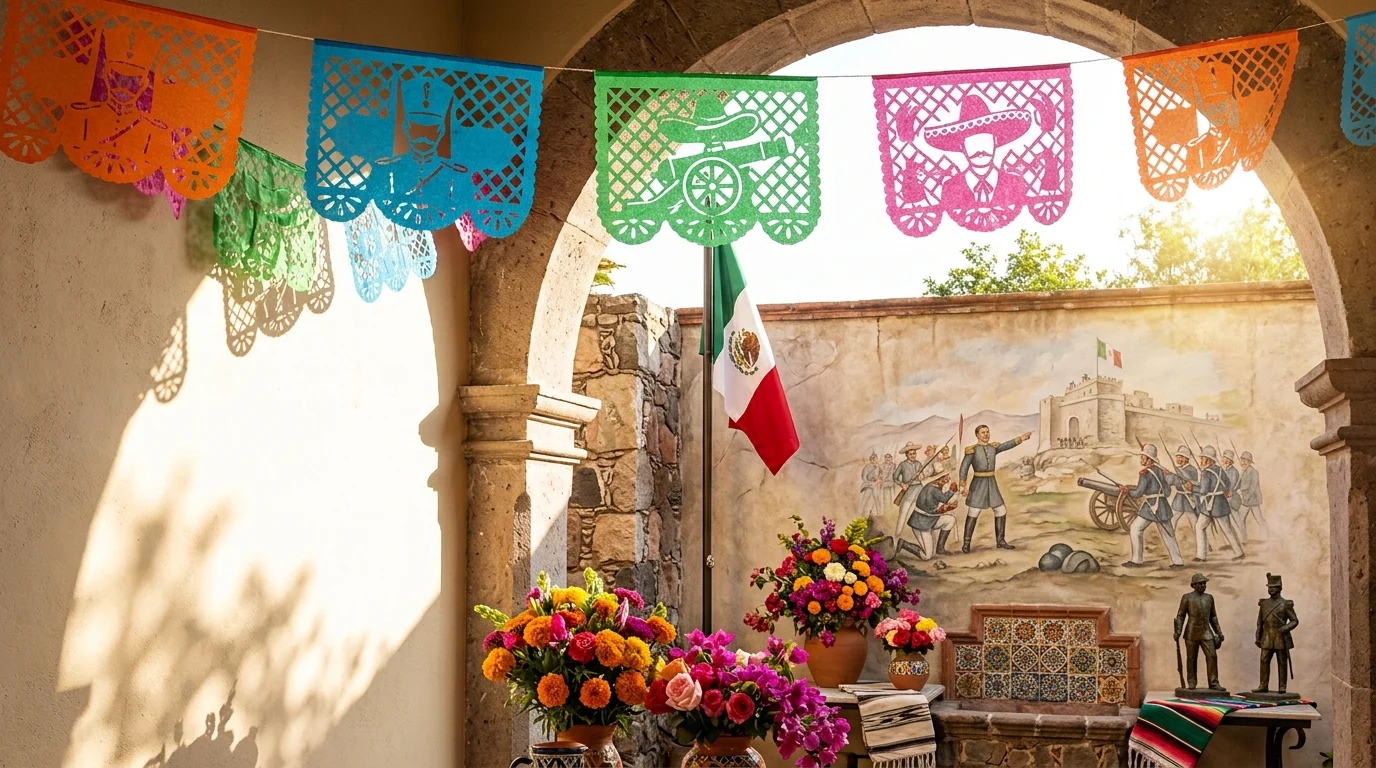

If you hear someone mention Cinco de Mayo and think it simply means “Mexican Independence Day,” there is an important distinction to know. The Cinco de Mayo meaning refers to May 5, the date commemorating Mexico’s victory over France at the Battle of Puebla in 1862. In the United States, the day is also widely associated with Mexican culture, food, music, and community celebrations. The meaning can therefore be historical, cultural, or casual depending on the conversation. Understanding the history behind the date helps you recognize why people celebrate it and why calling it Mexico’s Independence Day is inaccurate.
What Does Cinco de Mayo Mean?
Cinco de Mayo literally means “Fifth of May” in Spanish. It commemorates the Mexican army’s victory over French forces at the Battle of Puebla on May 5, 1862. Although the victory did not end the French intervention in Mexico, it became an important symbol of Mexican resistance.
| Detail | Explanation |
|---|---|
| Meaning | “Fifth of May” in Spanish |
| Historical event | Mexican victory at the Battle of Puebla |
| Date | May 5 |
| Common U.S. association | Mexican culture, food, music, and celebrations |
| Formal or informal | Both, depending on context |
The phrase itself is not slang or an acronym, so there is no “Cinco de Mayo full form.” It is simply the Spanish name for the date.
The Historical Meaning of Cinco de Mayo
The historical Cinco de Mayo meaning comes from the Battle of Puebla during the French intervention in Mexico. On May 5, 1862, Mexican forces defeated a much larger and better-equipped French army near the city of Puebla.
The victory was significant because France had one of the strongest military forces of the period. Mexico’s successful defense became a symbol of determination and resistance, even though French forces later advanced and eventually occupied Mexico City.
Cinco de Mayo should therefore be understood as a commemoration of a particular military victory, not as the date when Mexico became independent.
Mexico’s Independence Day is September 16, which commemorates the beginning of the Mexican War of Independence in 1810. Cinco de Mayo and Mexican Independence Day are separate occasions with different historical meanings.
Cinco de Mayo Meaning in the United States
In the United States, Cinco de Mayo often has a broader cultural meaning than the historical commemoration alone. Many communities mark the day with Mexican or Mexican American food, music, dancing, festivals, educational events, and other cultural activities.
Restaurants and social groups may also use the occasion as a reason for themed gatherings. Because of this, someone saying “We’re celebrating Cinco de Mayo tonight” may simply be talking about a party or cultural event rather than discussing the Battle of Puebla.
The historical and cultural meanings can coexist. Knowing the difference helps you understand what someone means without assuming that every Cinco de Mayo reference is about the same thing.
Is Cinco de Mayo Mexico’s Independence Day?
No. This is one of the most common misunderstandings about Cinco de Mayo.
Mexico’s Independence Day is celebrated on September 16. Cinco de Mayo takes place on May 5 and commemorates the Mexican victory at Puebla in 1862.
The distinction is easy to remember:
| Date | What It Commemorates |
|---|---|
| May 5 | Mexican victory at the Battle of Puebla |
| September 16 | Beginning of Mexico’s independence movement |
Cinco de Mayo is historically important, but it does not mark Mexico’s independence from Spain.
How Context Changes the Cinco de Mayo Meaning
The meaning of “Cinco de Mayo” is generally consistent, but the reason someone mentions it can change depending on the surrounding conversation.
Historical discussion:
“Why was Cinco de Mayo important in 1862?”
Here, the phrase clearly refers to the Battle of Puebla and its historical significance.
Cultural event:
“Our neighborhood has a Cinco de Mayo festival this weekend.”
Here, the focus is likely on community, culture, food, music, or entertainment.
Casual conversation:
“Are you doing anything for Cinco de Mayo?”
The speaker is probably asking about plans for May 5 rather than asking about Mexican history.
Restaurant or social setting:
“They have Cinco de Mayo specials tonight.”
The phrase refers to a themed promotion or celebration connected with the date.
Unlike internet abbreviations, Cinco de Mayo usually does not acquire a completely different definition because of punctuation, capitalization, or emojis. Context mainly tells you whether the speaker is discussing history, culture, or a social event.
Cinco de Mayo Meaning on Different Platforms
The basic meaning remains the same across social platforms and messaging services, but the purpose of mentioning it can vary.
Text Messages and WhatsApp
In private messages, Cinco de Mayo often refers to plans, parties, meals, or events.
“Are we still going out for Cinco de Mayo?”
The tone is usually casual and social.
Instagram and Facebook
Posts may use “Cinco de Mayo” when sharing event announcements, cultural celebrations, food, decorations, or personal experiences.
“Getting ready for our Cinco de Mayo festival!”
The emphasis may be cultural, community-oriented, or simply celebratory.
TikTok
On TikTok, the phrase can appear in videos about recipes, outfits, celebrations, educational history content, music, or cultural discussions.
“Three things you should know about Cinco de Mayo.”
Here, the meaning depends on the video’s subject rather than a special TikTok definition.
Group Chats
Friends may use the phrase to coordinate plans.
“Who’s free for Cinco de Mayo?”
In this setting, it normally functions as a reference to the date and associated activities.
Real Conversation Examples
Person A: “What is Cinco de Mayo actually about?”
Person B: “It commemorates Mexico’s victory over France at the Battle of Puebla.”
Meaning: The conversation is focused on the historical meaning of the date.
Person A: “Are you coming to our Cinco de Mayo party?”
Person B: “Absolutely. I’ll bring some food.”
Meaning: The phrase refers to a social celebration connected with May 5.
Person A: “Why are people posting so much about Cinco de Mayo today?”
Person B: “A lot of people are celebrating Mexican culture and the holiday.”
Meaning: The reference is cultural and contemporary rather than a detailed discussion of the 1862 battle.
Is Cinco de Mayo Rude or Offensive?
The phrase “Cinco de Mayo” itself is not rude or offensive. It is the Spanish name for May 5 and refers to a genuine historical commemoration.
However, the way people represent or celebrate the occasion can affect how their message is received. Treating Mexican culture as a costume, relying on stereotypes, or reducing the occasion entirely to drinking can come across as disrespectful.
A more thoughtful approach is to recognize the historical and cultural significance behind the date. If you are attending a celebration, respecting the people, traditions, and community involved matters more than simply using the phrase correctly.
How to Talk About Cinco de Mayo
Someone asks about the Cinco de Mayo meaning, a clear response is usually best:
- “It means ‘Fifth of May’ in Spanish and commemorates the Battle of Puebla.”
- “It celebrates Mexico’s victory over France at Puebla in 1862.”
- “It’s different from Mexico’s Independence Day, which is September 16.”
If the conversation is casual, you can keep your response shorter:
- “It’s the May 5 celebration connected to the Battle of Puebla.”
- “It commemorates a Mexican victory over France in 1862.”
If you are unsure what someone means when they mention Cinco de Mayo, you can ask:
- “Do you mean the historical event or the celebration?”
- “Are you talking about the history or your plans for May 5?”
These responses keep the conversation accurate without making a casual discussion unnecessarily formal.
When to Use the Term
You can use “Cinco de Mayo” naturally when discussing:
- May 5 celebrations
- Mexican or Mexican American cultural events
- Historical discussions about the Battle of Puebla
- Community festivals
- Food, music, and cultural activities associated with the occasion
- Plans for Cinco de Mayo gatherings
The phrase is widely understandable in English-language conversations, especially when the subject is the May 5 holiday.
If you are discussing the historical event, adding “Battle of Puebla” or “1862” can make your meaning especially clear.
When to Avoid Misusing the Term
The main thing to avoid is describing Cinco de Mayo as Mexico’s Independence Day. That is historically incorrect.
You should also avoid assuming that every Mexican person celebrates the day in the same way. Cinco de Mayo has different levels of significance for different people and communities.
In professional, academic, or educational writing, use precise language when explaining the holiday. Rather than saying simply that it “celebrates Mexico,” explain that it commemorates the Mexican victory at the Battle of Puebla.
Common Mistakes About Cinco de Mayo
| Common Mistake | Correct Understanding |
|---|---|
| Calling it Mexican Independence Day | Mexico’s Independence Day is September 16 |
| Saying it celebrates Mexico’s independence | It commemorates the Battle of Puebla victory in 1862 |
| Assuming it has one universal celebration style | Celebrations vary by community and setting |
| Treating it only as a party holiday | The date has a specific historical significance |
Another common mistake is confusing the literal meaning of the phrase with its cultural significance. “Cinco de Mayo” literally means “Fifth of May,” while the historical meaning comes from what happened on that date.
Similar Terms and Dates
A few related terms are easy to confuse with Cinco de Mayo.
| Term | Meaning | Main Difference |
|---|---|---|
| Mexican Independence Day | September 16 commemoration | Marks the beginning of Mexico’s independence movement |
| Battle of Puebla | 1862 military battle | The specific historical event commemorated by Cinco de Mayo |
| Día de la Independencia | Spanish for Independence Day | Refers to Mexico’s September 16 observance |
| Cinco de Mayo | “Fifth of May” | Commemorates the Mexican victory at Puebla |
These terms overlap in subject matter but should not be treated as interchangeable.
The Origin and Significance of Cinco de Mayo
The phrase comes directly from Spanish: “cinco” means five, while “de mayo” means “of May.” Together, “Cinco de Mayo” means “Fifth of May.”
Its historical significance comes from May 5, 1862, when Mexican forces defeated the French army at Puebla. The event did not immediately remove French forces from Mexico, but the victory became an important symbol of Mexican resistance.
In the United States, Cinco de Mayo later developed a strong cultural and community dimension. As a result, modern references can involve history, Mexican and Mexican American culture, festivals, food, music, or social gatherings.
The most accurate interpretation depends on what the speaker is discussing.
Quick Recap
- Cinco de Mayo means “Fifth of May” in Spanish.
- It commemorates Mexico’s victory over France at the Battle of Puebla in 1862.
- It is not Mexico’s Independence Day; that is celebrated on September 16.
- In the United States, the date is often associated with cultural celebrations, food, music, and community events.
- Context tells you whether someone is referring to the historical event, cultural significance, or a social celebration.
Frequently Asked Questions
What does Cinco de Mayo mean in text?
Cinco de Mayo in text usually refers to May 5, its historical commemoration, or plans for related celebrations.
Is Cinco de Mayo Mexico’s Independence Day?
No, Mexico’s Independence Day is September 16, while Cinco de Mayo commemorates the Battle of Puebla victory.
What does Cinco de Mayo mean on TikTok?
On TikTok, Cinco de Mayo usually refers to May 5 celebrations, cultural content, recipes, events, or historical discussions.
Is Cinco de Mayo rude?
The phrase itself is not rude, although insensitive stereotypes or disrespectful portrayals of Mexican culture can be offensive.
Can Cinco de Mayo have different meanings?
The phrase has one historical reference, but conversations may use it for cultural events, celebrations, or May 5 plans.
Final Thoughts
The Cinco de Mayo meaning is straightforward: it means “Fifth of May” and commemorates Mexico’s victory over France at the Battle of Puebla in 1862. The date is sometimes confused with Mexican Independence Day, but the two occasions have different histories and dates. In everyday American conversations, Cinco de Mayo can also refer to cultural events, food, music, festivals, or social plans. When you see or hear the phrase, look at the surrounding context to understand whether the speaker is discussing history or a modern celebration. Using the term accurately starts with remembering what May 5 actually represents.