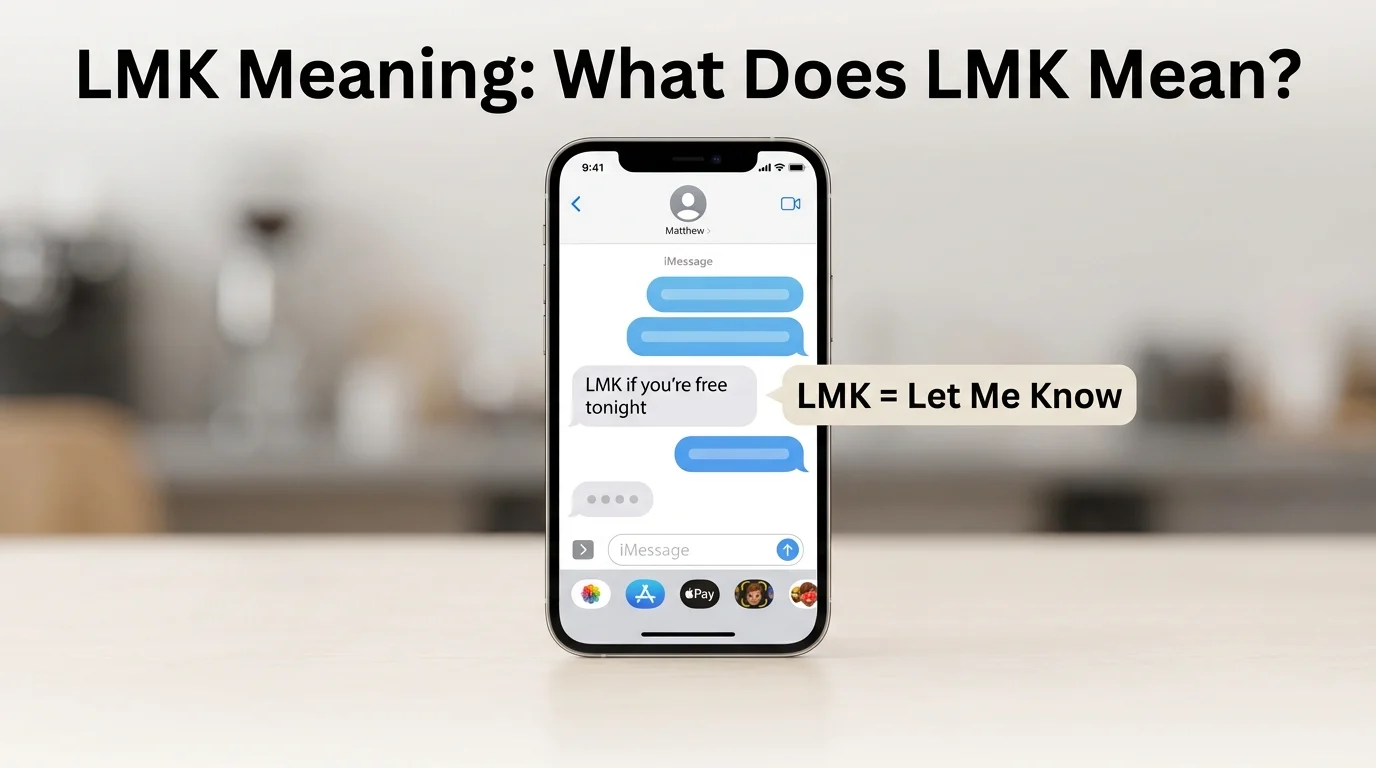


You receive a message that simply says “HY” and are not sure whether it is shorthand, slang, or a typo. In most casual texting, HY meaning is usually “Hell Yeah” or, less commonly, “Hey.” The intended meaning depends heavily on the surrounding conversation and how the sender normally texts. Understanding the context can help you tell whether HY expresses strong agreement, excitement, or simply works as a greeting. Below, you’ll find the common meanings of HY, examples in real conversations, its tone, platform usage, common misunderstandings, and natural ways to reply.
What Does HY Mean in Text?
The most common slang meaning of HY in casual text conversations is “Hell Yeah,” an enthusiastic way to say yes, definitely, or absolutely. In some conversations, HY can also be a shortened form of “Hey,” especially when it appears at the beginning of a message.
| Detail | Explanation |
|---|---|
| Most common slang meaning | Hell Yeah |
| Alternative meaning | Hey |
| Tone | Enthusiastic, casual, or friendly |
| Common use | Texts, chats, social media |
| Formal or informal | Informal |
When HY means “Hell Yeah,” it normally shows strong agreement or excitement. For example, if someone asks, “Wanna go to the concert?” and you answer “HY,” you are essentially saying, “Hell yeah!”
When it means “Hey,” the tone is usually much simpler. Someone might text “HY, what are you doing?” as a shortened greeting.
HY Meaning in Text: The Main Uses
The meaning of HY in text depends on what comes before and after it.
1. HY = Hell Yeah
This is the most useful interpretation when HY appears as a response to a question, suggestion, invitation, or statement. It communicates strong agreement rather than a hesitant “yes.”
Example:
Person A: “You coming to the game tonight?”
Person B: “HY!”
Meaning: “Hell yeah!” or “Absolutely!”
The exclamation mark reinforces the enthusiastic tone, but HY can still carry the same meaning without punctuation.
2. HY = Hey
HY can also be used as an abbreviated greeting. This interpretation is more likely when it starts a conversation rather than answers a question.
Example:
Person A: “HY, are you free later?”
Person B: “Yeah, what’s up?”
Here, HY functions like “Hey” rather than “Hell Yeah.” The rest of the sentence makes the intended meaning clear.
There is no universally accepted full form that applies to every use of HY. If someone tells you that HY always has one specific meaning, the conversation itself should still be checked before interpreting it.
How Context Changes the HY Meaning
Context is especially important with short abbreviations because the same two letters can represent different expressions.
Look at these situations:
- “Want pizza?” — “HY!” → Most likely “Hell yeah!”
- “HY, how are you?” → More likely “Hey.”
- “You actually did it?” — “HY 😂” → Likely an excited “Hell yeah.”
- “HY, can you send me that file?” → More likely “Hey.”
The relationship between the people also matters. Friends may use HY casually, while someone you barely know might use it differently.
Punctuation and emojis provide additional clues. “HY!!!” strongly suggests excitement, while “hy” at the start of a casual greeting may simply mean “hey.” A laughing emoji can make the expression playful, while a period can make it feel more restrained.
HY Meaning on Different Platforms
HY generally does not have a completely different standard meaning on each major platform. Its interpretation usually follows the same context-based pattern across messaging and social platforms.
Text Messages and WhatsApp
In ordinary texting, HY may mean “Hell Yeah” when responding enthusiastically, or “Hey” when opening a conversation.
Example:
“Going out tonight?”
“HY, I’m in.”
Snapchat and Instagram
On social platforms, HY can similarly function as casual slang or a shortened greeting. The surrounding message usually reveals which meaning the sender intends.
Example:
“HY, what are you doing?” → “Hey, what are you doing?”
TikTok and Other Social Chats
HY may appear in comments or direct messages as casual shorthand. When it responds directly to an opinion, invitation, or question, “Hell Yeah” is generally the more natural interpretation.
Example:
“Would you try this challenge?”
“HY 😂”
Gaming and Group Chats
In fast-moving chats, abbreviations such as HY can save typing time. If a teammate asks, “You joining?” and someone replies “HY,” an enthusiastic “Hell yeah” interpretation makes sense.
HY Examples in Real Conversations
1: Friends
Person A: “Movie tonight?”
Person B: “HY! What time?”
Meaning: Person B is enthusiastically agreeing to the plan.
2: Casual Greeting
Person A: “HY, you still awake?”
Person B: “Yeah lol. What happened?”
Meaning: HY means “Hey” because it introduces the conversation.
3: Group Chat
Person A: “Everyone ready for the road trip?”
Person B: “HY 😂”
Person C: “Let’s gooo!”
Meaning: HY means an enthusiastic “Hell yeah,” showing excitement about the trip.
What Tone Does HY Have?
HY is strongly informal, so its tone depends on which meaning is intended.
When HY means “Hell Yeah,” it is generally enthusiastic, excited, supportive, or emphatic. It can also sound playful when combined with emojis or exaggerated punctuation.
When HY means “Hey,” it is usually casual and friendly rather than particularly emotional.
Is HY Rude?
HY is not inherently rude, but “Hell Yeah” is informal and slightly stronger than a simple “yes.” It may be inappropriate in formal communication because of the profanity contained in the expanded phrase.
Is HY Flirty?
HY is not inherently flirty. If it appears in a romantic or playful conversation, the surrounding wording, emojis, and relationship between the people determine whether the message has a flirtatious tone.
Is HY Offensive?
HY is generally not offensive when used casually, but the “Hell Yeah” interpretation contains mild profanity. For that reason, clearer and more neutral wording is preferable in professional or sensitive situations.
How to Reply to HY
Your response should match the meaning and tone of the original message.
Friendly Replies
If HY means “Hell Yeah,” you could respond with:
- “Haha, I knew you’d say yes.”
- “Awesome, let’s do it!”
- “That’s what I wanted to hear.”
- “Perfect! See you there.”
If HY means “Hey,” simple responses work better:
- “Hey! What’s up?”
- “Hey, how are you?”
- “Hi! What’s going on?”
Funny Replies
If the conversation is playful, you can answer with:
- “That enthusiasm 😂”
- “Okayyy, I’ll take that as a yes.”
- “I knew you were down.”
When You Are Confused
If you cannot tell which meaning the sender intended, clarification is easy:
- “HY as in hey or hell yeah? 😂”
- “Wait, what do you mean by HY?”
- “Is that a yes? 😭”
There is nothing unusual about asking when a two-letter abbreviation is genuinely ambiguous.
When to Use HY
HY works best in casual communication with people who understand your texting style. You might use it with friends, classmates, gaming groups, social-media contacts, or people you regularly message.
If you mean “Hell Yeah,” use it when you want to show enthusiastic agreement. If you mean “Hey,” make sure the surrounding message makes that interpretation obvious.
When to Avoid HY
Avoid HY when clarity matters more than brevity. Professional emails, job applications, academic writing, client communication, formal announcements, and sensitive conversations usually call for complete words.
For example, replying “HY” to a manager could create unnecessary confusion. Writing “Absolutely” or “Yes, I’d be happy to” communicates your meaning more clearly.
The issue is not that slang is always inappropriate. The main concern is that HY can be ambiguous, and ambiguity is less useful in formal settings.
Common Mistakes About HY
| Common Mistake | Correct Understanding |
|---|---|
| Assuming HY always means “Hell Yeah” | It can also mean “Hey,” especially at the beginning of a message. |
| Treating HY as one universal full form | Its meaning depends on conversational context. |
| Assuming HY is automatically rude | The tone can be enthusiastic, casual, or neutral depending on usage. |
One common mistake is interpreting a standalone “HY” without looking at the previous message. A response to an invitation is much more likely to mean “Hell Yeah” than a greeting at the beginning of a conversation.
Another mistake is assuming every abbreviation has one official expansion. Internet slang is often flexible, and people may shorten words differently.
Similar Slang Terms
| Term | Meaning | Main Difference |
|---|---|---|
| HY | Hell Yeah / Hey | Can express agreement or act as a greeting |
| YEAH | Yes or agreement | Usually clearer and less ambiguous |
| HELL YEAH | Strong agreement | Full phrase rather than abbreviation |
| HEY | Casual greeting | Primarily used to start a conversation |
| YEP | Yes | Usually less emphatic than “Hell Yeah” |
These terms can overlap in casual conversations, but they are not interchangeable in every situation. “Hey” normally starts a conversation, while “Hell yeah” responds positively to something.
Origin and Popularity of HY
There is no single, reliably established origin date or creator for the slang use of HY. Like many internet abbreviations, its meaning developed through informal digital communication rather than having one universally documented source.
Because abbreviations can be created and reused by different online communities, you should be cautious about claims that HY has one official origin or one guaranteed definition.
Quick Recap
- HY most commonly means “Hell Yeah” when it expresses strong agreement or excitement.
- HY can also mean “Hey” when it is used as a casual greeting.
- The message surrounding HY is the best clue to its intended meaning.
- HY is informal and works best in casual texts, chats, and social conversations.
- If the meaning is unclear, asking for clarification is better than guessing.
Frequently Asked Questions
What does HY mean in text?
HY usually means “Hell Yeah” in text, while “Hey” is another common interpretation when beginning a casual conversation.
Is HY rude?
HY is not inherently rude, but its “Hell Yeah” meaning contains mild profanity and suits informal conversations better.
What does HY mean on TikTok?
On TikTok, HY usually carries its casual texting meanings, with context indicating whether it means “Hell Yeah” or “Hey.”
How should you reply to HY?
Reply enthusiastically when HY means “Hell Yeah,” or return the greeting when it means “Hey.”
Can HY have different meanings?
Yes, HY can mean “Hell Yeah” or “Hey,” and the surrounding conversation usually reveals which interpretation fits.
Final Thoughts
The main HY meaning in casual slang is usually “Hell Yeah,” especially when someone uses it to show strong agreement or excitement. However, HY can also mean “Hey” when it opens a casual conversation. Because both interpretations are possible, context matters more than the abbreviation alone. Check the surrounding words, punctuation, emojis, and purpose of the message before deciding what someone means. HY is best suited to informal conversations where shorthand feels natural. If the meaning could cause confusion, using the full expression or asking for clarification is the clearest choice.