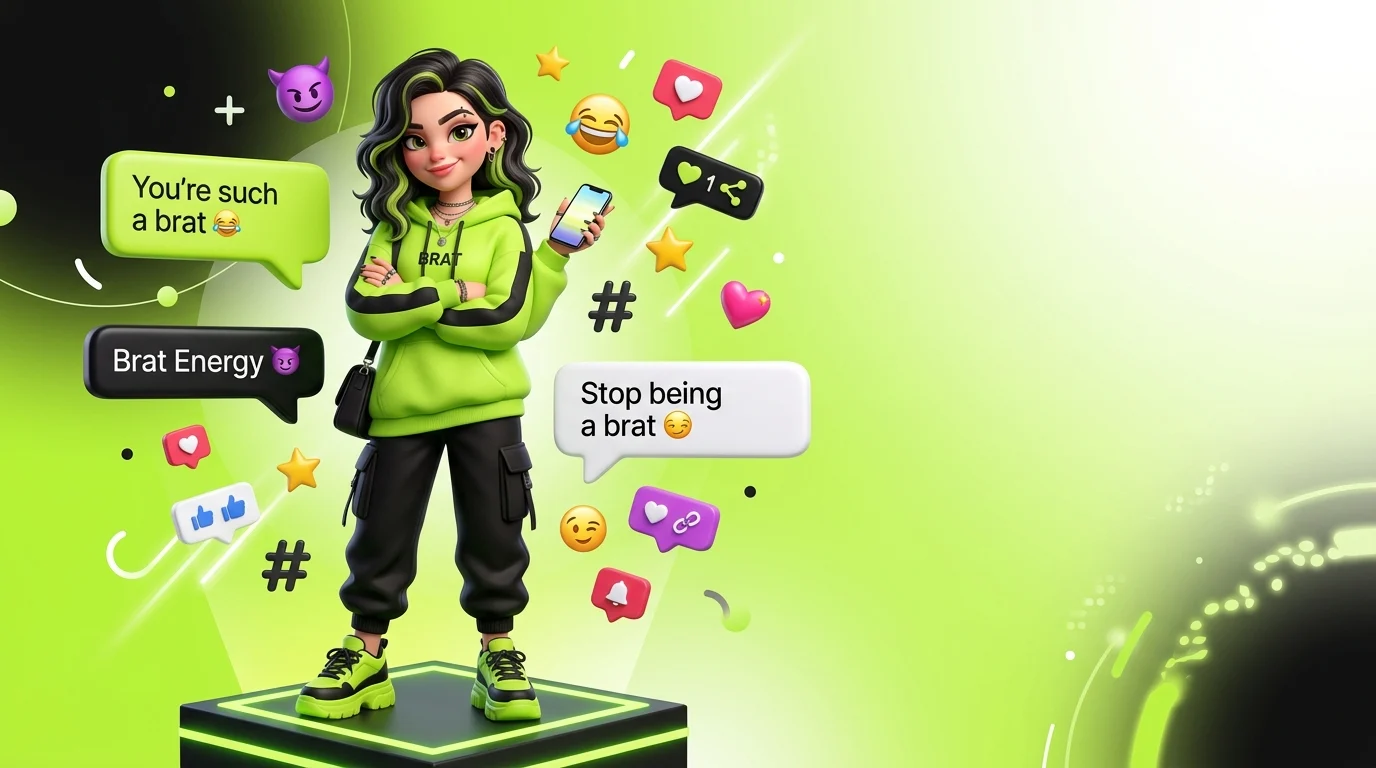

You might see someone call themselves a “brat” on TikTok, jokingly message “you’re such a brat,” or describe a celebrity as having “brat energy.” While the word has existed for a long time, its slang meaning has expanded in recent years. Depending on the conversation, it can be playful, affectionate, teasing, or mildly insulting.
Understanding the brat meaning slang requires paying attention to context, tone, and the relationship between the people talking. Here’s what the term usually means, how people use it across different platforms, when it’s appropriate, and how to respond naturally.
What Does Brat Mean?
In modern slang, brat usually describes someone who is playful, stubborn, mischievous, or intentionally difficult in a lighthearted way. It doesn’t stand for anything—it’s simply a word that has taken on different shades of meaning depending on the situation.
| Detail | Explanation |
|---|---|
| Most Common Meaning | A playful, stubborn, or mischievous person |
| Full Form | None |
| Tone | Playful, teasing, affectionate, or mildly critical |
| Common Platforms | TikTok, Instagram, Snapchat, text messages |
| Formal or Informal | Informal |
Unlike its traditional meaning of a badly behaved child, slang often uses brat for teenagers or adults in a humorous or affectionate way.
The Main Meaning of Brat in Slang
The most common slang meaning of brat is someone who knowingly acts stubborn, cheeky, demanding, or playful. They’re often aware they’re pushing someone’s buttons and may even find it amusing.
Rather than describing serious bad behavior, the slang version often refers to harmless teasing or playful defiance.
For example:
“Stop stealing my fries—you brat.”
In this example, the speaker isn’t genuinely angry. They’re teasing a friend for joking around.
The tone can range from affectionate to mildly annoyed depending on how it’s said.
Alternative Meanings of Brat
Although the playful definition is the most common today, brat has a few legitimate meanings depending on context.
| Meaning | Context | Tone | Example |
|---|---|---|---|
| Playfully stubborn person | Friends, texting, social media | Friendly | “You’re such a brat.” |
| Misbehaving child | Everyday English | Critical | “Their kid was acting like a brat.” |
| Confident, rebellious attitude | Pop culture and social media | Empowering or playful | “She’s embracing her brat era.” |
The intended meaning becomes clear from the conversation rather than the word alone.
How Context Changes the Meaning
The same word can sound affectionate, funny, or rude depending on the surrounding conversation.
Here are a few examples.
Example 1
Friend: “You hid my phone again?”
Reply: “Maybe.”
Meaning: The speaker is being playfully mischievous—a “brat.”
Example 2
Parent: “He’s acting like a brat today.”
Meaning: This refers to genuinely poor behavior.
Example 3
TikTok comment:
“Her brat energy is unmatched.”
Meaning: The person is being praised for a bold, rebellious, playful personality.
Example 4
Text:
“You’re such a brat 😂”
Meaning: The laughing emoji signals teasing rather than criticism.
Things that help reveal the meaning include:
- Emojis like 😂, 😈, or 😏
- Friendly teasing between people who know each other
- The overall topic
- Whether the word is aimed at a child or an adult
- Punctuation and playful wording
Brat Meaning on Different Platforms
TikTok
On TikTok, brat often refers to someone with a confident, rebellious, playful, or carefree attitude. It can also describe an aesthetic or personality that embraces being bold rather than trying to please everyone.
Example:
“She’s fully embracing brat summer.”
The tone is usually playful or self-confident.
Text Messages and Snapchat
In texts and Snapchat chats, brat is commonly used as teasing between friends, siblings, or romantic partners.
Example:
Person A: “I took the last cookie.”
Person B: “You’re such a brat.”
The message usually isn’t meant as a serious insult.
On Instagram, people may use brat in captions or comments to describe someone’s playful confidence or mischievous personality.
Example:
“Serving total brat energy.”
The meaning is generally lighthearted.
Dating Conversations
Between romantic partners or people flirting, brat can sometimes be used affectionately for someone who enjoys playful teasing or pretending to be difficult.
Whether it sounds cute or rude depends entirely on the relationship and mutual understanding.
Real Conversation Examples
Friends
Person A: “I changed your playlist.”
Person B: “You’re a brat.”
Meaning: Friendly teasing.
Family
Person A: “My little brother won’t share.”
Person B: “He’s being a brat today.”
Meaning: Refers to poor behavior.
Dating Chat
Person A: “No, I’m making you guess.”
Person B: “You’re such a brat 😏”
Meaning: Playful flirting and teasing.
Tone and Emotional Meaning
The word brat isn’t automatically rude. Its emotional tone depends heavily on context.
Is Brat Rude?
Sometimes.
Calling someone a brat can be insulting if you’re criticizing their behavior or speaking angrily.
However, friends often use it jokingly without causing offense.
Is Brat Flirty?
It can be.
In playful romantic conversations, calling someone a brat may express affectionate teasing. The tone usually becomes obvious through emojis, jokes, or previous messages.
Is Brat Offensive?
Usually not.
Most people see it as mild slang rather than offensive language. Even so, calling someone a brat who doesn’t appreciate teasing could come across as disrespectful.
How to Reply to Brat
Your response depends on whether the speaker is teasing, joking, or genuinely criticizing you.
Friendly Replies
- “I’ll take that as a compliment.”
- “You know you love it.”
- “Maybe just a little.”
- “Guilty as charged.”
- “I couldn’t resist.”
Funny Replies
- “Brat? I prefer professionally mischievous.”
- “That’s part of my charm.”
- “No evidence, no crime.”
- “I’m simply keeping life interesting.”
Replies When You’re Confused
- “Wait, do you mean that jokingly?”
- “Should I be offended or laugh?”
- “What made you call me a brat?”
When to Use the Term
Using brat works best in casual conversations where everyone understands the playful tone.
Good situations include:
- Texting close friends
- Social media comments
- Lighthearted group chats
- Playful conversations with siblings
- Friendly flirting when both people are comfortable
Because the word can sound critical in some situations, make sure your relationship and tone support the joke.
When to Avoid the Term
There are times when clearer language is a better choice.
Avoid using brat in:
- Professional emails
- Workplace conversations with unfamiliar coworkers
- Academic writing
- Customer service interactions
- Serious disagreements
- Conversations where emotions are already running high
Without a playful tone, the word can sound dismissive or unnecessarily insulting.
Common Mistakes
| Common Mistake | Correct Understanding |
|---|---|
| Thinking brat only describes children | Adults are often called brats jokingly in slang. |
| Assuming it’s always rude | It is frequently playful among friends. |
| Ignoring context | Tone, emojis, and relationships determine the meaning. |
Similar Slang Terms
| Term | Meaning | Main Difference |
|---|---|---|
| Savage | Bold or brutally honest | Focuses on clever or ruthless behavior |
| Gremlin | Chaotic or mischievous person | Usually emphasizes chaos over stubbornness |
| Menace | Someone who causes harmless trouble | Slightly stronger than brat |
| Diva | Demanding or dramatic person | Centers on high standards or dramatic behavior |
| Troll | Someone who provokes others online | Usually involves intentional online reactions |
Although these words overlap, brat most often highlights playful stubbornness rather than intentional cruelty.
Origin and Popularity
The word brat has been part of English for many years, originally referring to an ill-behaved child.
Its modern slang use broadened over time as people began using it jokingly among friends and online communities. More recently, social media has popularized phrases such as brat energy and brat era, where the emphasis is often on playful confidence, rebellion, or unapologetic self-expression rather than childish behavior.
Because slang evolves quickly, the exact meaning can shift depending on trends and the community using it.
Quick Recap
- Brat most commonly means someone who is playfully stubborn or mischievous.
- It does not have a full form or stand for an acronym.
- Context, emojis, and relationships determine whether it sounds affectionate or critical.
- It’s common on TikTok, Instagram, Snapchat, and in casual text messages.
- Respond with humor or ask for clarification if you’re unsure how it was intended.
Frequently Asked Questions
What does brat meaning slang mean in text?
It usually describes someone acting playfully stubborn, mischievous, or teasing in a friendly and informal conversation.
Is brat rude?
It can sound rude during criticism but is often playful and affectionate among friends or romantic partners.
What does brat mean on TikTok?
It commonly refers to a bold, rebellious, playful personality or aesthetic celebrated in casual online culture.
How should you reply to brat?
Respond with playful humor if the tone is friendly, or ask for clarification when the intent seems unclear.
Can brat have different meanings?
Yes, it can describe playful teasing, genuine bad behavior, or a confident rebellious attitude depending on context.
Final Thoughts
The brat meaning slang most often points to someone who’s playfully stubborn, cheeky, or mischievous rather than genuinely badly behaved. While the word has a traditional meaning related to an ill-behaved child, modern online conversations frequently use it in a lighter, more affectionate way. Paying attention to the platform, the relationship between speakers, emojis, and the overall tone will help you understand exactly what someone means. Used in the right context, brat is usually playful and memorable rather than offensive.